

Abstract Minimal Art
What defines abstract minimal art is the reduction of the art object to its most essential elements. Artists focus on basic shapes, muted color, and balanced compositions, representing the minimalist ideal of less is more. This art movement first gained momentum in the 1960s, reflecting radical ideas and pushing the limits of what art could represent. Minimalism emerged in the late 1950s and flourished in the 1960s and 1970s in the United States as a reaction against Abstract Expressionism, marking a significant shift in the art world, in part as a reaction against preceding art movements.
Minimalists working in this approach encouraged the viewer’s own reality and imagination, valuing physical engagement with medium and material. Through use of repetition, geometric forms like the square, and monochrome color, artists created works that inspire contemplation. Minimal art is characterized by simple forms, hard edges, and linearity. These artworks set aside narrative for pure visual experience, occupied only by shape, color, and the reality of their own existence.
Minimalist Art
Minimalist art emphasizes simplicity, order, and directness. The movement was closely linked to developments in America and York, where artists such as Agnes Martin and Sol LeWitt pioneered new approaches to painting and sculpture. Donald Judd is known for his three-dimensional 'stacks' and box-like sculptures that emphasize form over metaphor. Robert Morris was a pioneer of both Minimalism and Process Art, working in various media. Their work often featured grid patterns, parallel lines, and subtle color variations to produce serenity and balance. The core philosophy of Minimalism emphasizes that the artwork should only refer to its own physical presence, as encapsulated in Frank Stella's statement, "What you see is what you see." Key theoretical texts defining Minimalism include Donald Judd's essay "Specific Objects" and Robert Morris's "Notes on Sculpture."
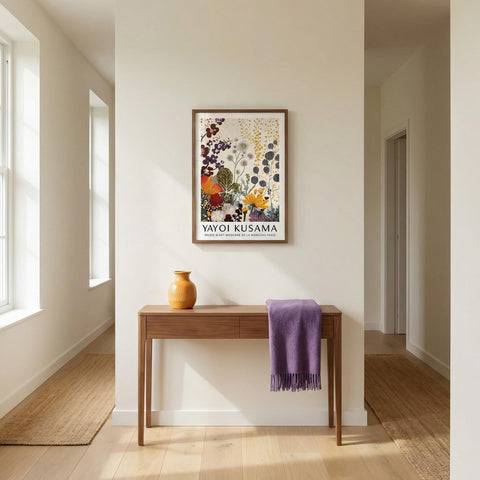
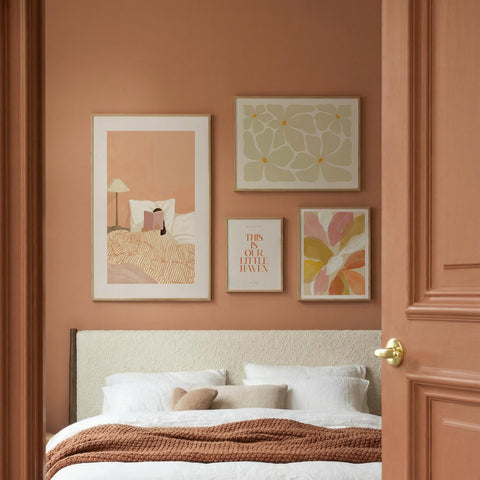
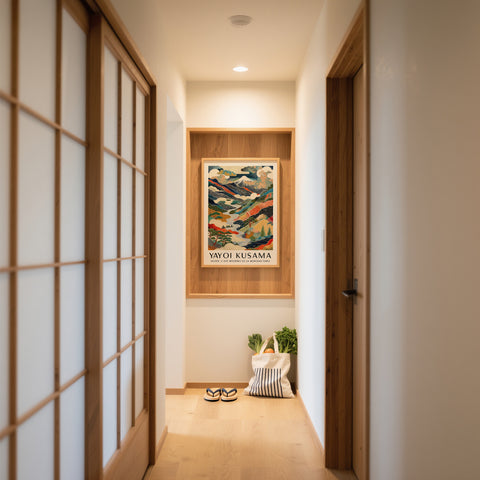
Materials like wood and industrial materials became common, reflecting both the development of contemporary art and a response to the previous generation's emotional expressiveness. Minimalist painting strips away the nonessential, allowing the viewer to engage with the physical presence and emotional resonance of the artwork. The movement was a reaction against the emotional complexity of Abstract Expressionism, aiming for accessibility through visual engagement with form and material. Minimalist works often blur the lines between painting and sculpture, emphasizing the viewer's physical experience with the art. Beyond the gallery, minimalist art products, such as canvas prints and wall art, have become popular for their ability to bring simplicity and elegance into living spaces. People purchase minimalist art products to decorate their living spaces, appreciating their clean aesthetic and calming influence.
Abstract Art
Abstract art values forms, color, and patterns rather than direct depiction of objects or people. Abstract minimal art draws from this tradition by prioritizing essential elements and reducing visual information. Patterns such as repeated vertical or horizontal lines and blocks of color are instrumental to these paintings. Through their use of limited color and simple shapes, artists foster a sense of order and truth in their works.
Part of the fascination with this genre is how the artist’s idea of beauty can emerge from just a square or series of lines. These works encourage the viewer to find their own reality within the quiet surface of the painting.
Modern Art
Modern art provided the foundation for the radical approach of minimalism. From the early twentieth century, artists in New York and abroad experimented with new ideas and mediums. The emergence of Minimalism is associated with a historical development in the aesthetics of the 1950s and 1960s. Minimalism surfaced in America in the mid-1960s in retaliation for preceding art movements. The transition toward simplicity and the use of color as a means of expression led to the development of abstract minimal art in both the United States and Europe.
This period also saw friendship and collaboration among artists, who shared notes and ideas to further the development of their movement. Museums such as the Tate in London, and institutions in America, played vital roles in collection, exhibition, and critical exploration of these new forms.
Minimalist Painting
Minimalist painting has been defined by series and sets, often using repetition and order to influence the viewer’s perception. Artists such as Agnes Martin, Carl Andre, and Sol LeWitt pushed the limits of what painting could be, focusing on material, form, and color. Their paintings range from quiet white grids to bold black and colored blocks, each representing the artist’s own reality and imagination.
The physical qualities of paint, wood, or industrial materials are central to this type of work. Minimalist artists wanted the viewer to respond directly to the object, to feel its presence and emotional impact without distraction from narrative or decorative elements.
Carl Andre
Carl Andre is one of the most influential artists in minimalism, known for using industrial materials such as metal and wood. Andre’s iconic work, “Equivalent VIII,” consists of fire bricks arranged in simple, low formations, allowing the importance of the art object to stand out. Donald Judd, another key figure, created modular, box-like sculptures using industrial fabrication techniques, further emphasizing the minimalist focus on form and material. Dan Flavin created site-specific installations using fluorescent light fixtures to explore the interplay of light and color, adding a unique dimension to the minimalist movement.
Andre’s works encourage viewers to walk around or even on the artwork, making them active participants. Courtesy of his radical approach, Andre helped shape the physical and conceptual direction of minimalist art and remains a prominent presence in the Tate’s collection.
Agnes Martin
Agnes Martin found beauty and hope within simple lines, grids, and subtle color palettes, which characterize her famous paintings. Her minimalist works represent the quiet, balanced nature of minimalism, inviting viewers to find emotion and truth in their own response.
Martin’s fascination with nature and the sky is visible in her use of soft hues and orderly patterns. Courtesy of the artist’s tireless exploration, her work continues to be celebrated in museums and holds a central place in both the history of minimalist painting and modern art. Frank Stella's "Black Paintings," featuring simple stripes of black paint, were foundational to the Minimalist movement, further influencing the trajectory of abstract minimal art. Kazimir Malevich is considered one of the earliest proponents of minimal painting, laying the groundwork for the movement's focus on simplicity and essential forms.
Sol LeWitt
Sol LeWitt’s contribution to minimalism lies in concept and execution. His wall drawings and structures use geometric form, lines, and color to create site-specific artworks that transform space. LeWitt’s radical idea that “the idea becomes a machine that makes the art” shifted attention away from the art object to the underlying concept. He is also recognized for his modular cube structures and wall drawings based on predetermined systems or ideas, which have become iconic representations of minimalist art. LeWitt emphasized that the idea behind his works was more important than the final product, a principle that redefined the role of the artist in the creative process.
Many of LeWitt’s works are constructed from simple patterns and sets, with blocks of color and black lines defining their structure. Courtesy of his vision, minimalists gained new ways to represent ideas, and his influence extends to contemporary art today.
Conclusion
Abstract minimal art holds a unique place in the development of modern and contemporary art, shaped by the vision and skill of artists such as Carl Andre, Agnes Martin, and Sol LeWitt. Their works, guided by principles of simplicity, balance, and physical presence, continue to inspire artists and audiences, offering a powerful exploration of reality through minimalist form and material. Whether found in the museum or within a personal collection, these artworks encourage a love of truth, imagination, and enduring fascination with the art world’s possibilities.