



Japanese Mountain Landscape
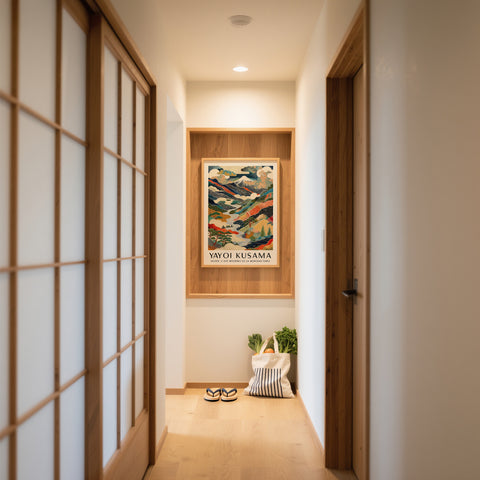
The Japanese mountain landscape has been a profound source of inspiration for artists throughout Japan's history. These landscapes, often depicted in traditional Japanese art, reflect the country's deep reverence for nature and its ever-changing seasons.
The term "sansui" (山水), meaning "mountain and water," embodies the essence of these landscapes. This concept, rooted in Chinese painting traditions, was embraced and transformed by Japanese artists to reflect their unique environment and aesthetic sensibilities. From the misty peaks of the Japanese Alps to the iconic silhouette of Mount Fuji, these scenes evoke a sense of tranquility and contemplation.
Artists like Katsushika Hokusai and Utagawa Hiroshige immortalized these vistas in their woodblock prints, capturing the interplay of light, shadow, and seasonal changes. Their works not only showcase the physical beauty of the mountains but also convey the spiritual and philosophical connections between humans and nature.
Japanese Art
Japanese art encompasses a wide range of styles and mediums, each reflecting the country's rich cultural heritage and evolving aesthetic values. From ancient pottery and calligraphy to contemporary installations, Japanese artists have consistently drawn inspiration from their surroundings, particularly the natural world.
One of the most renowned forms is "ukiyo-e," or "pictures of the floating world," which flourished during the Edo period (1603–1868). These woodblock prints often depicted landscapes, kabuki actors, and scenes from everyday life. Artists like Hokusai and Hiroshige elevated the genre by focusing on landscapes, bringing attention to the beauty of Japan's mountains, rivers, and rural scenes.
Another significant style is "sumi-e," or ink wash painting, characterized by its monochromatic palette and emphasis on brushwork. This technique, influenced by Chinese painting, was adapted by Japanese artists to express the subtleties of their native landscapes. The use of negative space and varying ink tones allows for a dynamic representation of mountains and natural elements.
Mountain Landscape
The depiction of mountain landscapes in Japanese art serves not only as a visual representation but also as a medium for conveying philosophical and spiritual ideas. Mountains are often seen as sacred spaces, embodying the connection between the earthly and the divine. This reverence is evident in the careful and deliberate portrayal of mountainous terrains.
In traditional hanging scrolls, or "kakemono," artists would present vertical compositions of towering peaks enveloped in mist, inviting viewers to embark on a visual journey through the landscape. These scrolls were not merely decorative but served as focal points for meditation and reflection.
The integration of seasonal elements, such as blooming cherry blossoms or autumn foliage, further enhances the emotional resonance of these landscapes. By capturing the transient beauty of nature, artists emphasize the impermanence of life, a central theme in Japanese aesthetics.