Introduction
Poster stores are retail establishments-both online and physical-that specialize in selling wall art, art prints, and decorative posters designed to transform home and office spaces. A poster is a form of wall art that typically features printed images or text on paper. Whether you’re looking to create a stunning gallery wall or find that perfect piece to hang above your couch, these stores offer curated collections spanning countless art styles and themes.
This guide covers the full range of poster store options, from mass-market online retailers to specialty print studios and brick-and-mortar locations. We’ll examine product types, quality standards, and shopping considerations to help you make informed purchases. Note that custom printing services and fine art galleries fall outside our scope-we’re focused specifically on stores where you can browse and shop for ready-made posters and prints.
If you’re a homeowner, renter, office manager, or design enthusiast searching for affordable artwork, poster stores offer curated collections of prints, photography, and art posters in various sizes with options for framing and finishing that bring life to your walls.
By the end of this guide, you will:
Understand the different categories of poster stores and what each offers
Know how to evaluate quality in paper, printing, and materials
Compare pricing models across store types effectively
Navigate common shopping challenges with confidence
Make purchases that match your taste and space requirements
Understanding Poster Store Categories
Poster stores serve as accessible destinations for customers seeking decorative artwork without the premium prices of traditional art galleries. These retailers curate collections across categories-from nature photography to geometric shapes, vintage illustrations to contemporary designs-making it easy for anyone to discover pieces that match their personality and interiors.
Unlike fine art galleries that sell original works, poster stores focus on reproduced images and art prints at accessible price points. They differ from custom print shops by offering pre-designed collections rather than printing customer-uploaded files. And unlike general home decor retailers that stock posters as one category among many, dedicated poster stores provide depth of selection and specialized expertise in wall art.
Online Poster Retailers
Online poster retailers like AllPosters, Art.com, and Society6 operate as digital-first platforms where you can browse millions of designs from your home. These stores have transformed how people shop for wall art, offering vast collections that no physical location could match.
The advantages are compelling: you can filter by color, theme, room type, or artist to find exactly what inspires you. Competitive pricing, frequent deals, and the convenience of home delivery make online stores the primary access point for most customers today. Many offer visualization tools that let you see how a piece might look on your walls before you commit.
Specialty Print Studios
Specialty print studios represent a boutique approach to poster retail, focusing on specific aesthetics or themes that passionate collectors love. Scandinavian design studios might offer minimalist botanical prints, while vintage-focused shops curate mid-century travel posters and retro illustrations.
These stores often work directly with artists to produce exclusive designs you won’t find elsewhere. The brand identity of each studio creates a cohesive collection that helps you build a consistent style throughout your house. Where mass-market retailers offer variety, specialty studios offer curation-helping you create a sense of intentional design rather than random accumulation.
Physical Retail Locations
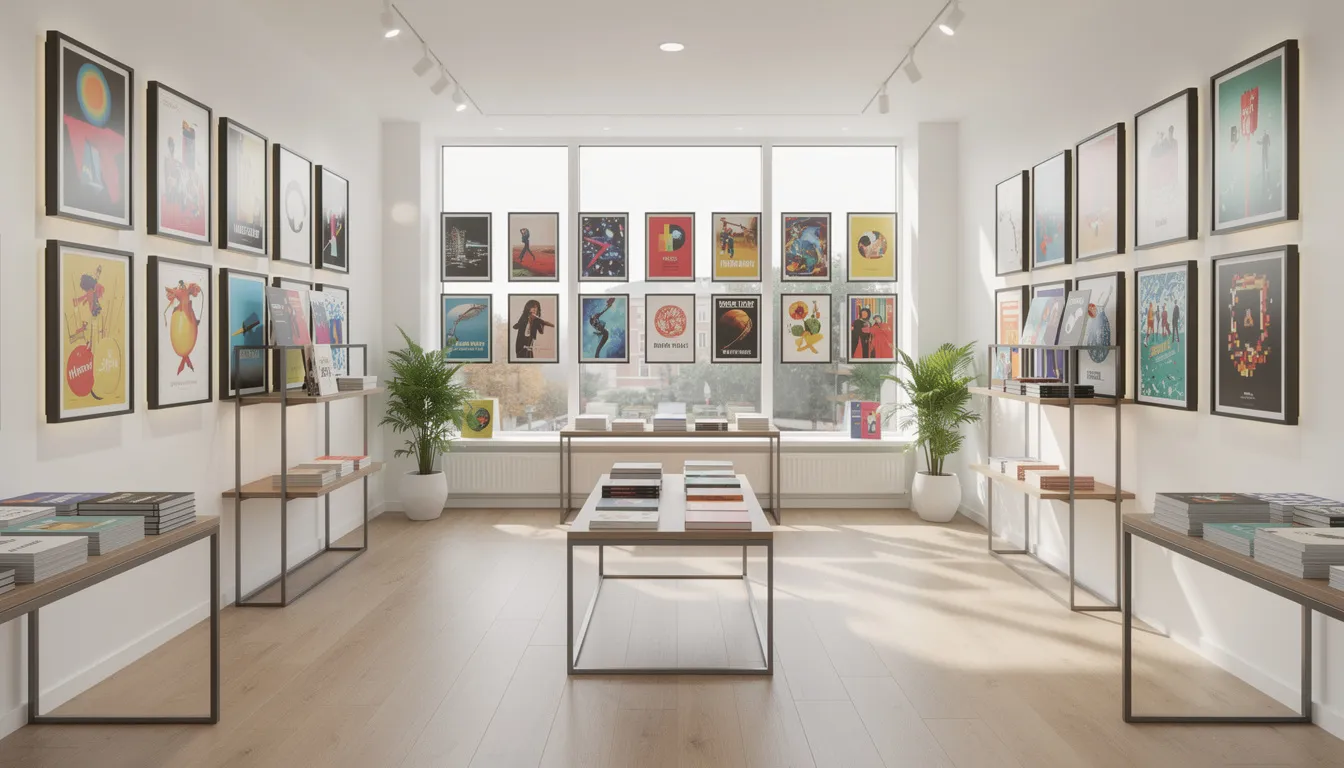
Brick-and-mortar poster stores provide something digital platforms cannot: the ability to see actual print quality, touch paper textures, and visualize true colors before purchase. Physical stores often maintain framing services on-site, allowing you to walk out with a finished, ready-to-hang piece.
The experience of browsing physical collections can spark inspiration in ways that scrolling through a website doesn’t match. Staff at dedicated poster shops typically offer expertise in helping you choose sizes and styles that work for your space. Understanding product offerings and quality standards matters regardless of whether you shop online or in person.
Product Offerings and Quality Standards
Now that you understand the different store categories, let’s examine what poster stores actually sell and how to evaluate quality across their offerings.
Print Types and Materials
Standard poster prints use coated paper stock, typically ranging from 170gsm to 250gsm-the higher the number, the thicker and more substantial the paper feels. Canvas art offers a textured alternative that mimics traditional paintings, produced by printing directly onto stretched cotton or synthetic fabric. Premium options include art prints on archival paper designed to resist fading for decades.
Paper finishes affect both appearance and durability. Matte finishes reduce glare and work well in bright rooms, while glossy finishes make colors pop but can reflect light annoyingly. Satin provides a medium between the two. Giclée printing-a method using archival inks and high-resolution output-delivers museum-quality color reproduction that serious collectors seek.
Size Options and Formats
Poster stores typically stock a range of standard dimensions. Small prints (8x10” to 12x16”) work perfectly for creating collages or filling narrow spaces. Medium sizes (16x20” to 24x36”) suit most bedroom and office walls. Large statement pieces (30x40” and beyond) create dramatic focal points in living rooms or above a couch.
Many stores offer custom sizing, though this affects pricing and production time. Portrait orientation suits single subjects and vertical spaces, while landscape format works better for panoramic nature photography or scenes with horizontal movement. Your material choice affects size limitations-canvas art typically comes in standard dimensions, while paper prints offer more flexibility.
Framing and Finishing Services
The difference between a poster and finished artwork often comes down to framing. Many poster stores offer in-house framing services where you can choose frame styles, mat colors, and glass types. Basic black or white frames start around $25-40 for medium prints, while premium wood frames with museum glass can exceed $150.
Alternatively, you can purchase prints unframed and source frames separately-often more economical but requiring additional effort. Some stores sell prints already mounted on foam board or stretched over wooden frames, providing a fun middle ground between bare paper and full framing.
Key quality indicators to check include: paper weight (200gsm+ for durability), printing method (giclée for archival quality), and color accuracy guarantees. With these standards in mind, let’s turn to practical shopping considerations.
Shopping Process and Store Comparison
Evaluating different poster stores effectively requires understanding what criteria matter most for your specific needs and how to compare value across different price points.
Evaluation Criteria
Before committing to a purchase, consider these factors based on your priorities:
Product range and curation quality: Does the store offer the art styles and themes you love? A store with a million options isn’t helpful if none match your taste.
Pricing transparency and shipping costs: Check total costs including delivery-some stores offer free shipping above certain thresholds or charge premium rates for oversized pieces.
Print quality and material specifications: Look for detailed information about paper weight, printing methods, and color profiles. Reputable stores provide this world of technical detail openly.
Customer service and return policies: Since you’re buying without seeing the physical product (online), generous return windows and responsive support matter significantly.
Price Comparison Framework
Store Type |
Basic Prints |
Premium Prints |
Framing Add-on |
|---|---|---|---|
Mass Market Online |
$15-30 |
$40-80 |
$25-60 |
Specialty Studios |
$25-50 |
$60-120 |
$40-100 |
Physical Stores |
$20-40 |
$50-100 |
$30-80 |
Mass market retailers offer the lowest entry points but may compromise on paper quality or printing precision. Specialty studios charge premiums for exclusive designs and often higher-quality materials. Physical stores fall in between, with the added value of immediate gratification and the ability to check quality before buying. |
When interpreting these prices, consider cost-per-year-of-enjoyment. A $60 premium print on archival paper that stays vibrant for decades delivers better value than a $15 print that fades within two years. These pricing realities connect directly to common challenges shoppers face.
Common Challenges and Solutions
Understanding typical issues when shopping for posters helps you avoid disappointment and make purchases you’ll love for years.
Color Accuracy Concerns
Monitor calibration varies wildly between devices, meaning that vibrant image on your screen might arrive looking different. Solution: Look for stores offering color guarantees or easy returns. Some retailers provide physical color swatches or sample prints. If a store mentions “color-managed workflow” or provides ICC profiles, they’re taking accuracy seriously.
Size Selection Difficulties
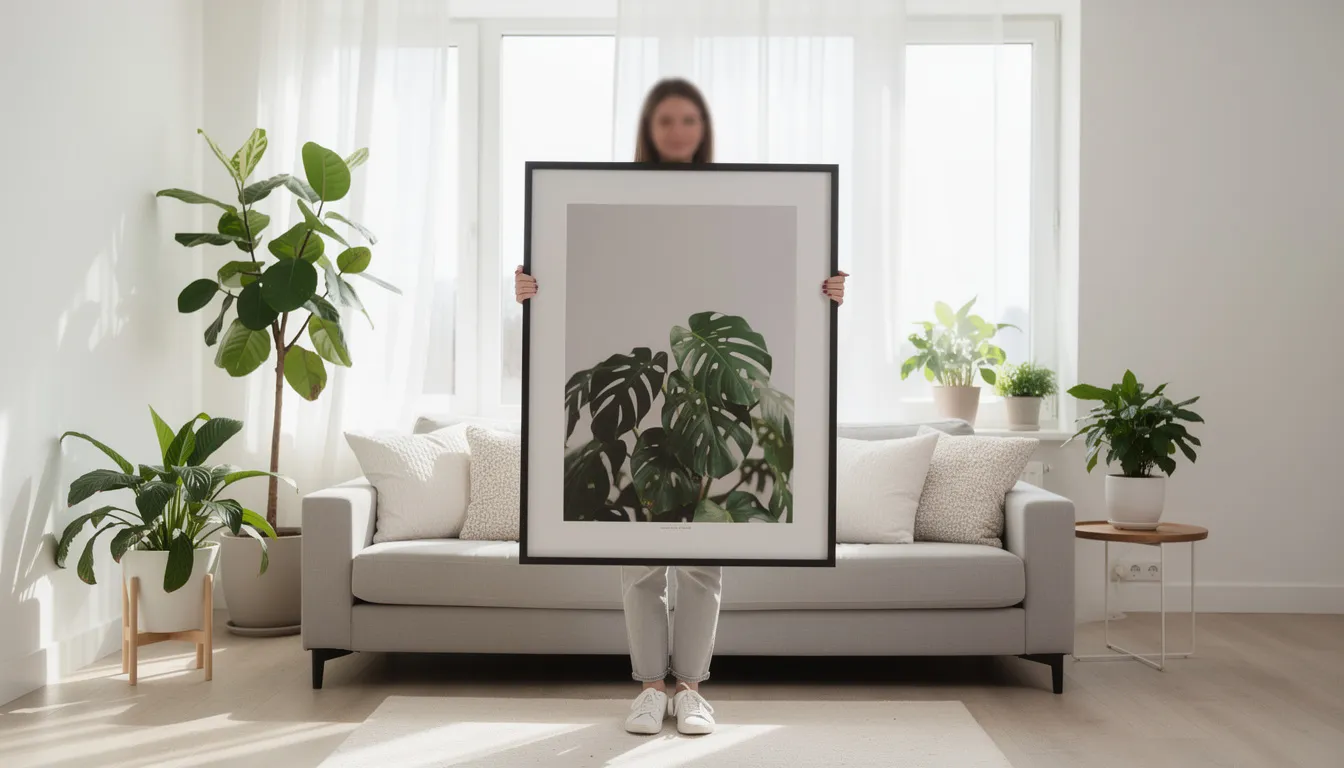
The most common mistake is choosing pieces too small for a space-a 12x16” print can look lost on a large wall. Solution: Use painter’s tape to mark dimensions on your wall before ordering. Many online stores offer AR visualization tools through their apps. For gallery wall planning, create paper templates at actual size to test arrangements before committing.
Quality Uncertainty
Without touching a product, how do you know if quality matches the price? Solution: Read material specifications carefully-reputable stores list paper weight, printing method, and ink types. Check customer reviews with photos showing actual received items. Start with a smaller, less expensive order from a new company to test quality before investing in large pieces.
Overwhelming Choice
With millions of options across stores, decision paralysis is real. Solution: Narrow systematically. First, define your color palette based on existing room decor. Second, identify 2-3 themes that inspire you (nature photography, abstract geometric shapes, vintage travel). Third, set a firm budget. Fourth, browse only stores specializing in your chosen aesthetic rather than trying to search everything.
Making informed decisions through these strategies leads to purchases that truly enhance your space.
Conclusion and Next Steps
Successful poster shopping requires understanding the range of store types available, recognizing quality standards in materials and printing, and matching purchases to your specific space and personality. Whether you choose the vast selection of online retailers, the curated collections of specialty studios, or the tangible experience of physical stores, applying consistent evaluation criteria helps you find art that transforms your walls.
Your immediate next steps:
Measure your space using a tape measure and photograph walls you want to fill
Set a realistic budget including potential framing costs
Identify 3-5 preferred styles by saving images that inspire you online
Research store reputations through customer reviews and return policy details
Start with smaller purchases from new retailers before committing to large or expensive pieces
For further exploration, consider learning about gallery wall composition principles, understanding how lighting affects artwork display, and exploring interior design fundamentals that help artwork feel integrated rather than added. With the right approach, you’ll discover poster stores as valuable destinations for bringing affordable, meaningful art into your home and office life.