Introduction
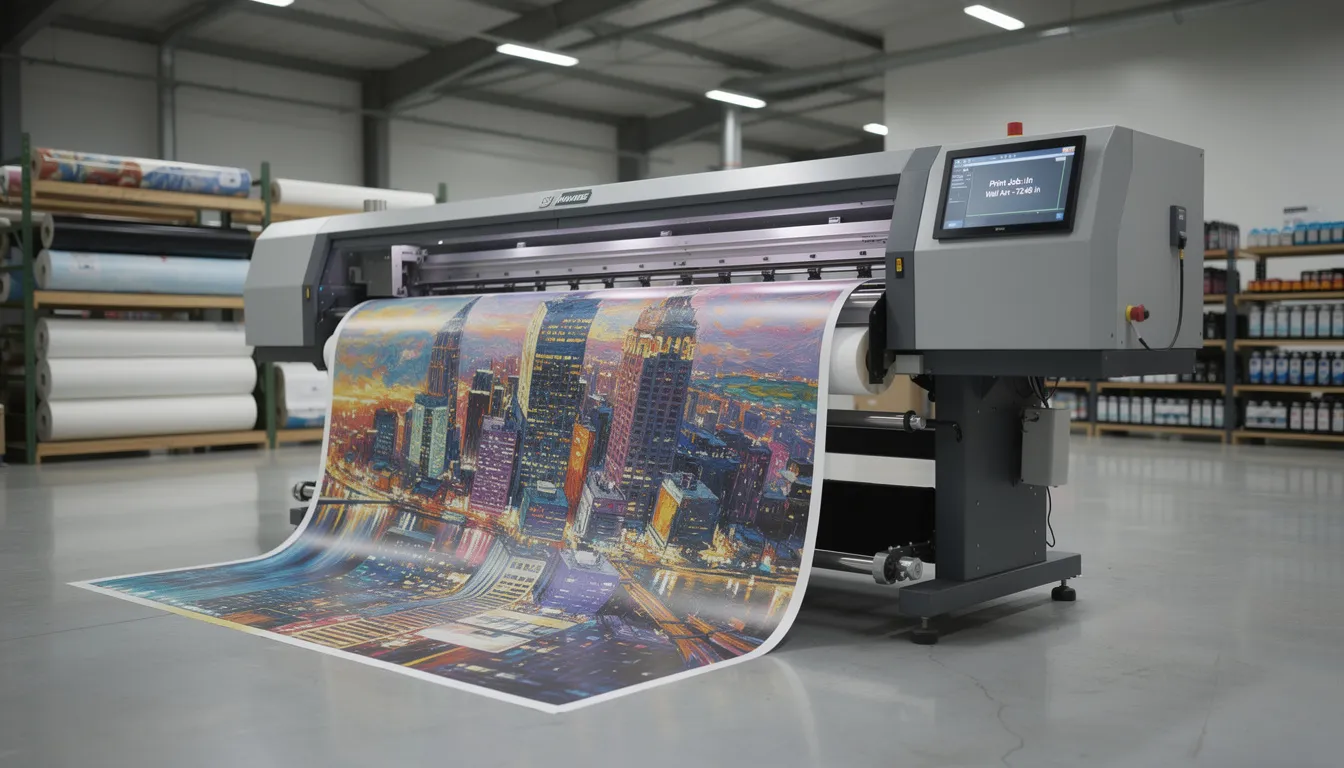
Giant poster printing uses large format printing technology to produce wall art typically starting at 24” x 36” and scaling up to room-sized dimensions exceeding 10 feet wide. This specialized printing process transforms high-resolution images into commanding visual statements that dominate spaces and capture attention in ways standard prints simply cannot achieve.
This guide covers everything you need to know about creating your own custom posters at massive scale-from understanding print technology and material options to file preparation and installation. The content serves interior designers seeking statement pieces, businesses building brand presence, artists reproducing work at gallery scale, and homeowners wanting to create big impressions in living spaces.
Direct answer: To print giant posters, you upload a high-resolution file to a large format printing service, select your preferred substrate (paper, vinyl, or rigid material), and the printer produces your artwork using inkjet, UV, or specialized print technology designed for oversized output.
By the end of this guide, you’ll understand:
Size options and how viewing distance affects resolution requirements
Material choices for indoor use, outdoor durability, and specialty applications
File preparation steps for print ready output
Production timelines and cost considerations
Installation methods for different substrates
Understanding Giant Poster Printing
Large format printing differs fundamentally from desktop or commercial printing in scale, technology, and application. While standard printers handle documents up to 13” x 19”, large format printers accommodate widths from 24 inches to over 60 inches, using roll-fed or flatbed systems designed for graphics that make a big impression at events, trade show displays, and architectural installations.
Size Categories and Standards
Standard large format poster sizes follow established dimensions that balance visual impact with practical production:
24” x 36” – Entry-level large poster size, ideal for retail displays
36” x 48” – Popular for trade show graphics and office art
48” x 72” – Statement wall pieces for lobbies and galleries
60” x 90” and larger – Full wall murals and architectural graphics
Custom sizes accommodate specific design project requirements. Most print services handle widths up to 60 inches with virtually unlimited length on roll-fed systems, while flatbed printers produce rigid materials up to 10 feet by 50 feet per sheet. When planning dimensions, note that extremely large posters may require sectioned printing for shipping logistics-a detail worth discussing with customer service before ordering.
The relationship between size and viewing distance directly impacts perceived quality. A 48” x 72” poster viewed from 10 feet appears sharp at 100 DPI, while the same image viewed at arm’s length requires 300 DPI to avoid visible pixelation.
Print Technology Types
Three primary technologies produce giant posters, each with distinct advantages:
Inkjet large format printers dominate paper-based poster production. These systems spray microscopic ink droplets via piezoelectric or thermal heads, achieving resolutions up to 1200 DPI for photos and art reproductions with exceptional color accuracy and detail.
UV flatbed printers cure ink instantly with ultraviolet light during application, bonding it to rigid substrates like foam board, PVC, acrylic, and metal. This technology produces scratch-resistant output without drying time, handling materials up to 2 inches thick.
Latex and eco-solvent systems produce durable output for indoor and outdoor applications. Latex inks are water-based and eco-friendly, while eco-solvent inks embed into vinyl for weather resistance lasting 3-5 years without laminating.
Production speed varies significantly-high-volume systems exceed 500 square feet per hour, while photo-quality modes slow to 50 square feet per hour for maximum detail. Your printer will select the same configuration that balances your quality requirements with turnaround needs.
Resolution and Image Quality Requirements
File specifications for large format printing follow different rules than standard print:
DPI requirements by viewing distance:
10+ feet viewing: 75-100 DPI sufficient
5-10 feet viewing: 100-150 DPI recommended
Under 5 feet viewing: 150-300 DPI optimal
For a 48” x 72” poster, this translates to source files ranging from 3,600 x 5,400 pixels (75 DPI) to 14,400 x 21,600 pixels (300 DPI). Large format services typically request files in TIFF, PDF, or high-quality JPEG format, with CMYK color profiles for accurate reproduction.
When you upload your file online, many services run automatic quality checks. If resolution falls below optimal levels for your selected size, you’ll receive notification to review before production. Most providers offer an online calculator to verify your images meet specifications for the current product configuration.
Material Options for Giant Posters
Substrate selection determines durability, appearance, and installation method for your giant poster. Options span four categories: papers, films, rigid materials, and fabrics-each suited to specific applications and environments.
Paper Substrates
Paper remains the most popular and cost-effective choice for indoor use:
Matte paper (160gsm) delivers a sophisticated finish that reduces glare under artificial lighting. This substrate suits art prints, photography where reflection would distract, and environments with variable lighting. Colors appear slightly softer than glossy alternatives, creating an elegant gallery aesthetic.
Semi gloss and satin finishes balance color vibrancy with glare reduction. These mid-range options work well for photos, graphics, and brand materials where you need punch without the mirror-like reflection of high gloss.
High gloss paper (190gsm) maximizes color saturation and contrast for photography and high-impact graphics. The reflective surface demands controlled lighting but produces the most vivid output. This finish grabs customer’s attention in retail environments and trade show booths.
Bond paper serves temporary displays, presentations, and draft proofs at lower cost. Weight typically ranges from 20-32 lb, suitable for short-term use where premium materials aren’t necessary.
Durable Materials
When longevity matters more than cost, films and rigid substrates deliver:
Vinyl options include permanent adhesive for wall graphics, removable varieties for temporary installations, and banner grades for suspended displays. Vinyl resists moisture and light fading, functioning outdoors temporarily with proper laminating options. Standard vinyl runs 3-5 years indoors, longer lasting with UV lamination.
Fabric materials produce wrinkle-resistant displays ideal for trade shows where graphics travel frequently. Polyester fabrics accept dye-sublimation printing for vibrant, washable output that folds without creasing. Fabric banners and backdrops weigh less than vinyl alternatives, reducing shipping cost.
Rigid substrates stand independently or mount flush to walls. Foam core (3/16” to 1/2” thickness) provides lightweight, economical options for big events and temporary signage. PVC and Sintra board handle heavier use and outdoor exposure. Dibond (aluminum composite) and Gatorboard deliver premium materials for permanent installations requiring structural integrity.
Specialty Applications
Specific environments demand specialized substrates:
Weather-resistant materials for outdoor applications include UV-treated vinyl, mesh (allowing wind pass-through for large banners), and corrugated plastic. These substrates withstand rain, sun exposure, and temperature fluctuations for months to years depending on ink and lamination.
Laminated options add protective layers increasing durability and lifespan. Matte lamination maintains the original finish while preventing scratches; gloss lamination enhances vibrancy. Laminated posters resist moisture, fingerprints, and UV fading-extending indoor life by 2-3 years and enabling outdoor display.
Mounting and finishing options elevate presentation quality. Foam board mounting adds rigidity to paper prints. Grommets and pole pockets enable hanging. Contour cutting creates custom shapes from your artwork. Professional framing showcases art reproductions at gallery standard.
Design and Production Process
Successful giant poster production begins with careful planning and proper file preparation. Understanding requirements before you create your artwork prevents costly reprints and production delays.
File Preparation Steps
Follow these steps to prepare a print ready file:
Calculate required resolution based on final print size and expected viewing distance. For a 36” x 48” poster viewed from 6 feet, source images should measure at least 5,400 x 7,200 pixels (150 DPI at output size).
Set up proper color profiles in your preferred design software. Convert RGB images to CMYK for accurate color reproduction. Request the printer’s specific ICC profile if available-this reduces Delta E color variance from 5+ points to under 2.
Include bleed areas of 0.125” to 0.25” beyond final trim dimensions for edge-to-edge printing. Add crop marks indicating final cut lines. Many services provide free templates with these specifications pre-configured.
Conduct test prints when color accuracy is critical. Request a pdf proof for on-screen review, or pay for a small-scale hard proof printed on your selected material. Verify critical brand colors match expectations before full production.
When preparing your own artwork, note that upscaling low-resolution images rarely produces acceptable results. If source material falls below requirements, consider artwork choices that embrace a graphic or artistic treatment rather than photorealistic detail.
Production Timeline Comparison
Material Type |
Print Method |
Standard Turnaround |
Rush Available |
|---|---|---|---|
Paper posters |
Inkjet |
2-3 business day |
Same-day to 24hr |
Vinyl/fabric |
Inkjet/latex |
3-5 business day |
1-2 days |
Rigid substrates |
UV flatbed |
5-7 business day |
3-4 days |
Laminated options |
Multi-step |
5-10 business day |
4-5 days |
Rush orders typically add 50-100% to base price. Set press quantities and production scheduling early for big events or special occasions where timeline flexibility is limited.
Quality control processes vary by provider. Premium services include visual inspection for banding, color shifts, and surface defects. Proof approval steps-whether digital pdf proof or physical sample-add 1-2 days but prevent expensive errors on large quantity orders.
Common Challenges and Solutions
Even experienced designers encounter issues with giant poster production. Addressing problems proactively saves time and money.
Image Quality Problems
Pixelation at large scale remains the most common issue. Solution: ensure minimum 150 DPI at final print size for standard viewing distances. For images that will be examined closely (under 5 feet), target 300 DPI. If your source material falls short, consider smaller output dimensions or artistic treatments like posterization that mask resolution limitations.
Color matching failures frustrate brand-conscious clients. Solution: request color proofs before production, use calibrated monitors for design review, and provide Pantone references for critical colors. What appears on screen often differs from print-professional proofing catches discrepancies before you’ve committed to full production. If results still miss expectations, please contact customer service with specific feedback for adjustment.
Material Selection Issues
Indoor vs. outdoor durability mismatch leads to premature failure. Solution: match material specifications to installation environment honestly. Paper and unlaminated prints work for climate-controlled indoor spaces; vinyl with UV lamination handles direct sunlight; mesh accommodates high-wind locations. When in doubt, recommend selecting routes toward more durable options.
Mounting challenges arise when substrate thickness doesn’t match installation method. Solution: select appropriate rigidity for your mounting approach. Self-adhesive wall graphics require smooth, clean surfaces. Standoff mounting demands minimum 3mm substrate thickness. Heavy rigid materials need French cleats or Z-bars rather than adhesive strips.
Size and Space Constraints
Shipping limitations affect extremely large posters. Solution: for pieces exceeding 60” in any dimension, consider sectioned printing that ships flat and installs as a seamless mural. Multi-panel designs intentionally incorporate split lines as a design element. Contact customer service to discuss options before finalizing dimensions.
Installation access issues surprise many clients. Solution: during the design phase, measure doorways, stairwells, and hallways between delivery point and installation location. A 72” x 96” rigid poster on foam board won’t navigate standard 80” doorways without damage. Roll-up materials or sectioned panels solve access constraints.
Installation and Display Considerations
Proper installation protects your investment and ensures your giant poster achieves its intended visual impact.
Wall preparation requirements vary by mounting method. Adhesive vinyl demands clean, smooth surfaces free of dust, oils, and texture. Use painter’s tape to verify the wall accepts adhesive before full application. Painted drywall typically works well; textured surfaces, fresh paint (under 30 days), and porous materials often fail. Mechanical mounting (screws, nails, standoffs) requires finding studs for heavy rigid materials.
Hardware selection matches substrate weight and rigidity. Paper posters up to 36” x 48” work with poster rails, magnetic strips, or museum putty. Larger paper requires frames or mounting to rigid backing. Foam board and PVC use wall-mounted grippers, velcro strips, or standoffs for floating effects. Heavy Dibond or framed pieces demand proper anchoring-toggle bolts for drywall, masonry anchors for concrete.
Professional installation vs. DIY depends on scale, material, and precision requirements. Most paper posters and small rigid pieces install easily with basic tools. Wall murals exceeding 8 feet, multi-panel installations requiring perfect alignment, and valuable art reproductions benefit from professional handling. Installation services typically cost $50-200 for standard pieces, scaling up for complexity and height.
Long-term care and maintenance extends display life. Dust paper and matte surfaces with soft microfiber cloths; avoid moisture. Clean laminated or vinyl surfaces with damp cloths and mild soap. Keep UV-sensitive materials away from direct sunlight unless UV-laminated. Fabric banners store folded without permanent creasing; vinyl rolls with printed side out to prevent cracking. Framed pieces under glass or acrylic require periodic cleaning to maintain great quality presentation.
Conclusion and Next Steps
Giant poster printing transforms spaces through commanding scale and visual impact. Success depends on three interconnected decisions: size requirements matched to installation space and viewing distance, material durability appropriate for environment and longevity needs, and image quality sufficient for your chosen dimensions.
Immediate action steps:
Measure your installation space precisely, including access pathways and wall conditions
Prepare or evaluate source images against resolution requirements for your target size
Request material samples from print services to evaluate finish, weight, and quality firsthand
Upload your file online or contact customer service to discuss specifications for complex projects
Review pdf proof carefully before approving production
For complex installations, multi-location rollouts, or projects where brand consistency matters, professional consultation prevents expensive errors. Most large format print services offer design studio support to optimize your artwork for production and recommend material combinations suited to your specific application.
Whether you’re creating a single statement piece for a living room or producing signage for big events, understanding these fundamentals ensures your giant posters deliver the visual impact and longevity your design project deserves.