Introduction
Restaurant art directly shapes how guests perceive your establishment from the moment they walk through the door. The visual elements adorning your walls communicate your brand identity, set emotional tone, and influence how long diners choose to linger over their meals.
Art is integrated into restaurant design through custom murals, sculptures, local artist collaborations, and thematic installations. Artistic elements enhance dining by stimulating conversation, reinforcing brand identity, boosting acoustic comfort, and providing memorable experiences. Art communicates the restaurant's story, values, and commitment to local or sustainable practices, and can enhance the ambiance of a restaurant space. The type of art you choose signals your restaurant's vibe-serene pieces create an intimate dining atmosphere, while vibrant works energize lively spots. Integrating art into restaurant design elevates brand identity and fosters emotional connections with diners, making it a vital component of a successful hospitality environment.
This guide covers the selection, placement, and maintenance of visual artwork for restaurants, cafes, and dining establishments-including canvas prints, photography, paintings, and mixed media installations. Restaurant owners, interior designers, and hospitality managers will find practical frameworks for enhancing their space with purposeful visual elements. We won’t address architectural design or furniture selection, focusing instead on wall-mounted and displayed art pieces.
Direct answer: Restaurant art should complement your brand identity, enhance customer experience through intentional visual storytelling, and withstand the unique demands of commercial food service environments including humidity, grease, and frequent cleaning.
By the end of this guide, you will understand:
The different types of restaurant art and their applications
Selection criteria based on establishment type and brand positioning
Strategic placement techniques for maximum visual impact
Budget considerations from affordable prints to original commissions
Maintenance requirements for longevity in commercial settings
Understanding Restaurant Art
Restaurant art encompasses all visual elements intentionally displayed to enhance dining ambiance and reinforce brand character. Unlike residential decor, these pieces must perform double duty-creating atmosphere while surviving the practical demands of food service operations.
The connection between visual environment and dining psychology runs deep. Studies consistently show that thoughtfully curated art increases perceived meal quality, encourages longer visits, and strengthens emotional connections to an establishment. What guests see while eating becomes inseparable from how they experience your food.
Artistic elements in restaurants do more than decorate-they stimulate conversation, reinforce your brand identity, boost acoustic comfort, and provide memorable experiences. Art can communicate your restaurant’s story, values, and commitment to local or sustainable practices. The right art enhances ambiance, signals your establishment’s vibe, and helps foster emotional connections with diners, making it a key factor in shaping the overall dining experience.
Types of Restaurant Art
Restaurant art comes in a wide variety of forms, each contributing uniquely to ambiance, function, and guest experience. Below are key types, their definitions, and examples of how they can be used in restaurant settings:
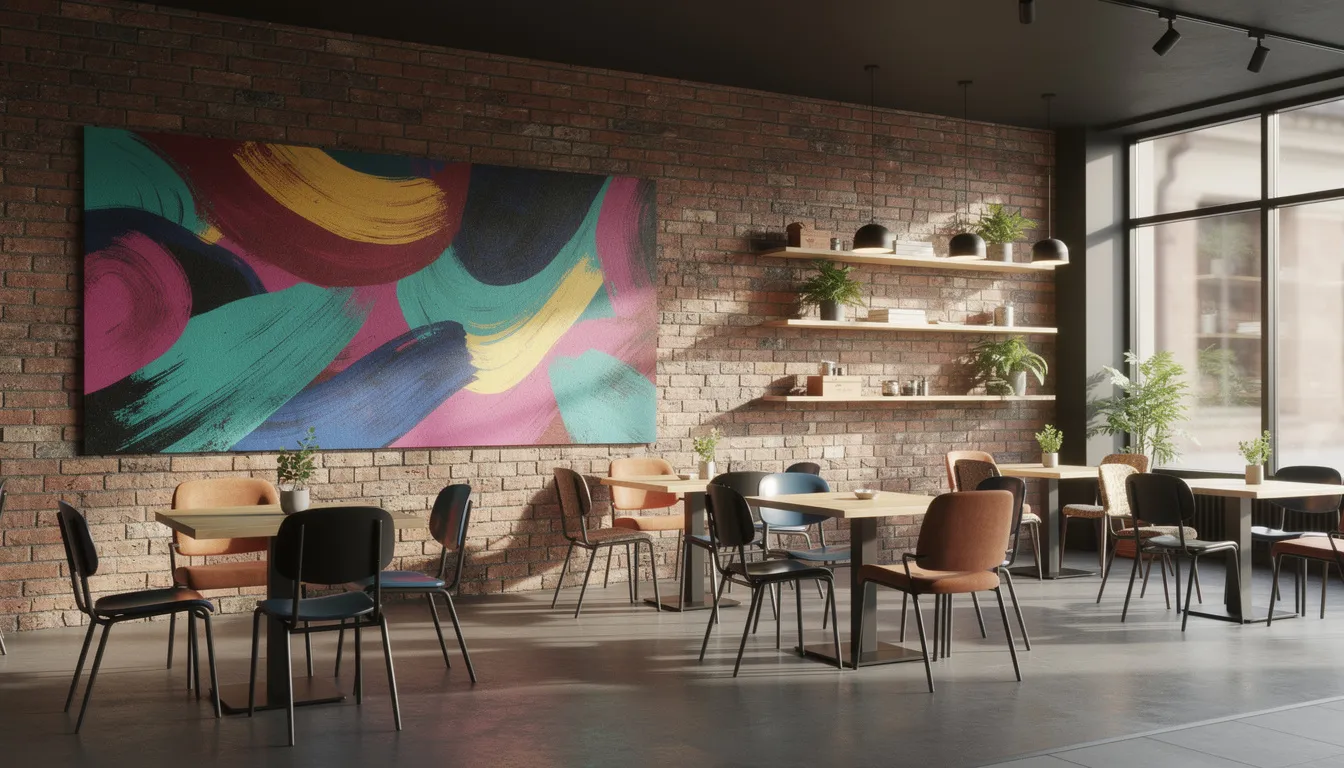
Murals and Large-Scale Paintings: Murals and large-scale paintings act as powerful focal points that define a room’s character. These expansive works set a specific mood, add color, and create a visual anchor for the space. For example, a hand-painted mural depicting local scenery can immerse guests in the restaurant’s regional identity.
Three-Dimensional Art Pieces: Sculptures, wall-mounted installations, and other three-dimensional art add texture, depth, and a tactile sensory element to the environment. These pieces can be crafted from metal, wood, ceramics, or mixed media, and often serve as conversation starters or thematic highlights.
Functional Art: Art can be functional, such as fabric-based installations that improve acoustics. Soft-surfaced or sound-absorbing art, like textile wall hangings or upholstered panels, not only enhance visual appeal but also create a comfortable acoustic environment for conversation.
Interactive Installations: Interactive installations can engage patrons on a tactile and sensory level by responding to diner movement. For instance, kinetic sculptures or digital displays that change with touch or motion encourage guests to interact with the space, making the dining experience more engaging.
Unique or Quirky Art Pieces: Unique or quirky art pieces encourage interaction among guests, serving as icebreakers and fostering social connection. These might include whimsical sculptures, unexpected objects, or playful wall art that invites discussion and laughter.
Aesthetically Striking Installations: Aesthetically striking art installations provide backdrops for social media, acting as free word-of-mouth marketing. Instagrammable walls, neon signs, or bold graphic murals can turn your restaurant into a destination for social sharing.
Canvas Prints and Stretched Canvases: These offer durability alongside visual impact. Their frameless presentation suits contemporary spaces, while the textile surface absorbs sound-a practical benefit in busy dining rooms. These pieces resist minor impacts better than framed glass and clean easily.
Framed Photography: Photography can be a significant element in restaurant design. Framed photography showcasing food, local landmarks, or abstract compositions brings professional polish to any wall. Black-and-white culinary photography creates sophistication, while vibrant local scenes build community connection. Frame selection matters as much as the image-ornate frames suit traditional spaces while minimal profiles work for modern aesthetics.
Original Paintings and Commissioned Pieces: These deliver unique character impossible to replicate. While requiring greater investment, they signal authenticity and can become signature elements that diners remember and discuss. Local artists often welcome restaurant commissions for the ongoing exposure.
Digital Art and Modern Prints: These serve contemporary establishments seeking bold visual statements. These affordable options allow frequent rotation and can reference current trends, seasonal themes, or even menu changes without significant expense.
Typography, Illustration, Rustic, and Fine Art: Various styles of cafe and restaurant wall art include Typography (inspirational quotes, menu highlights), Illustration (playful or artistic drawings), Rustic (weathered, vintage-inspired pieces), and Fine Art (museum-quality works or reproductions). Each style can be chosen to reinforce your restaurant’s concept and target audience.
Summary Table: Types of Restaurant Art and Their Roles
Art Type |
Definition & Example |
Relationship to Ambiance & Function |
|---|---|---|
Murals & Large-Scale Paintings |
Expansive wall art, often custom-painted |
Define room character, set mood, create focal points |
Three-Dimensional Art |
Sculptures, wall installations, mixed media |
Add texture, depth, tactile interest |
Functional Art |
Fabric panels, acoustic installations |
Improve sound quality, enhance comfort |
Interactive Installations |
Art that responds to touch or movement |
Engage patrons, encourage interaction |
Unique/Quirky Pieces |
Whimsical or unexpected art |
Spark conversation, foster social connection |
Aesthetically Striking |
Bold, photogenic installations |
Social media backdrops, marketing |
Canvas Prints |
Stretched canvas, frameless prints |
Durable, sound-absorbing, contemporary look |
Framed Photography |
Professional photos, food or local scenes |
Sophisticated, community connection |
Original Paintings/Commissions |
Unique, artist-created works |
Authenticity, signature elements |
Digital Art/Modern Prints |
Rotating, trend-driven digital or printed works |
Flexibility, affordability, trend alignment |
Typography, Illustration, Rustic, Fine Art |
Text-based, drawn, vintage, or museum-quality pieces |
Reinforce concept, target audience, and brand identity |
Understanding these foundational categories prepares you to choose pieces strategically based on your specific establishment type and target audience.
Art Styles and Themes
Food and culinary-themed artwork remains perennially popular, from vintage advertisement reproductions to modern food photography. These pieces create immediate thematic coherence, reminding guests why they’re there. Vintage signs advertising classic dishes evoke nostalgia, while contemporary culinary photography signals freshness and quality.
Local and cultural themes root your establishment in community identity. Photographs of regional landmarks, artwork by neighborhood artists, or pieces reflecting cultural heritage tell guests your restaurant belongs here. This approach resonates particularly well with tourists seeking authentic experiences.
Abstract and contemporary pieces suit modern dining spaces where visual sophistication takes precedence over literal interpretation. Color becomes the primary communication tool-choose palettes that complement your interior design and reinforce desired emotional responses.
Rustic and vintage styles align naturally with farm-to-table concepts, traditional cooking, and establishments emphasizing heritage. Weathered frames, agricultural imagery, and antique-style prints create warmth and authenticity that supports comfort food positioning.
Understanding these foundational categories prepares you to choose pieces strategically based on your specific establishment type and target audience.
Selecting Restaurant Art for Different Spaces
Art selection begins with honest assessment of your restaurant concept, target demographic, and brand positioning. The pieces that elevate a fine dining experience would feel out of place in a family-friendly cafe, and vice versa.
Fine Dining Establishments
Sophisticated environments demand artwork of corresponding quality. Original paintings, limited edition prints, and museum-quality reproductions signal the elevated experience guests expect. Investment here communicates respect for your clientele’s discernment.
Color palettes should remain neutral and classic-deep burgundies, navy, forest green, or monochromatic schemes. Avoid trendy pieces that may date quickly; instead, choose timeless subjects and compositions that age gracefully alongside your establishment’s reputation.
Lighting becomes critical with valuable pieces. Proper illumination enhances viewing while protecting against UV damage. Professional framing with conservation-grade materials protects your investment, and insurance documentation becomes advisable for significant acquisitions.
Casual Dining and Cafes
Vibrant colors and playful themes encourage the relaxed atmosphere where conversation flows freely. These spaces invite guests to linger, and art should reinforce that comfort. Bold prints, whimsical illustrations, and colorful photography all serve this purpose.
Local artist collaborations build community connections while providing cost-effective original pieces. Many cafes successfully display rotating exhibitions by area artists, creating fresh experiences for regular customers while supporting neighborhood creatives.
Material durability matters more here than in formal settings. Higher traffic, proximity to food preparation, and more frequent cleaning require pieces that withstand practical demands. Choose surfaces that clean easily and mounting systems that resist accidental contact.
Fast-Casual and Quick Service
Bold graphics and typography reinforce brand messaging in environments where guests may spend only minutes. These pieces communicate quickly-there’s no leisurely contemplation of subtle details when customers are ordering at counters.
Easy-to-clean surfaces become essential, and vandal-resistant mounting protects your investment. Graffiti-style murals, oversized typography, and simple graphic designs read clearly from distances and angles typical of quick-service layouts.
Strategic placement must not interfere with efficient service flow. Art should enhance the experience without creating bottlenecks near ordering areas or blocking sight lines to menu boards and signage.
Art Placement and Installation Strategies
Creating cohesive visual flow throughout your dining room requires systematic placement rather than random decoration. Each piece should relate to adjacent works while serving its specific location’s needs.
Placement Guidelines
Eye-level positioning ensures optimal viewing-center artwork 57-60 inches from the floor, the gallery standard that accounts for average standing and seated sight lines. Adjust slightly lower in spaces where most viewing occurs from seated positions.
Group arrangements and gallery walls transform larger spaces into visual destinations. Maintain consistent spacing between pieces (typically 2-3 inches), and organize by theme, color palette, or frame style to create intentional collections rather than random accumulations.
Corner placements and accent walls serve intimate seating areas where couples or small groups dine. These semi-private spaces benefit from conversation-piece art that doesn’t compete with the main dining room’s visual narrative.
Entrance and waiting area focal points create strong first impressions before guests reach their tables. This prime real estate deserves signature pieces that communicate your brand immediately and memorably.
Size and Scale Considerations
Proportion relative to wall space follows the two-thirds rule-artwork should occupy roughly two-thirds of available wall width above furniture. Oversized pieces overwhelm intimate spaces while undersized works disappear in large rooms.
The choice between large statement pieces and multiple smaller works depends on your visual goals. Single dramatic works create focal points and conversation starters, while carefully arranged collections suggest curation and connoisseurship.
Ceiling height influences vertical composition choices. Tall walls accommodate vertically oriented pieces or stacked arrangements, while standard heights suit horizontal orientations and single-row installations.
Lighting and Display Methods
Natural light brings artwork alive but creates UV exposure risks. Position valuable pieces away from direct sunlight, or install UV-filtering glazing to protect colors and materials from fading over summer months and beyond.
Accent lighting options dramatically enhance visual impact:
Lighting Type |
Best For |
Considerations |
|---|---|---|
Track lighting |
Flexible coverage of multiple pieces |
Requires ceiling mounting, adjustable positioning |
Picture lights |
Individual artwork emphasis |
Classic appearance, focused illumination |
Wall washers |
Gallery walls and large installations |
Even coverage, architectural integration |
LED strips |
Modern displays and backlit effects |
Energy efficient, color temperature options |
Secure mounting systems for high-traffic commercial environments exceed residential standards. French cleats, security hangers, and professional-grade hardware prevent accidents and theft while allowing maintenance access. |
Anti-theft measures and insurance considerations become relevant for valuable original works. Security cables, alarmed frames, and documented appraisals protect significant investments.
Common Challenges and Solutions
Restaurant owners consistently encounter specific obstacles when incorporating art into their establishments. These proven solutions address the most frequent concerns.
Budget Constraints
Partner with local art schools and emerging artists for affordable original pieces. Students gain portfolio additions and exhibition experience while you acquire unique works at fraction of gallery prices. Many programs actively seek such partnerships.
Consider high-quality prints and reproductions as cost-effective alternatives delivering visual impact without original artwork investment. Modern printing technology produces remarkably faithful reproductions that satisfy all but the most discerning viewers.
Implement rotating exhibitions to refresh your space without major investment. Gallery partnerships, artist loans, and seasonal rotations keep your visual environment dynamic while spreading acquisition costs over time.
Maintenance and Durability
Choose materials resistant to humidity, grease, and frequent cleaning. Acrylic glazing over glass, sealed canvas surfaces, and non-porous frame materials survive commercial kitchen proximity better than residential-grade options.
Install protective glazing and appropriate mounting hardware from the beginning rather than replacing damaged pieces later. Conservation-grade UV-filtering acrylic costs more initially but preserves artwork indefinitely.
Establish regular cleaning and maintenance schedules integrated into your overall operations. Light dusting prevents grease accumulation that becomes difficult to remove once established, and monthly review catches developing problems before they require costly intervention.
Theme Coordination
Create mood boards before purchasing to ensure cohesive design across all planned acquisitions. Digital tools allow you to explore how pieces interact before committing funds.
Work with interior designers familiar with commercial restaurant requirements. Hospitality design specialists understand the unique demands of food service environments and can guide selections that satisfy both aesthetic and practical needs.
Plan for seasonal updates and menu-related theme changes when establishing your initial art program. Build flexibility into your installation systems to accommodate rotating pieces without patching walls or repositioning lighting.
Conclusion and Next Steps
Restaurant art serves as silent brand ambassador, shaping guest perceptions and enhancing dining experiences in ways that complement your food and service. The principle underlying all successful implementations remains constant: visual elements should reinforce your brand identity while creating inviting atmosphere that encourages return visits.
Immediate actions to begin your art program:
Assess your current space-photograph each wall location and note lighting conditions, traffic patterns, and existing visual elements
Define your budget range for initial acquisition and ongoing rotation
Identify theme preferences through mood board creation and competitive review of admired establishments
Implementation sequence:
Research local artists, galleries, and commercial art suppliers serving your region
Source appropriate pieces matching your established criteria
Plan installation timeline coordinating with operational schedule to minimize service disruption
Document your collection for insurance and maintenance tracking
Related topics worth exploring include restaurant lighting design, which directly impacts how artwork displays; acoustic considerations, since wall treatments affect sound as well as sight; and overall interior design strategy, which contextualizes art within broader environmental planning.
Additional Resources
Online art retailers specializing in commercial spaces:
Explore hospitality-focused galleries offering bulk pricing and commercial licensing
Review print-on-demand services providing customization and quick turnaround
Professional installation services:
Commercial picture hanging specialists familiar with restaurant requirements
Security mounting hardware suppliers serving hospitality industry
Local art partnerships:
Regional artist associations offering exhibition programs
Art school partnership coordinators facilitating student-restaurant connections
Gallery consignment programs providing rotation without purchase commitment