


Introduction
Vintage advertising represents the printed and broadcast promotional materials created from the late 19th century through the 1990s, before digital marketing transformed the industry. These historical artifacts combine commercial purpose with artistic craftsmanship, making them fascinating objects for study and collection. Vintage advertisements reflect the cultural values and marketing strategies of their time, often showcasing the artistic styles and design trends that were prevalent during their respective eras. They also document changing gender roles, consumer habits, and design styles.
This guide covers advertising from the 1880s through the 1980s, spanning print magazine ads, vintage advertising posters, trade cards, and promotional ephemera. The scope focuses on collectible materials rather than broadcast commercials, though television’s influence on design trends receives attention where relevant. Collectors, design enthusiasts, historians, and anyone seeking vintage decor with historical charm will find practical guidance here.
Direct answer: Vintage ads refer to promotional materials created before the digital age, typically valued for their historical significance, artistic merit, and ability to reflect the cultural values of their time period. These pieces range from common magazine advertisements worth a few dollars to rare poster art commanding thousands.
By exploring this guide, you will gain:
Understanding of how advertising evolved across distinct historical periods
Knowledge to identify valuable pieces and avoid reproductions
Practical collecting strategies matched to various budgets
Recognition of design evolution from Victorian ornate to mid-century modern
Preservation techniques to protect your collection
Understanding Vintage Advertising
Vintage advertising encompasses promotional materials from pre-digital eras that possess both historical documentation value and artistic merit. Unlike modern data-driven marketing campaigns, these pieces were hand-crafted by illustrators and designers who transferred their art to wood engravings or printing blocks for mass production. Vintage ads serve as primary sources for researchers studying consumerism and social history, showcasing the evolution of branding, typography, and graphic design. They also act as visual time capsules, recording past social norms, fashion, technology, and evolving attitudes toward health and gender roles.
Design Techniques and Artistic Styles
For modern collectors and design enthusiasts, vintage ads offer windows into past consumer culture while providing aesthetic inspiration that continues influencing contemporary graphic design trends.
Historical Periods and Movements
Victorian era advertising (1880s-1900) established the foundation with ornate typography and detailed illustrations. Artists created elaborate designs featuring intricate borders, decorative flourishes, and densely packed visual information reflecting the period’s taste for embellishment.
The Art Deco period (1920s-1930s) marked a dramatic shift toward geometric designs and bold colors. This golden age of advertising art coincided with advances in color printing technology, allowing magazines to showcase vibrant full-page advertisements that still captivate collectors today.
Mid-century modern advertising (1940s-1960s) emphasized clean lines, increased use of photographs, and streamlined messaging. The post-war era produced iconic imagery portraying idealized family life, while the 1960s introduced counterculture influences with psychedelic graphics, funky fonts, and contrasting color palettes.
Each era’s design philosophy reflects broader artistic movements, from Art Nouveau’s organic curves to Modernism’s functional simplicity, creating distinct visual languages that help collectors identify and date pieces.
Cultural and Commercial Significance
Vintage advertisements serve as visual chronicles capturing social values, gender roles, and consumer expectations of specific time periods. A 1950s household product ad reveals contemporary assumptions about domestic life, while 1960s fashion advertising documents changing attitudes toward self-expression.
These materials document product evolution and brand development in tangible form. Early Coca-Cola illustrations, automotive advertisements showcasing design trends, and the transformation of cigarette marketing before smoking restrictions all preserve commercial history.
The artistic merit of vintage advertising has earned recognition in museums and influenced contemporary graphic designers who explore historical techniques, combining elements like 1960s psychedelic imagery with 1980s neon aesthetics in modern campaigns.
Understanding this cultural context transforms collecting from simple acquisition into historical research, where each piece tells stories about the era that produced it.
Types and Formats of Vintage Advertising
Building on this historical foundation, vintage advertising exists across multiple formats, each with distinct characteristics, availability, and collecting considerations that appeal to different interests and budgets.
Print Magazine and Newspaper Advertisements
Magazine ads from 1900-1980 represent the most accessible entry point for collectors. Publications like LIFE, Saturday Evening Post, and Vogue produced thousands of full-color advertisements featuring sophisticated illustrations and photography that defined each era’s visual style.
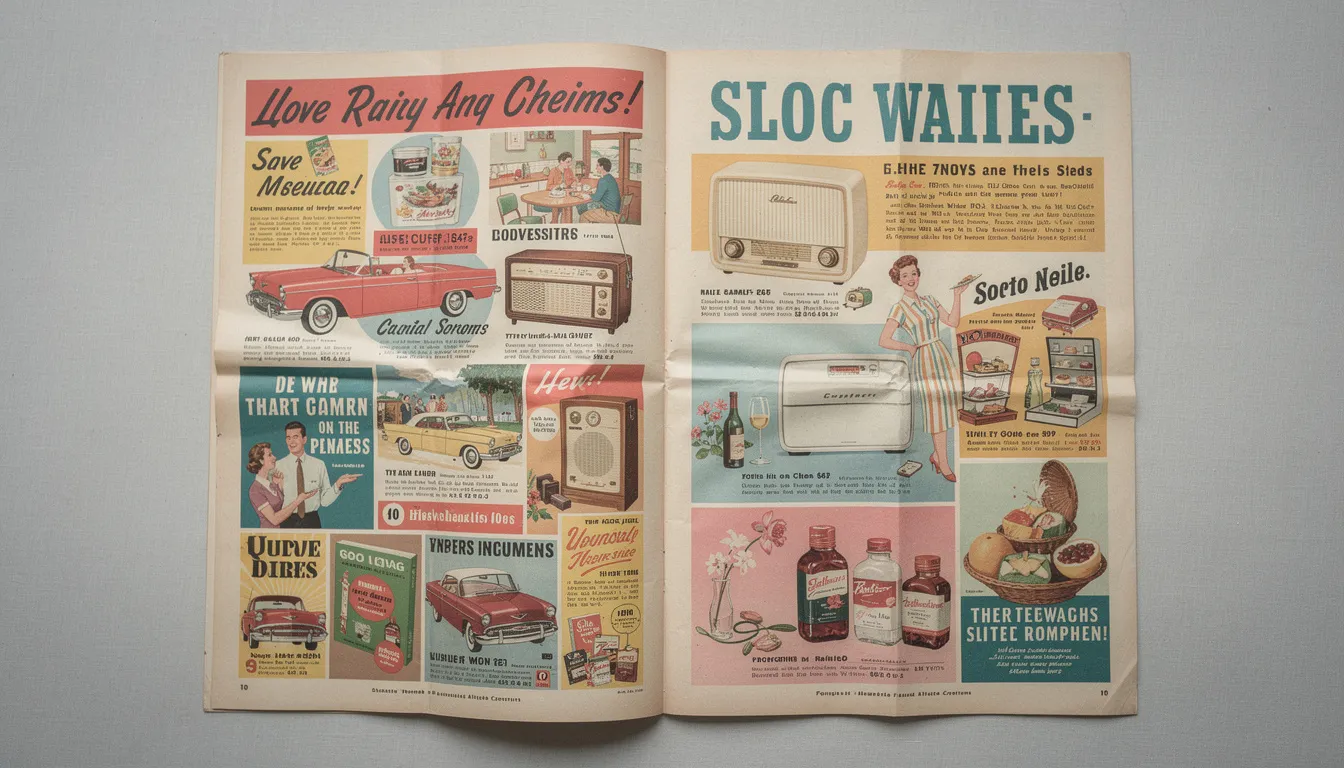
Newspaper advertisements typically featured typography-focused designs promoting local businesses, with less color but often greater historical specificity regarding regional commerce. These pages document community commercial life in ways glossy national magazines cannot capture.
The variety of product categories-automotive, fashion, tobacco, household goods-allows collectors to specialize based on personal interest, with certain categories like vintage automobile ads commanding premium prices among enthusiasts.
Advertising Posters and Billboards
Large-format promotional posters for products, travel destinations, and entertainment represent the premium segment of vintage advertising collecting. Stone lithography and screen printing techniques created vibrant colors that remain striking over a century later.
Famous poster artists like Alphonse Mucha, whose Art Nouveau designs promoted everything from theatrical productions to cigarette papers, elevated advertising to recognized art form. American illustrators including Norman Rockwell created images that transcended their commercial purpose to become cultural touchstones.
Travel posters from the 1920s-1960s showcasing destinations through idealized imagery have become particularly desirable, with examples from this type frequently appearing in design publications and home decor settings.
Promotional Materials and Ephemera
Trade cards, postcards, and product packaging from the 1880s-1950s constitute advertising ephemera-materials originally intended as disposable but now valued for their rarity and craftsmanship. Victorian-era tobacco and soap companies produced elaborate trade cards that consumers collected, creating early examples of promotional marketing.
Point-of-sale displays, signs, and branded merchandise add three-dimensional variety to collections focused primarily on paper items. These pieces often survived in smaller quantities, making authenticated examples particularly valuable.
The range of formats-from pocket-sized trade cards to room-sized displays-offers collectors opportunities to build focused collections around specific eras, products, or artistic styles.
Collecting and Evaluating Vintage Advertising
With format knowledge established, practical collecting requires understanding authentication, condition assessment, and market valuation to build a meaningful collection while avoiding costly mistakes.
Authentication and Condition Assessment
Authentication becomes crucial when evaluating potentially valuable pieces, particularly vintage advertising posters and rare magazine ads from desirable periods.
Examine paper quality for age-appropriate characteristics-genuine vintage paper feels different from modern reproductions and shows natural aging patterns
Check printing techniques using magnification to identify period-appropriate methods versus modern printing dots or glossy finishes that indicate reproductions
Verify publication dates and historical accuracy of depicted products against documented timelines
Consult expert resources, auction house specialists, and provenance documentation for significant purchases
Condition assessment follows standard grading terminology: mint (unused original condition), excellent (minimal wear), good (some age-appropriate wear), and fair (significant damage but displayable). The result of condition grading directly impacts value, with mint examples often commanding multiples of good-condition pricing.
Value Comparison by Category
Vintage Advertising Value Comparison Table
Category |
Rarity Level |
Price Range |
Best Examples |
|---|---|---|---|
Magazine Ads |
Common-Moderate |
$5-$200 |
Coca-Cola, automotive, fashion |
Poster Art |
Moderate-High |
$100-$5000+ |
Travel, entertainment, Art Deco |
Trade Cards |
High |
$10-$500 |
Victorian tobacco, soap, patent medicine |
Magazine advertisements offer the most accessible entry point, allowing new collectors to explore different eras and product categories without significant investment. A collection of automotive ads from the 1950s-1960s can be assembled affordably while providing genuine historical and aesthetic value.
Poster art requires larger budgets but delivers dramatic visual impact. Collectors often set price limits per piece, gradually acquiring significant examples while passing on overpriced items.
Trade cards and ephemera reward patience and research, as knowledgeable collectors find undervalued pieces at estate sales and antique shops where sellers may not recognize specific value factors.
Common Challenges and Solutions
Understanding typical obstacles helps collectors protect investments and build satisfying collections.
Paper Deterioration and Preservation
Store items in acid-free folders and boxes away from direct sunlight, humidity, and temperature fluctuations. Even common magazine ads benefit from basic archival protection that costs little but prevents significant damage over time.
Use archival-quality mounting materials for display purposes-never laminate or use adhesive tapes on valuable pieces. Professional framing with UV-protective glass allows safe display while preserving condition.
Reproduction and Authenticity Issues
Learn period-appropriate printing techniques for each era you collect. Victorian lithography, mid-century color photography, and various paper stocks each have identifiable characteristics that separate originals from reproductions often found on platforms like Flickr or sold as decorative prints.
Build relationships with reputable dealers and auction houses who stand behind authenticity. Online auction results provide pricing benchmarks, but filter purchases through verification before committing significant funds.
Market Valuation Fluctuations
Focus collection building on personal enjoyment rather than pure investment speculation. Nostalgia-driven markets fluctuate as different eras cycle through popularity among decorators and collectors.
Research completed sales on auction sites and post your questions in collector forums where experienced members share market knowledge. Price guides provide baseline information, but active market participation reveals current trends.
Conclusion and Next Steps
Vintage advertising represents a perfect intersection of art, history, and commerce, offering collectors tangible connections to past eras while showcasing the evolution of graphic design and marketing technique. Whether drawn to Victorian ornate illustrations, Art Deco geometric boldness, or mid-century photographic sophistication, this field accommodates diverse interests and budgets.
Immediate next steps:
Visit local antique shops and estate sales to examine authentic pieces firsthand
Join online collector forums to learn from experienced enthusiasts
Start affordably with magazine advertisements from your preferred era
Document acquisitions with photos and provenance information
Invest in basic archival storage before expanding your collection
Related topics worth exploring include advertising history research through university archives, graphic design evolution and its commercial applications, and focused collecting around specific brands or product categories that hold personal significance.
Additional Resources
Price Guides and Market Research
Completed auction results on major platforms provide current market pricing
Specialty price guides covering specific categories like tobacco advertising or travel posters
Museum exhibition catalogs documenting significant pieces and historical context
Collections and Archives
Smithsonian American History Museum advertising collection
Duke University digital advertising archives
Library of Congress print and photograph collections
Conservation Services
American Institute for Conservation member directory for professional preservation
Archival supply companies offering acid-free storage materials
Professional framing services specializing in works on paper





