Introduction
Vintage kitchen wall decor brings warmth and character to cooking spaces through carefully selected artwork, signage, and decorative elements that reference beloved design eras while working seamlessly with modern appliances. This approach to kitchen decor allows homeowners to infuse their walls with nostalgia and personal style without undertaking major renovations.
This guide covers art prints, canvas pieces, metal signs, and wall-mounted displays that create cozy, inviting atmospheres. We’ll explore how to select, place, and style these elements while avoiding topics like cabinetry changes or structural modifications. Whether you’re enhancing a farmhouse kitchen, updating a contemporary space, or adding charm to a small room, you’ll find practical strategies for incorporating vintage pieces that feel authentic rather than costume-like.
Vintage kitchen wall decor combines nostalgic design elements-botanical prints, hand-lettered signage, and retro typography-with contemporary durability and mounting systems that protect your investment from kitchen moisture and heat.
By the end of this article, you will:
Understand key vintage style periods and their defining visual characteristics
Select artwork at appropriate scales for your wall space and ceiling height
Create cohesive color schemes that enhance existing fixtures and countertops
Balance old-world elegance with modern functionality
Solve common placement challenges specific to kitchen environments
Understanding Vintage Kitchen Aesthetics
Vintage kitchen style refers to design elements that reference specific historical periods while serving contemporary needs for durability, cleanability, and visual appeal. This approach differs from true antique collecting-instead, it draws inspiration from past eras to create spaces that feel lived-in, meaningful, and adorned with personal history.
The relevance extends beyond mere decoration. A vintage kitchen with thoughtfully chosen wall decor becomes a warm gathering place where cooking feels less like a chore and more like a connection to tradition. The walls tell a story, whether through botanical illustrations that evoke grandmother’s herb garden or typography that recalls classic neighborhood cafes.
Historical Design Periods
The 1920s through 1940s farmhouse era introduced enamelware motifs, detailed botanical illustrations, and hand-lettered signage crafted with care and attention to detail. This period’s aesthetic emphasized practical beauty-art that depicted the foods being prepared, the herbs being grown, and the values of home cooking. Muted earth tones, cream backgrounds, and weathered finishes define this look, creating rustic charm that remains admired today.
The 1950s and 1960s brought mid-century modern sensibilities to kitchen spaces, featuring clean typography, geometric patterns, and optimistic color palettes of bright teal, mustard yellow, and coral. This era celebrated progress and domesticity simultaneously, producing wall decor that feels both cheerful and sleek. Printed materials from this period often featured bold coffee advertisements, stylized cooking illustrations, and nature-inspired abstract forms.
Understanding these periods helps inform contemporary wall decor choices. When you recognize what makes 1940s botanical prints different from 1960s geometric patterns, you can curate a collection that feels authentic rather than randomly assembled, giving your vintage kitchen its own personality.
Color Palette Foundations
Vintage wall decor succeeds when colors complement existing kitchen elements rather than competing with them. Muted earth tones-sage greens, warm browns, and soft terracotta-work beautifully with natural wood cabinetry and copper pots displayed on open shelving. Creamy whites and weathered pastels create bright, airy backdrops that make colorful artwork pop without overwhelming a small space.
Historical periods directly influence color selection. Farmhouse-era prints favor greens, browns, and cream, while mid-century pieces embrace bolder combinations of gold, teal, and coral. A gorgeous French country aesthetic leans toward lavender, butter yellow, and soft blue tones that evoke Provençal landscapes.
Choosing wall art that echoes colors already present in your countertops, fixtures, or glassware creates visual cohesion. This intentional approach to color builds the foundation for selecting specific pieces that enhance rather than clash with your existing interior design.
Selecting Vintage-Inspired Wall Art
With color foundations established, artwork selection becomes a matter of matching subject matter, scale, and quality to your kitchen’s specific character and dimensions. The goal is creating focal points that draw the eye while maintaining the room’s functionality as a cooking space.
Botanical and Herb Prints
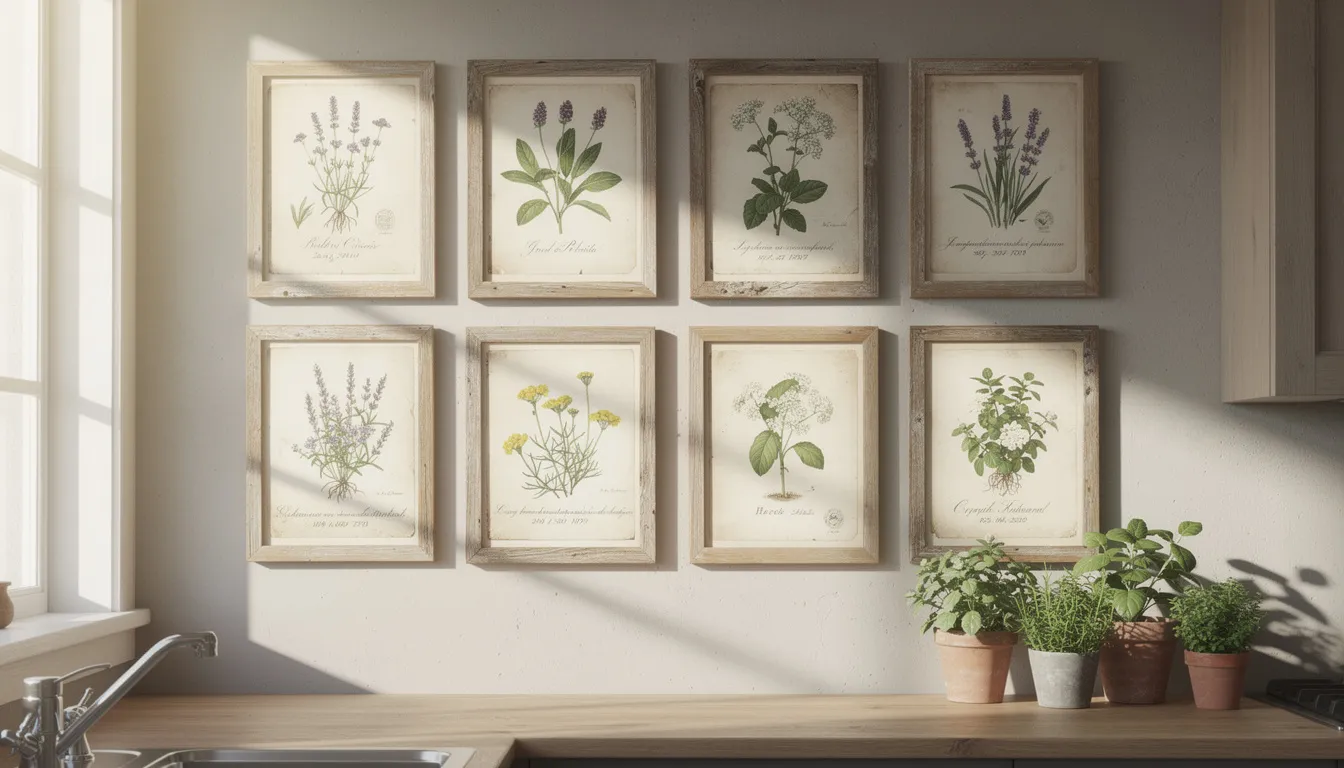
Canvas prints featuring vintage botanical illustrations remain a timeless choice for kitchen walls. These pieces celebrate nature and cooking simultaneously-depicting rosemary, thyme, lavender, and other culinary herbs in the detailed scientific illustration style popular from the 1700s through early 1900s. The connection between wall art and the actual cooking happening below creates a sense of purposeful beauty.
Scale matters significantly when placing botanical prints. Above sinks, medium-sized prints (16x20 inches) work well without interfering with faucet fixtures or windows. Over dining areas, larger statement pieces or grouped collections of smaller prints create visual centerpieces that guests can admire during meals. Near stovetops, placement requires careful consideration of heat-position artwork at least 18 inches away from burners.
Quality printing techniques ensure longevity in kitchen environments where moisture, temperature changes, and cooking residue challenge less durable materials. Look for canvas with moisture-resistant coatings or professionally framed prints behind glass. This investment in quality protects both the artwork’s beauty and your wall surfaces.
Typography and Signage
Hand-lettered quotes, vintage menu boards, and classic cafe signage add personality and warmth that purely visual art cannot achieve. These pieces communicate-welcoming guests, celebrating food, or simply stating “coffee” in gorgeous vintage script. Metal signs with printed retro advertisements bring texture and dimension, while wooden signs with distressed finishes enhance rustic charm.
Typography selections should complement botanical prints through coordinated color schemes and framing choices. A farmhouse kitchen might pair herb illustrations in weathered wood frames with a hand-painted “Farm Fresh” sign in matching cream and sage tones. Mid-century spaces work beautifully with sleek black frames unifying geometric prints and bold typographic art.
For readability and visual impact, consider viewing distance. Large quote signs (24 inches or more) create statement pieces visible from across the room, while smaller typographic accents work best at close range-above a coffee station, for example, where the detail can be appreciated.
Abstract and Geometric Elements
Mid-century inspired geometric prints bridge vintage charm with contemporary kitchen designs featuring stainless steel appliances and sleek countertops. These pieces-featuring circles, triangles, and organic shapes in warm color palettes-feel both retro and fresh, adding allure without appearing dated.
The key lies in balancing representational botanical art with abstract elements. A gallery wall might feature three botanical prints alongside one geometric piece, creating visual interest through variety while maintaining cohesion through shared colors. This approach prevents spaces from feeling too literal or theme-heavy while still communicating the vintage aesthetic.
Abstract selections particularly suit kitchens where homeowners want vintage warmth without overt nostalgia. The mood shifts from “grandmother’s kitchen” to “design-forward space with heritage appreciation”-a distinction that matters for personal expression and resale value alike.
Strategic placement of these varied artwork styles transforms walls from afterthoughts into curated displays that reflect careful attention to interior design principles.
Strategic Placement and Styling Techniques
Selecting beautiful artwork represents only half the challenge. Placement determines whether individual pieces create cohesive impact or visual confusion. Kitchen spaces present unique challenges-competing with appliances, navigating around windows and cabinetry, and accounting for practical cooking needs.
Gallery Wall Arrangements
Gallery walls work best on larger uninterrupted wall sections, often in eat-in kitchen areas or above banquette seating where they can be admired without interfering with cooking activities. These arrangements create focal points that anchor dining room-adjacent spaces and display collections with sophistication.
Follow these steps for successful gallery wall creation:
Plan your complete layout on the floor before hanging anything, arranging and rearranging until the composition feels balanced
Maintain 2-3 inch spacing between frames for cohesive appearance that allows each piece room to shine while creating unified display
Use paper templates cut to frame dimensions, tape them to walls, and step back repeatedly to assess visual impact before committing to hardware installation
Consider sight lines from multiple kitchen work areas-the prep zone, cooking station, and seating areas all offer different viewing angles
Start hanging from the center outward, using a level to ensure straight lines that prevent the casual charm from tipping into careless appearance
Style Integration Comparison
Different kitchen styles call for different vintage wall decor approaches. Understanding these relationships helps readers choose combinations that enhance existing design elements.
Kitchen Style |
Artwork Focus |
Frame Selection |
Color Approach |
|---|---|---|---|
Farmhouse Modern |
Botanical prints, herb illustrations |
Weathered wood, white frames |
Sage greens, cream, soft browns |
Mid-Century Revival |
Geometric patterns, clean typography |
Thin black or brass frames |
Mustard yellow, teal, warm grays |
French Country |
Lavender fields, vintage labels |
Ornate gold, distressed frames |
Lavender, butter yellow, soft blues |
This synthesis helps homeowners select combinations that enhance existing kitchen design without competing with appliances or cabinetry. A farmhouse kitchen with white shaker cabinets welcomes weathered frames and muted botanical tones, while a mid-century space with walnut cabinetry pairs beautifully with thin brass frames and bold geometric prints.
The goal is creating harmony between wall decor, fixtures, lighting, and functional elements like cake stands and displayed copper pots. When everything works together, the vintage kitchen feels intentionally designed rather than randomly decorated.
Common Challenges and Solutions
Incorporating vintage wall decor in kitchens presents practical obstacles beyond typical room decorating. Cooking environments demand solutions that address moisture, heat, and the visual competition of modern appliances.
Moisture and Heat Damage
Kitchen humidity from boiling water, dishwasher steam, and general cooking activity threatens paper-based artwork and unprotected frames. Choose canvas prints with moisture-resistant coatings for areas near sinks. Metal signs and properly sealed wood pieces offer durable alternatives that age gracefully rather than deteriorating.
Position all artwork at least 18 inches away from cooking surfaces to prevent heat damage and grease accumulation. This practical spacing protects your investment while maintaining visual impact-stepping back from the stovetop actually improves viewing angles for most wall placements.
Scale Mismatches
One of the most common mistakes involves selecting artwork too small for the available wall space, creating a timid appearance rather than the bold statement vintage decor deserves. Use painter’s tape to outline proposed artwork dimensions on walls before shopping, living with the proposed scale for several days before committing.
Consider ceiling height and cabinet proportions when selecting oversized statement pieces. A gorgeous 36-inch botanical print becomes overwhelming in an 8-foot ceiling galley kitchen but works perfectly in open-concept spaces with 10-foot ceilings. The relationship between art scale and architectural proportions determines whether pieces feel curated or cramped.
Clashing with Modern Appliances
Stainless steel refrigerators and sleek range hoods can overwhelm delicate vintage aesthetics if wall decor doesn’t hold its own. Select artwork with neutral backgrounds-creams, taupes, soft grays-that complement contemporary finishes rather than fighting them. Warm metallic frames in gold or brass bridge the gap between vintage charm and modern fixture finishes.
The solution isn’t hiding appliances but creating visual balance. A well-scaled vintage piece draws the eye deliberately, making the stainless steel recede into supporting role rather than dominating the space.
Conclusion and Next Steps
Vintage kitchen wall decor succeeds through thoughtful period selection, appropriate scale, and quality materials that withstand kitchen environments while delivering the timeless design homeowners seek. The approach transforms functional cooking spaces into warm, personality-filled rooms that invite lingering over morning coffee and become natural gathering places for family and guests.
To begin your vintage kitchen transformation:
Measure available wall space and note ceiling heights to guide artwork scale decisions
Identify your preferred vintage period-farmhouse, mid-century, or French country-based on existing kitchen elements
Select 2-3 core colors from your countertops, cabinetry, or fixtures to ensure new pieces integrate seamlessly
Shop for one statement piece first, building your collection gradually rather than attempting complete transformation at once
Consider seasonal rotation possibilities as your collection grows. A shelf displaying vintage Christmas plates in December can showcase spring botanicals by April, keeping your kitchen decor fresh while honoring the tradition of thoughtful gift-giving to yourself. Pieces collected during travels or inherited from family members add meaning beyond mere decoration, transforming walls into personal galleries that tell your story.
The beauty of vintage kitchen wall decor lies in its flexibility. Unlike major renovations, artwork and signage can evolve with your tastes, making this approach both practical and endlessly customizable. Start with pieces that speak to you, place them with care, and watch your kitchen develop the timeless charm and warmth that makes cooking feel like coming home.