


Japanese wall art has a long history that continues to inspire people across the world. From detailed woodblock prints to expressive ink paintings, the art of Japan captures nature, life, and tradition in ways that remain timeless. These works do more than decorate walls. They carry stories, scenes, and moments that connect us to a culture shaped by mountains, seas, and the changing seasons.
Japanese Paintings of Mountains
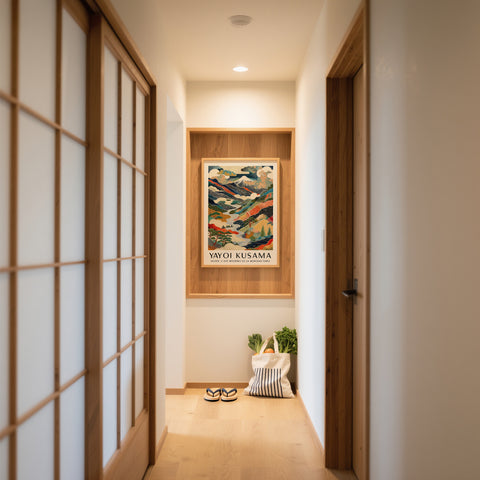
Mountains are central to many Japanese paintings. Artists often depicted peaks rising through morning mist or covered in autumn colors. Mountain passes and bridges became common subjects, showing how nature and human life meet. These images are not only landscapes but also reflections of life’s paths, marked by both calm and challenge.
Japanese Art
Japanese art developed across many centuries, blending painting, prints, calligraphy, and folding screens. Ink monochrome styles emphasized simplicity, while later painters used color on paper and canvas to capture vivid scenes of tea houses, villages, and nature. From Kyoto, the former capital, to Tokyo, the current one, artists created works that recorded both daily life and famous places.
Japanese Prints
Japanese prints, especially woodcut styles, allowed many artists to share their work widely. Print series like the Fifty Three Stations and the Sixty Nine Stations recorded travel routes, bridges, and villages. These prints were collected in Japan and later inspired painters in Europe. Van Gogh, for example, studied Japanese prints closely and copied their style into his own painting.
Shin-hanga and Modern Japanese Art Prints
In the early twentieth century, the shin-hanga movement brought a modern approach to Japanese artwork prints while preserving traditional woodblock techniques. Artists such as Ohara Koson became known for refined nature studies, especially birds, flowers, and quiet seasonal scenes. These prints balanced craftsmanship with a softer, more atmospheric style that appealed to collectors in Japan and abroad.
Photographer and publisher Ogawa Kazumasa also played an important role in shaping modern Japanese art prints. His work combined photography and printmaking to document landscapes, gardens, and cultural scenes, helping to bridge traditional Japanese art with newer visual forms. Together, shin-hanga artists and publishers expanded how Japanese art posters and prints were created, shared, and appreciated.
Mountain Landscape
The mountain landscape has been one of the most lasting themes in Japanese wall art. Images of dawn breaking over peaks, autumn trees at the base, or a sea crashing against cliffs all show the deep link between nature and art. Mountains often appeared in the foreground or background, framing life in villages and tea houses.
Woodblock Prints
Woodblock prints made it possible for many people to enjoy Japanese art. Artists carved designs into wood, applied black ink or color, and pressed them onto paper. These prints captured everything from daily scenes to dramatic views of nature. Series such as Thirty Six Views remain some of the most recognized collections today.
Mount Fuji
No subject is more iconic than Mount Fuji. This peak has been painted in every season, from snowy winter to bright red Fuji in October. It has been shown with moonlit skies, misty mornings, and clear dawns. Fuji became a symbol of Japan, and many masterpieces were created to capture its form.
Katsushika Hokusai
Among Japanese painters, Katsushika Hokusai stands out as a master. His Thirty Six Views of Mount Fuji print series remains one of the most famous. Hokusai’s prints, like the Great Wave and Red Fuji, combined bold style with close attention to nature. His work inspired many artists around the world and continues to influence how mountains and seas are captured on paper.
Folding Screens
Folding screens were both functional and artistic. Painted with scenes of trees, tea houses, and villages, they added color and style to rooms. Many artists used folding screens to show seasonal changes, creating scenes that stretched across multiple panels. These works combined painting with interior design, blending art into daily life.
Famous Places
Japanese art often highlighted famous places, from bridges and villages to city streets in Kyoto and Tokyo. Artists created series dedicated to travel, capturing the life of two men on the road or the view from a mountain pass. These works serve as both records of history and works of art that connect life and landscape.
Morning Mist
Scenes of morning mist often appear in Japanese wall art. Painters used ink to soften mountains, trees, and rivers, giving the feeling of dawn slowly lifting. Black ink on paper captured these moments with simplicity, while color prints added depth to the atmosphere. Morning mist became a way to show both nature and the passing of time.
Van Gogh
Van Gogh studied Japanese prints closely. He admired the way Japanese painters and printmakers captured nature with bold lines and strong colors. His paintings often included trees, bridges, and mountains in styles that reflected his study of Hokusai’s prints. This influence shows how Japanese art spread beyond Japan, shaping Western painting in lasting ways.
Four Seasons
The four seasons are central to Japanese wall art. Spring brought cherry blossoms, summer showed green forests, autumn added red leaves, and winter placed snow over villages and mountains. Artists captured these seasonal shifts not only in landscapes but also in daily scenes of tea houses, bridges, and life. The seasons gave rhythm and depth to the art, reflecting the cycles of nature and time.