Introduction
Japanese artwork for sale spans from museum-quality prints to affordable wall art, with the most accessible options for modern home spaces found through specialized online retailers, art print marketplaces, and galleries focusing on contemporary Japanese-inspired design. Whether you’re seeking traditional woodblock prints or minimalist interpretations of Japanese aesthetics, today’s market offers thousands of options across every price point and format.
Authentic Japanese artwork can be purchased through specialized online galleries, US-based shops, and direct Japanese marketplaces.
This guide covers contemporary Japanese-inspired prints, traditional motif reproductions, and modern interpretations available as stretched canvas, framed prints, and poster formats suitable for residential and studio display. The focus remains on decorative art for living spaces rather than investment-grade originals or antique collection pieces. Design-conscious buyers seeking Japanese aesthetic elements-whether for a first apartment or a curated home office-will find practical guidance here.
Japanese art matters for contemporary interiors because it delivers visual impact through restraint. The balance between negative space and bold imagery, the reverence for nature, and centuries of refined composition techniques translate remarkably well to modern minimalist spaces. These artworks bridge culture and functionality, serving as conversation pieces that don’t overwhelm a room.
From this article, you’ll gain:
Clear understanding of major Japanese art styles and their contemporary applications
Knowledge of quality indicators that separate lasting prints from disposable decor
Realistic price range expectations for different formats and quality levels
Practical guidance for matching artwork scale and style to your specific spaces
Confidence in evaluating online sellers and making informed purchasing decisions
Where to Buy Japanese Artwork Online
Finding reputable sources is essential when purchasing Japanese artwork online. Here are some of the most respected platforms and galleries offering authentic and contemporary Japanese art for sale:
Ronin Gallery: Offers a wide selection of Ukiyo-e and contemporary Japanese art.
Artsper: Features a variety of contemporary Japanese artists.
Tokaido Arts: Located in San Francisco's historic Japan Center, this gallery offers Japanese woodblock prints from historical periods to the 21st century.
TRiCERA: One of Asia's largest art platforms, featuring high-quality pieces from both renowned and emerging Japanese artists.
The Art of Japan: Specializes in fine Japanese prints and paintings from the 18th–20th centuries.
Artsy: Partners with high-end Japanese galleries and institutions to list fine art.
SBI Art Auction: A major Tokyo-based auction house for modern and contemporary Japanese art.
Saatchi Art: Connects Japanese artists with global collectors, handling logistics and offering advisory services.
Artelino: An online auction platform specializing in Japanese prints.
Moonlit Sea Prints: Focuses on Japanese woodblock prints with expert guidance.
Mercari and Rakuma: Large Japanese C2C marketplaces for finding various art items at often lower costs.
Artistics: Offers a collection of Japanese paintings available for purchase.
Art.com: Provides options for framed artwork and canvas wall art.
General Online Retailers: Japanese wall art prints are available for purchase online at multiple retailers, offering a wide range of styles and price points.
These platforms provide access to both traditional and contemporary Japanese artwork, ensuring options for every collector and design preference.
Understanding Japanese Art Styles for Contemporary Spaces
Japanese aesthetic principles center on minimalism, natural forms, balanced composition, and restrained color palettes. These elements-developed over centuries of artistic tradition in Japan-translate directly to contemporary interior design, making Japanese painting and prints particularly versatile for modern homes.
Japanese art is renowned for its intricate designs and rich history. It depicts thousands of years of culture in beautiful imagery, and has been shaped by centuries of isolation, leading to a unique artistic style that stands apart from other world traditions.
Traditional Motifs in Modern Prints
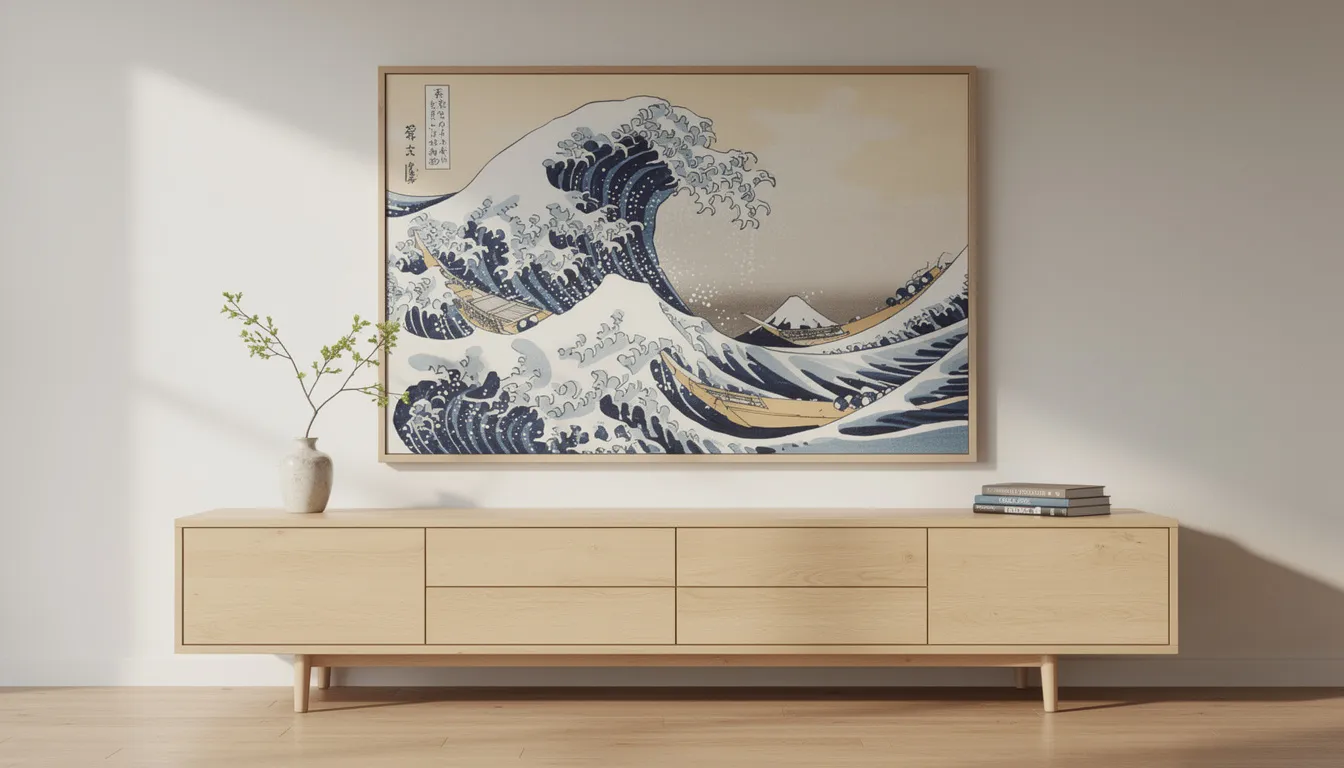
The influence of ukiyo-e woodblock prints remains the dominant force in Japanese art available for home purchase today. Artists like Hokusai created images so iconic-particularly “The Great Wave off Kanagawa”-that they’ve become shorthand for Japanese visual culture worldwide. Contemporary prints frequently reinterpret these historical works, offering everything from faithful reproductions to bold reimaginings.
Cherry blossoms, ocean waves, Mount Fuji, and geometric patterns derived from textile traditions form the core visual vocabulary. Cranes, koi fish, and bamboo forests appear across countless artworks, each carrying symbolic weight within Japanese culture. These traditional elements connect modern buyers to centuries of artistic heritage while fitting seamlessly with contemporary design sensibilities-their clean lines and natural subjects complement rather than compete with modern furniture and architecture.
Contemporary Japanese-Inspired Design
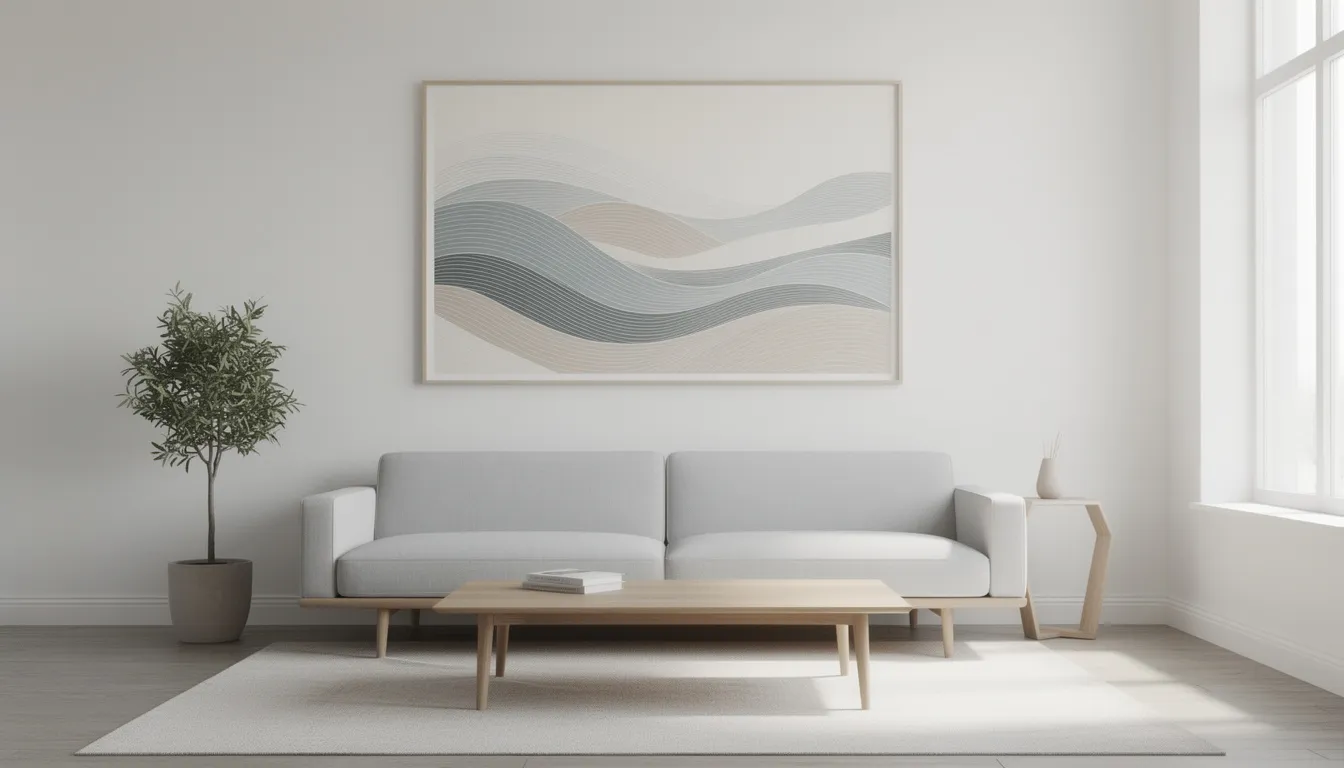
Modern interpretations of Japanese aesthetics often strip traditional motifs to their essential forms. Abstract representations might reduce a cherry blossom branch to a few curved lines and soft pink accents, or translate the energy of Hokusai’s waves into geometric patterns. This minimalist approach has driven significant interest from buyers in Europe and across the world seeking art that feels both culturally rich and visually restrained.
Contemporary artists working in this space blend traditional Japanese painting techniques with modern graphic design, creating works that honor their sources while speaking a universal visual language. These pieces particularly suit homes where bold traditional imagery might feel too literal or thematic-they offer the Japanese aesthetic without announcing it.
Types of Japanese Artwork Available for Purchase
The format you choose for Japanese wall art affects everything from visual impact to longevity and price. Understanding your options helps match the artwork to both your space and your budget.
Art Prints and Posters
High-quality reproduction prints represent the most accessible entry point for collecting Japanese artworks. Professional giclée printing on archival paper captures the subtle gradations and vibrant colors of original woodblock prints and paintings with remarkable fidelity. Paper quality varies significantly-look for acid-free, cotton-rag papers rated for archival longevity if you’re investing in pieces for long-term display.
Traditional Japanese prints often featured specific paper textures that contributed to their visual character. Better reproduction services use papers that approximate these textures, from smooth finishes for graphic work to slightly textured stocks for traditional ukiyo-e reproductions. The difference between a twenty-dollar poster and a hundred-dollar art print often lies entirely in these material choices.
Canvas and Framed Options
Stretched canvas prints offer ready-to-hang convenience, eliminating framing costs and decisions. The texture of canvas can complement traditional Japanese painting styles, though it may feel less authentic for woodblock print reproductions that originally existed on paper. Canvas works particularly well for larger formats where framing costs would add significantly to the purchase price.
Pre-framed options have multiplied across online retailers, with frames ranging from simple black gallery profiles to natural wood finishes that echo traditional Japanese aesthetics. Sizing options now cover everything from small accent pieces to statement works spanning several feet-critical flexibility given the range of room types and wall dimensions in modern homes.
Digital and Minimalist Interpretations
Contemporary graphic approaches to Japanese themes have exploded in popularity, particularly among younger buyers seeking art that bridges cultural appreciation with modern taste. These works might exhibit a bold orange sunset behind stylized mountains or reduce traditional scenes to near-abstract color fields. Many originate from independent artists selling through print-on-demand platforms, offering unique perspectives unavailable through traditional art channels.
This category also includes photography of Japan-serene temple gardens, neon-lit Tokyo streets, misty mountain landscapes-that captures the country’s aesthetic without reproducing traditional art forms. For buyers wanting Japanese-inspired atmosphere without explicit cultural imagery, these alternatives offer compelling options.
Evaluating Quality and Authenticity When Buying
Quality assessment matters enormously for artwork intended for long-term display. The difference between prints that fade within months and those that maintain their vibrancy for decades often isn’t visible at the time of purchase.
Key Quality Indicators
When print quality matters most-which is any time you’re spending more than basic poster prices-examine these key quality indicators:
Paper weight and composition: Archival papers typically start at 200+ gsm (grams per square meter), with premium options reaching 300+ gsm. Cotton rag content indicates better longevity than wood pulp papers.
Ink fade resistance: Pigment-based inks resist fading far longer than dye-based alternatives. Reputable sellers specify ink type; if they don’t mention it, assume dye-based.
Color accuracy: Quality reproduction requires careful color matching to source artwork. Reviews and return policies help protect against prints that arrive with inaccurate colors.
Edge finishing and margins: Clean, precise trimming and appropriate margins indicate professional production. Ragged edges or cramped borders suggest cost-cutting.
Print resolution: Enlarged prints require high-resolution source files. Pixelation or blur indicates insufficient resolution for the chosen size.
Price and Value Comparison
Format |
Price Range |
Best Use Case |
Longevity |
|---|---|---|---|
Basic posters |
$10-30 |
Temporary display, rentals |
1-3 years before fading |
Quality art prints |
$40-150 |
Long-term home display |
20+ years with proper care |
Stretched canvas |
$60-300 |
Large format, no-frame solution |
15+ years |
Framed prints |
$80-400+ |
Gallery-ready presentation |
25+ years |
Limited editions |
$200-1000+ |
Serious collection building |
Archival indefinitely |
Choosing among these options depends on your intended use and budget. Buyers furnishing their first home might reasonably start with quality art prints, investing in framing later or selecting pieces that come ready to hang. Those building a collection over time may choose fewer, higher-quality pieces. For rental properties or spaces you’ll redesign within a few years, basic posters serve adequately without significant investment. |
Assessing Seller Credibility
Practical steps for assessing online art retailers begin with review examination-look specifically for reviews mentioning print quality, accurate color reproduction, and packaging. Legitimate sellers provide clear information about printing methods, paper specifications, and return policies. Be wary of sellers with only product photos and no production details.
Check whether the seller has a phone number, physical address, or business registration information visible on their website. Established art print services typically offer satisfaction guarantees; absence of any return policy signals risk. For higher-priced items, don’t hesitate to contact sellers directly with questions-their responsiveness indicates customer service quality.
Common Challenges and Solutions
Matching Art Scale to Room Size
Artwork that looks substantial on a website often arrives feeling small against an actual wall. The standard guideline suggests artwork should fill 60-75% of available wall width above furniture. For a sofa spanning 84 inches, the art above it should measure roughly 50-63 inches wide. Single pieces work best when they’re at least 40% of furniture width; below that threshold, consider a grouping instead.
Before ordering, tape the artwork dimensions on your wall using painter’s tape. Live with that rectangle for a day or two, viewing it from your normal positions in the room. This simple step prevents the most common sizing regret.
Color Coordination with Existing Decor
Japanese art ranges from neutral ink washes to vibrant polychromatic scenes. For rooms with existing bold colors or patterns, traditional sumi-e ink paintings or monochromatic prints create harmony without competition. Spaces with neutral palettes can support more colorful pieces-perhaps cherry blossoms in soft pink or Hokusai’s iconic blue waves.
Consider the undertones already present in your space. Warm-toned rooms (cream walls, wood floors) pair naturally with art featuring warm accents. Cool-toned spaces with gray walls and chrome fixtures complement the blue and gray palettes common in traditional Japanese prints.
Verifying Seller Authenticity and Quality
Practical steps for assessing online art retailers begin with review examination-look specifically for reviews mentioning print quality, accurate color reproduction, and packaging. Legitimate sellers provide clear information about printing methods, paper specifications, and return policies. Be wary of sellers with only product photos and no production details.
Check whether the seller has a phone number, physical address, or business registration information visible on their website. Established art print services typically offer satisfaction guarantees; absence of any return policy signals risk. For higher-priced items, don’t hesitate to contact sellers directly with questions-their responsiveness indicates customer service quality.
Conclusion and Next Steps
Japanese artwork offers versatile design solutions for modern spaces when quality and scale receive proper consideration. The combination of centuries-refined aesthetics with contemporary production methods means buyers can access work that enhances their homes without requiring museum-level budgets or specialized knowledge.
To move forward effectively:
Measure your intended wall space and calculate the appropriate artwork dimensions using the 60-75% guideline.
Identify your preferred style category-traditional prints, contemporary interpretations, or photography.
Research 2-3 sellers with clear quality specifications and favorable reviews before purchasing.
Consider starting with a single quality piece rather than multiple budget options.
Related topics worth exploring include framing options that complement Japanese aesthetics (simple profiles in black or natural wood), art placement techniques for optimal viewing height and lighting, and strategies for building cohesive gallery walls that incorporate Japanese pieces alongside other types of artwork in your collection.