Introduction
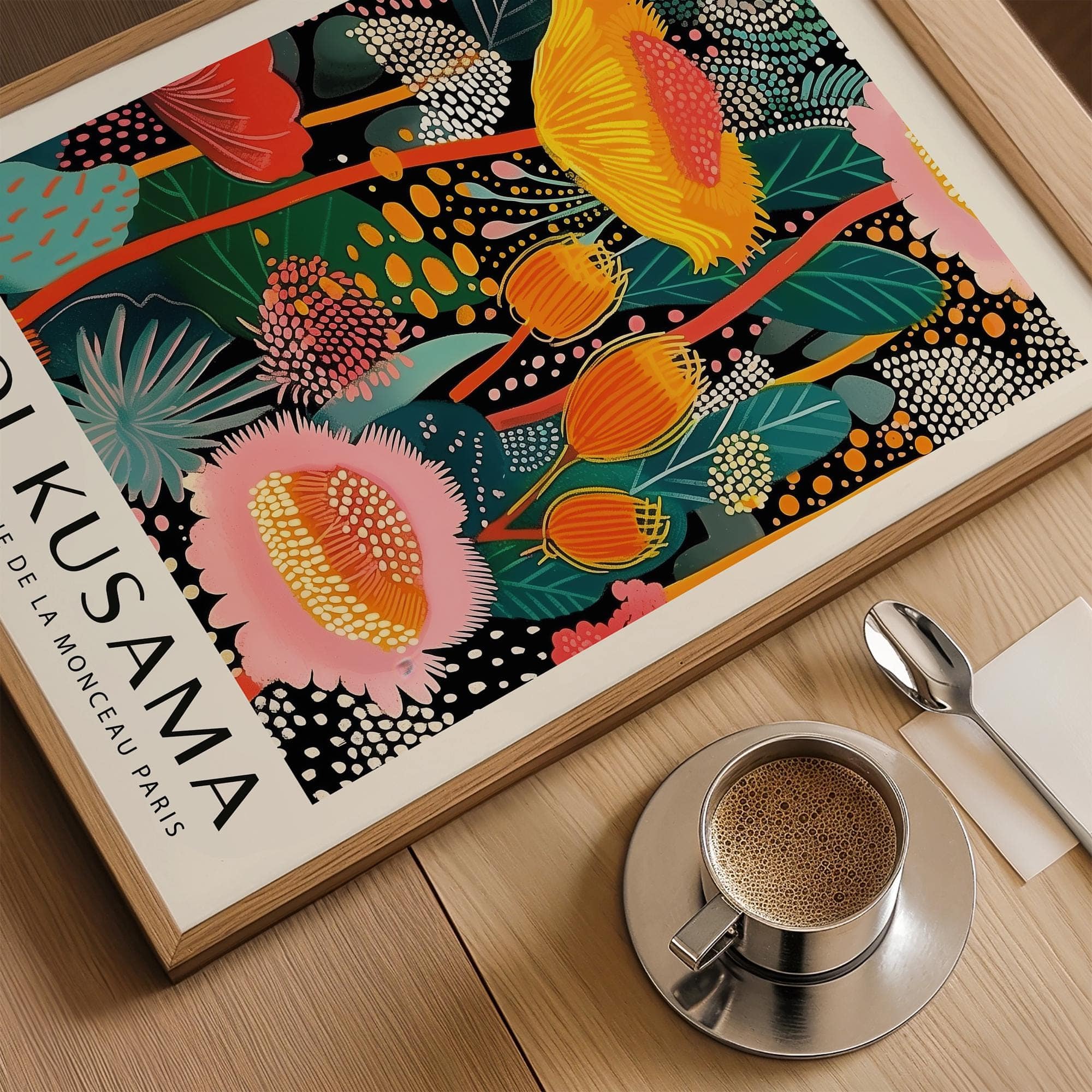
Posters are a versatile form of visual communication that combine large-scale graphics and concise text to convey messages. Posters are printed visual displays designed to communicate messages, showcase art, or decorate spaces through a combination of images, typography, and graphics. Whether you’re looking to create a stunning gallery wall, find the perfect art prints for your bedroom, or design a custom poster for an event, understanding poster fundamentals helps you make informed decisions that match your personal style and space requirements.
This guide is ideal for home decorators, art enthusiasts, and anyone interested in creating or displaying posters.
This guide covers everything you need to know about poster types, design principles, printing materials, and display techniques. We won’t be addressing large-scale billboard advertising or interactive digital displays-instead, we focus on the prints you’ll hang in your home, office, or give as a gift to friends and family.
Quick answer: Posters are large-format printed materials designed for wall display, typically ranging from 8x10 inches to 27x40 inches, available in various paper types and finishes to suit different aesthetic and functional needs.
By the end of this guide, you will:
Understand the different categories of posters and their ideal applications
Learn essential design principles for creating eye-catching wall art
Know how to choose the right materials and printing methods for quality results
Master display techniques that complement your room and decor
Discover resources to bring your creative vision to life
Understanding Poster Fundamentals
A poster is a printed visual communication medium typically larger than standard photographs or documents, designed for wall mounting and immediate visual impact. These prints serve purposes ranging from interior design enhancement to marketing communications and personal expression, making them versatile tools for transforming any space.
Poster vs Print Distinction
Standard posters are mass-produced prints focused on affordability and accessibility, often printed on lightweight paper stock. Art prints and fine art reproductions, by contrast, use premium materials like archival paper and museum-quality inks designed to last for decades without fading.
The distinction matters when you’re investing in artwork for your home decor. Poster prints work beautifully for trendy designs you might rotate seasonally, while beautiful art prints justify their higher cost when you want pieces that become permanent fixtures reflecting your personality and taste.
Historical Context and Modern Applications
Poster history traces back to the 1840s with the development of lithographic printing, but the medium truly flourished in 1870s Paris when artists like Jules Chéret created colorful advertising posters that transformed city streets into open-air galleries. These early designs inspired generations of artists and established posters as a legitimate art form rather than mere commercial notices.
Today’s poster world spans from vintage-inspired illustrations to contemporary minimalist designs, from concert memorabilia to scandinavian design aesthetics that emphasize clean lines and muted color combinations. The digital printing revolution has democratized poster creation, allowing anyone to upload their images and create custom artwork that captures meaningful moments from their life.
Understanding this rich heritage helps you appreciate why certain styles resonate and how current trends connect to poster-making traditions spanning nearly two centuries.
Types of Posters and Their Applications
Posters are classified by their purpose into promotional, informational, social, or artistic categories.
With foundational knowledge established, exploring specific poster categories reveals which options best suit your needs. Each type serves distinct purposes and works optimally in particular settings throughout your house.
Art and Decorative Posters
Art posters encompass photography prints featuring breathtaking landscapes, abstract compositions with bold colors, nature scenes that bring the outside world indoors, and motivational quotes rendered in creative typography. These pieces serve primarily aesthetic functions, transforming blank walls into expressions of your personal style.
Room-specific applications matter significantly. Bedroom spaces benefit from calming imagery and softer color palettes that promote relaxation, while living areas can handle more dramatic artwork that sparks conversation. A corner that feels empty and forgotten becomes a focal point when anchored by the right piece. Consider the existing decor, furniture colors, and natural lighting when selecting art prints to ensure they complement rather than clash with your established aesthetic.
Informational and Educational Posters
Maps depicting world geography or specific cities like Paris, scientific charts illustrating natural phenomena, infographics presenting complex data visually, and reference materials all fall within this category. These prints combine beauty with utility, serving as both decoration and learning tools.
Professional offices often feature industry-relevant graphics that subtly communicate expertise to clients. Children’s rooms benefit from educational posters covering alphabets, solar systems, or historical timelines that make learning part of daily life. The connection between visual presentation and information retention makes these prints valuable investments for any learning environment.
Custom and Personalized Posters
Custom poster options let you transform personal photos into wall-worthy artwork, create bespoke designs celebrating special dates and family milestones, or commission illustrations reflecting unique interests. This category offers maximum creative freedom and emotional significance.
The personalization benefits extend beyond self-expression. A custom poster featuring wedding photos, travel memories, or children’s artwork makes a meaningful gift that demonstrates thoughtfulness and effort. Browse templates from various services or upload your own images to create something truly one-of-a-kind that no store-bought print can match.
With poster types clarified, understanding how to design effective prints becomes the logical next step.
Poster Design and Creation Process
Building on your knowledge of poster categories, the design process itself determines whether your final product captures attention or fades into the background. Whether you’re creating from scratch or customizing templates, these principles guide successful outcomes.
Design Principles and Best Practices
Effective poster design follows established principles that ensure visual impact regardless of subject matter:
Visual hierarchy and focal points - Arrange elements so viewers’ eyes naturally move from the most important information (typically the headline or central image) through supporting details. Size, contrast, and placement all contribute to guiding attention.
Color scheme selection and contrast - Choose color combinations that evoke appropriate emotions while maintaining readability. Bold colors create energy and excitement; muted palettes suggest sophistication and calm. Ensure sufficient contrast between text and background for legibility.
Typography choices and readability - Select fonts that match your poster’s tone while remaining readable from the intended viewing distance. Limit yourself to two or three complementary typefaces to maintain visual coherence.
White space utilization and layout balance - Resist the urge to fill every inch. Strategic empty space prevents clutter, enhances focus on key elements, and creates a professional appearance that lets your artwork breathe.
Digital Tools and Software Comparison
Selecting the right design platform depends on your skill level, budget, and project requirements.
Criterion |
Canva |
Adobe Creative Suite |
Online Print Services |
|---|---|---|---|
Ease of Use |
Beginner-friendly drag-and-drop |
Steep learning curve |
Very simple templates |
Templates |
Extensive library |
Limited but customizable |
Design-specific options |
Cost |
Free tier available |
Monthly subscription |
Included with printing |
Output Quality |
High-resolution exports |
Professional-grade |
Varies by service |
For beginners seeking inspiration without technical complexity, Canva and similar platforms offer thousands of templates you can customize with your own images and text. Professionals requiring maximum creative control gravitate toward Adobe software despite the higher cost. Many printing services include simple design tools that streamline the workflow from creation to delivery with fast shipping options. |
Your tool choice directly affects printing considerations, which we’ll explore next.
Materials, Printing, and Quality Considerations
The design only represents half the equation-material and printing choices determine how your poster looks and lasts in real-world conditions. Understanding these factors helps you make informed decisions aligned with your quality expectations and budget.
Paper Types and Finishes
Paper selection significantly impacts both appearance and durability. Matte finishes eliminate glare, making them ideal for spaces with significant natural lighting and photographs where subtle details matter. Glossy finishes enhance color vibrancy and create visual pop but show fingerprints and reflections more readily.
Weight specifications indicate paper thickness and perceived quality. Standard posters often use 100lb (148gsm) stock, while premium options like Munken Kristall range from 200gsm upward, providing substantial feel and resistance to curling. For environmentally conscious buyers, FSC-certified and recycled paper options deliver sustainability without sacrificing quality.
Size Standards and Applications
Common poster dimensions accommodate various display needs:
Size |
Common Name |
Ideal Application |
|---|---|---|
8x10” to 11x14” |
Small |
Grouped arrangements, small spaces |
16x20” to 18x24” |
Medium |
Standalone accent pieces, bedrooms |
24x36” |
Large |
Statement pieces, living areas |
27x40” |
Movie poster |
Entertainment rooms, large walls |
Consider viewing distance when selecting size-artwork viewed from across a spacious room needs larger dimensions than a picture positioned above a desk where you sit daily. The relationship between wall space and poster dimensions should feel balanced; an oversized print in a small room overwhelms, while a tiny frame on an expansive wall disappears. |
Printing Methods and Quality Control
Digital printing dominates modern poster production, offering cost-effective results for quantities from single units to thousands. Traditional lithography remains relevant for extremely large runs where per-unit cost decreases significantly at scale.
For optimal results, source files should maintain 300 DPI resolution at the intended print size-lower resolutions result in visible pixelation that degrades the final product. File formats matter too: PDF and TIFF preserve quality better than compressed JPEGs. Always request proofs when possible, understanding that screens display RGB color while printers use CMYK, which can produce noticeable differences in certain hues.
With quality prints in hand, proper display techniques maximize their impact.
Common Challenges and Solutions
Even well-designed, professionally printed posters can disappoint when common issues arise. These practical solutions address the problems people most frequently encounter.
Poor Image Resolution and Pixelation
When printed images appear blurry or pixelated, the source file lacks sufficient resolution for the chosen size. Ensure your original image contains enough pixels-a simple formula: multiply the desired print dimension in inches by 300 to determine the minimum pixel requirement per side. For existing low-resolution images, AI upscaling tools can improve quality, though results vary.
Color Matching Between Screen and Print
The colors you see on your monitor rarely match printed output exactly because screens emit light while prints reflect it. Calibrate your monitor using built-in tools or hardware calibrators for closer matching. When designing, work in CMYK color space rather than RGB to preview how colors will actually appear in print. Request physical samples from printing services when color accuracy is critical.
Framing and Display Issues
Finding frames that suit your poster dimensions can frustrate, especially for non-standard sizes. Custom framing solves this but increases cost significantly. Alternatively, measure carefully before purchasing and consider that mats can adapt standard frame sizes to fit unusual prints. For hanging, lightweight posters work with adhesive strips, while heavier framed pieces require proper wall anchors. Gallery wall arrangements benefit from planning layouts on the floor first before committing to wall placement.
Conclusion and Next Steps
Posters offer remarkable versatility for decorating spaces, expressing personality, and creating meaningful environments that reflect your unique tastes. From understanding the distinction between casual prints and fine art reproductions to mastering design principles and material selection, you now possess the knowledge to make confident choices.
Take these immediate steps to apply what you’ve learned:
Measure your intended wall space to determine appropriate poster dimensions
Decide whether you’ll create custom designs, customize templates, or purchase existing artwork
Select materials based on display conditions and longevity requirements
Order prints from a reputable service or visit a local printer for hands-on consultation
For those inspired to explore further, consider researching gallery wall composition techniques that combine multiple prints into cohesive arrangements, or discover how poster selection integrates with broader interior design coordination to achieve a complete room makeover.
Additional Resources
Design Templates: Canva, Adobe Express, and Crello offer free templates across categories from minimalist to maximalist styles.
Size Reference Chart:
5x7” - Desktop or shelf display
11x14” - Small wall accent
16x20” - Standard decorative size
24x36” - Large statement piece
Frame Sizing Guide:
Standard frame sizes typically accommodate common photo dimensions.
For custom sizes, measure your print precisely and add appropriate mat borders before ordering.
Printing Service Considerations: Compare services based on paper options, color accuracy guarantees, turnaround time, shipping costs, and customer reviews before committing to large orders.