Introducción
Las impresiones de póster y los marcos ofrecen una de las formas más accesibles e impactantes de transformar cualquier espacio, combinando obras reproducidas de alta calidad con marcos protectores y decorativos para crear exhibiciones profesionales en la pared sin el precio elevado del arte original. Ya sea que estés decorando un primer apartamento, renovando una oficina o buscando regalos significativos, entender cómo seleccionar y combinar impresiones con marcos adecuados marca la diferencia entre una decoración amateur y presentaciones dignas de galería.
Esta guía cubre todo lo que necesitas saber sobre impresiones de póster y marcos: diferencias en la calidad de impresión según tipos de papel y resoluciones, materiales de marco que van desde metal elegante hasta madera clásica, opciones de tamaño desde dimensiones estándar hasta soluciones de enmarcado personalizadas, y el proceso de selección que combina la obra con tu espacio específico. El público objetivo incluye propietarios que buscan realzar sus paredes, estudiantes que decoran con presupuesto limitado, gerentes de oficina que crean espacios inspiradores y cualquier persona que busque regalos distintivos que reflejen estilo personal.
Respuesta rápida: Las impresiones de póster son reproducciones a gran escala de imágenes, obras de arte o diseños impresos en papel o lienzo, mientras que los marcos proporcionan un encuadre protector y un realce estético—juntos crean arte de pared listo para colgar que transforma instantáneamente cualquier habitación.
Al final de esta guía, entenderás:
Cómo la calidad de impresión, resolución y materiales del papel afectan la longevidad y el impacto visual
Qué materiales de marco se adaptan a diferentes estilos, presupuestos y ambientes
Consideraciones de tamaño para una colocación y proporciones óptimas en la pared
Enfoques económicos para una decoración profesional
Procesos paso a paso para seleccionar y ordenar impresiones enmarcadas
Comprendiendo los fundamentos de las impresiones de póster y el enmarcado
Las impresiones de póster representan obras de arte reproducidas creadas mediante procesos de impresión digital o offset, disponibles en una variedad de tipos de papel, materiales de lienzo y múltiples tamaños para adaptarse a cualquier pared. Estas impresiones artísticas democratizan el acceso a imágenes impresionantes—desde fotografía y diseños abstractos hasta reproducciones clásicas de arte—facilitando que los clientes descubran y exhiban obras profesionales a precios accesibles.
Los marcos cumplen propósitos duales que van más allá de la simple presentación. Primero, protegen las impresiones del daño ambiental, incluyendo polvo, exposición a luz UV y contacto físico que de otro modo degradaría la calidad de la imagen con el tiempo. Segundo, los marcos mejoran la presentación visual, usando materiales, perfiles y acabados que complementan el estilo de la obra mientras se integran perfectamente con la decoración del espacio.
Calidad de impresión y materiales
La resolución de impresión determina la nitidez y claridad de los detalles, medida en puntos por pulgada (DPI). Las impresiones de póster de calidad alcanzan 2400 DPI o más, garantizando líneas nítidas y reproducción precisa del color incluso en tamaños grandes. El gramaje del papel, medido en gramos por metro cuadrado (gsm), afecta la durabilidad y la textura; los pósters estándar usan papel de 100-150gsm, mientras que las impresiones premium van de 180 a 250gsm para presentaciones sustanciales y de calidad museística.
Los tipos de tinta impactan significativamente la longevidad. Las tintas curables con UV y las tintas de látex resisten el desvanecimiento durante décadas, mientras que las tintas pigmentadas estándar pueden mostrar degradación en 5-10 años sin medidas protectoras. Al comprar impresiones enmarcadas o pedir piezas personalizadas, verificar las especificaciones de la tinta asegura que tu inversión mantenga colores vibrantes durante años de exhibición.
Construcción y propósito del marco
Cada marco consta de cuatro componentes principales: el moldeado (borde exterior visible que define el estilo), el acristalamiento (cubierta protectora de vidrio o acrílico), la tabla trasera (soporte estructural detrás de la impresión) y el hardware para colgar (alambre, colgadores dentados o anillas en D para montaje en pared).
La calidad del marco se correlaciona directamente con la protección de la obra. Los marcos premium incorporan paspartú sin ácido que previene el amarillamiento, acristalamiento que bloquea los rayos UV para proteger contra daños por luz, y respaldo seguro que mantiene las impresiones planas y protegidas de la humedad. Entender estos elementos te ayuda a encontrar opciones que equilibran el presupuesto con las necesidades de conservación.
Estos fundamentos te preparan para evaluar opciones específicas de materiales, donde las variaciones en el acabado del papel, la construcción del marco y el tipo de acristalamiento crean resultados dramáticamente diferentes para tu arte de pared.
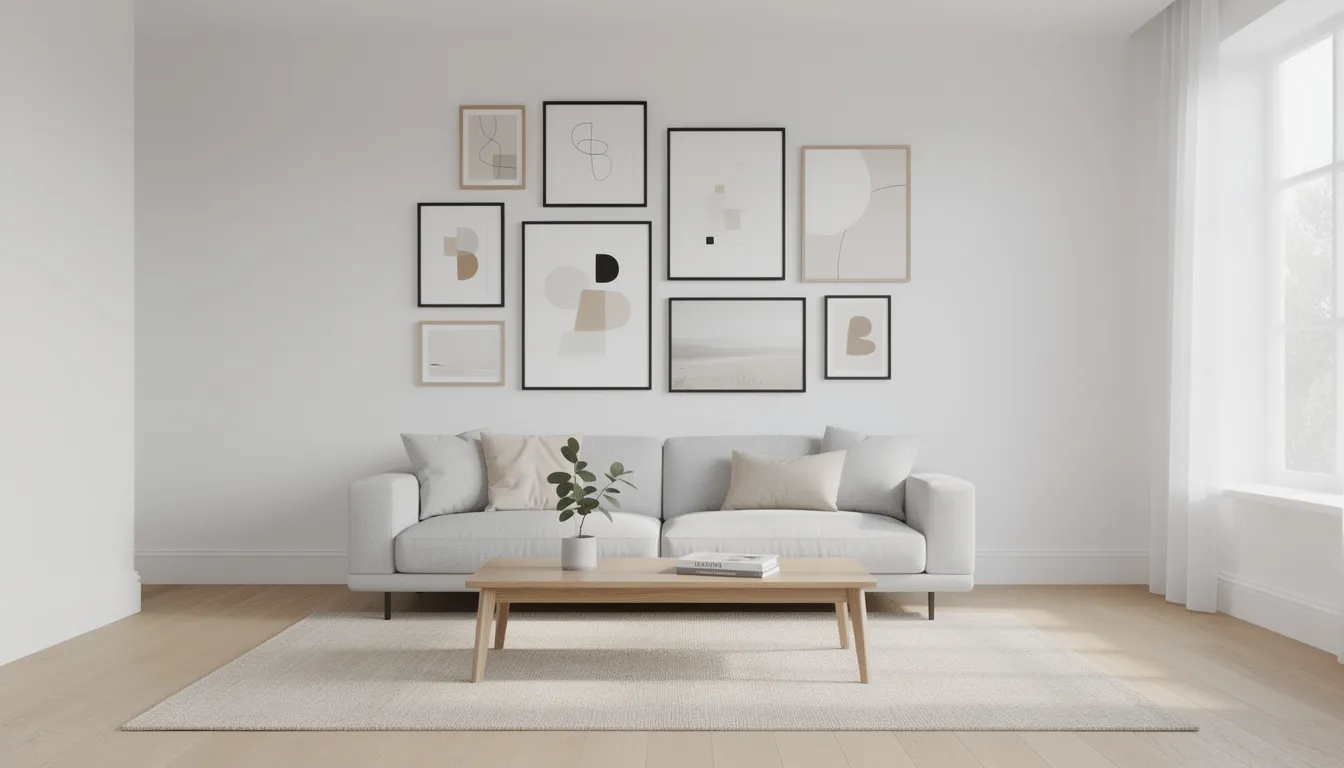
Tipos de impresiones de póster y materiales de marco
Basándose en estos conceptos fundamentales, seleccionar los materiales adecuados requiere entender cómo las diferentes opciones afectan la apariencia, durabilidad y precio, permitiéndote crear exactamente el estilo que te encanta dentro de tu presupuesto.
Opciones de impresión en papel y lienzo
Los acabados mate eliminan el deslumbramiento, haciéndolos ideales para espacios con iluminación variable y creando una presentación sofisticada y discreta popular entre coleccionistas de arte. Los acabados brillantes intensifican la saturación y el contraste del color, ofreciendo impresiones vibrantes y llamativas que captan la atención, pero pueden mostrar huellas dactilares y reflejos.
Los acabados satinados ofrecen un punto intermedio, combinando una mejora moderada del color con reducción del deslumbramiento, una elección sencilla que funciona bien en diversos entornos. Las impresiones en lienzo estiradas sobre marcos de madera crean presentaciones texturizadas y pictóricas que añaden profundidad y dimensión sin requerir un marco adicional. Los papeles de bellas artes premium replican la experiencia de obras de calidad museística, con composición de algodón y calificaciones archivísticas que superan los 100 años.
Opciones de materiales para marcos
Los marcos de madera siguen siendo la selección clásica, ofreciendo calidez y atractivo tradicional en acabados que van desde roble natural hasta blanco pintado o nogal teñido. Se adaptan a casi cualquier estilo, pero requieren consideración climática: en ambientes húmedos, la madera puede absorber entre un 10 y 15% de humedad, lo que puede causar deformaciones sin un acabado adecuado.
Los marcos metálicos ofrecen un estilo moderno y elegante y una durabilidad excepcional, resistiendo fluctuaciones ambientales mientras proporcionan perfiles delgados que maximizan la visibilidad de la obra. Las opciones de aluminio son livianas, lo que facilita colgarlas y las hace ideales para formatos grandes. Los materiales compuestos y las alternativas recicladas han ganado demanda significativa, con marcos de bambú sostenible y metal reciclado aumentando un 40% en preferencia del consumidor a medida que la decoración ecológica se vuelve prioridad.
Vidrio y elementos protectores
El vidrio estándar ofrece protección clara a precios accesibles, pero añade peso y riesgo de rotura. Las alternativas de acrílico pesan un 50% menos, ofreciendo seguridad a prueba de roturas, ideal para hogares con niños o áreas de mucho tránsito como oficinas y pasillos.
El acristalamiento con protección UV, ya sea de vidrio o acrílico con recubrimientos filtrantes, bloquea hasta el 99% de los rayos ultravioleta dañinos, extendiendo la vida útil de la impresión de 5-10 años sin protección a más de 50 años con el cuidado adecuado. Para espacios con luz natural intensa, la protección UV representa una de las inversiones más valiosas en la preservación de obras de arte.
Consideraciones clave sobre materiales: Combina el acabado de la impresión con las condiciones de iluminación, selecciona materiales para el marco adecuados para tu entorno e invierte en protección UV para obras de arte expuestas en espacios soleados.
Con las opciones de materiales aclaradas, el siguiente paso implica medir, coordinar y personalizar tu selección para lograr resultados profesionales.
Proceso de selección y personalización
Elegir la combinación perfecta de impresiones de carteles y marcos implica una evaluación sistemática de tu espacio, preferencias estéticas y requisitos prácticos. Ya sea que subas imágenes para impresión personalizada o explores colecciones seleccionadas de artistas reconocidos, seguir un proceso estructurado garantiza resultados satisfactorios.
Guías de tamaño y medición
El tamaño adecuado crea un equilibrio visual entre la obra de arte y el espacio circundante. Usa estos pasos desde la evaluación inicial hasta la compra final:
Mide el espacio en la pared y las proporciones del mobiliario: Calcula las dimensiones disponibles en la pared, tomando nota de cualquier mueble debajo del área destinada para exhibir; la obra de arte generalmente debe abarcar entre el 50% y 75% del ancho del mueble debajo.
Selecciona tamaños estándar de carteles o dimensiones personalizadas: Los tamaños comunes incluyen 11x14, 18x24 y 24x36 pulgadas, disponibles en la mayoría de las opciones de marcos. El enmarcado personalizado se adapta a dimensiones únicas pero aumenta el costo y el tiempo de producción.
Elige los bordes del paspartú y el ancho del marco: Los paspartús añaden espacio visual entre la imagen y el marco; bordes de 2 a 4 pulgadas son adecuados para la mayoría de los carteles, mientras que paspartús más anchos crean presentaciones formales tipo galería.
Calcula las dimensiones totales enmarcadas: Suma los bordes del paspartú (ambos lados) más el ancho del marco (ambos lados) a las dimensiones de la impresión. Una impresión de 24x36 con paspartús de 2 pulgadas y marco de 1 pulgada totaliza 30x44 pulgadas lista para colgar.
Coordinación de Estilo y Color
Combinar impresiones enmarcadas con la decoración existente crea interiores coherentes e intencionados. Esta comparación te ayuda a elegir combinaciones que realzan tu visión decorativa:
Estilo de habitación |
Tipo de marco recomendado |
Mejores estilos de impresión |
|---|---|---|
Moderno/Contemporáneo |
Marcos de metal o madera elegante |
Arte abstracto, fotografía, diseños minimalistas |
Tradicional/Clásico |
Marcos de madera ornamentados con detalles dorados |
Carteles vintage, impresiones botánicas, reproducciones de arte clásico |
Rústico/Estilo campestre |
Marcos de madera envejecida o de granero |
Fotografía de naturaleza, anuncios vintage, arte de paisajes |
Considera la armonía de color entre el acabado del marco, la selección del paspartú y la paleta de la habitación. Los marcos oscuros crean definición y formalidad; los marcos claros se sienten aireados y accesibles. Los marcos neutros en negro, blanco o madera natural ofrecen versatilidad si planeas rotar las obras de arte según la temporada. |
El proceso de pago en la mayoría de los proveedores permite previsualizar las selecciones digitalmente—tómate el tiempo para revisar combinaciones antes de añadir artículos a tu carrito y enviar tu pedido. Muchas tiendas ahora ofrecen aplicaciones de realidad aumentada que muestran los marcos en tus paredes reales, ayudándote a confirmar elecciones antes de comprar.
Incluso con una selección cuidadosa, surgen desafíos—entender los problemas comunes te prepara para una implementación exitosa.
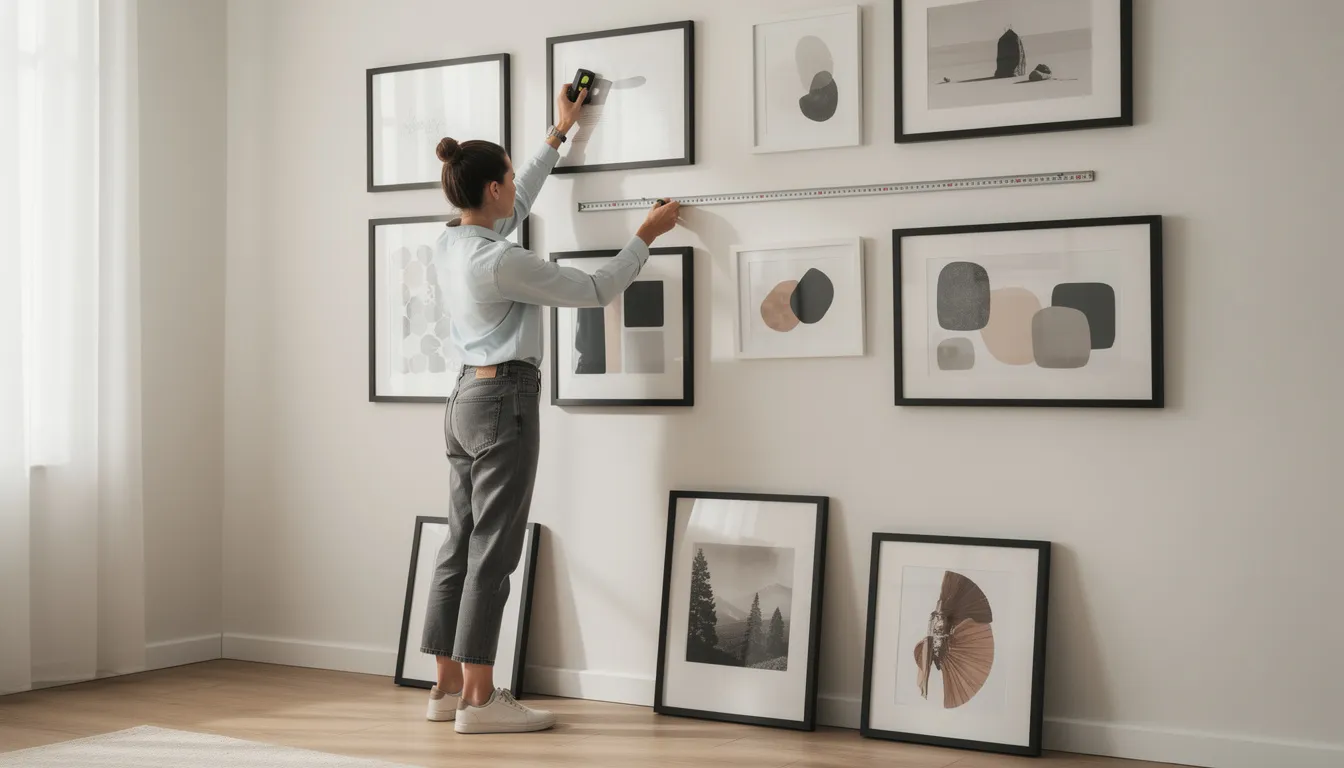
Desafíos comunes y soluciones
Degradación de la calidad de la impresión
Solución: Elige vidrio o acrílico con protección UV combinado con paspartú libre de ácido para cualquier obra de arte expuesta a luz natural. Sin protección, las impresiones amarillean y se desvanecen en 2-5 años; con materiales adecuados, espera más de 50 años de color vibrante. Al hacer tu pedido, revisa cuidadosamente las especificaciones—este paso simple evita decepciones.
Desajustes en el tamaño del marco
Solución: Siempre verifica las dimensiones exactas del póster antes de comprar marcos por separado. Los tamaños estándar varían ligeramente entre fabricantes, y las dimensiones internacionales difieren de los estándares nacionales. El método más sencillo: compra paquetes completos de impresión y marco donde la compatibilidad está garantizada. Si ordenas por separado, crea un archivo con las medidas para referencia al pagar.
Problemas con la colocación y colgado en la pared
Solución: Combina los anclajes de pared con el peso del marco: los marcos para pósteres estándar requieren anclajes básicos, mientras que las impresiones grandes enmarcadas que superan las 15 libras necesitan pernos de palanca o montantes. Antes de perforar, marca la ubicación con cinta removible y retrocede para verificar la posición. Usa un nivel durante la instalación para asegurar una presentación recta.
Consejo profesional: Para inquilinos o quienes prefieren flexibilidad, las tiras adhesivas para montaje, clasificadas según el peso de tu marco, permiten colgar sin daños y reposicionar fácilmente a medida que evoluciona tu estilo.
Estas soluciones aseguran que su arte enmarcado en la pared logre una presentación profesional que le encantará durante años, llevándonos a la implementación.
Conclusión y próximos pasos
Impresiones de póster de calidad y marcos crean exhibiciones profesionales en la pared a precios accesibles para prácticamente cualquier presupuesto. Al comprender los materiales de impresión, la construcción del marco, los principios de tamaño y los procesos de selección, transforma paredes ordinarias en galerías curadas que reflejan estilo personal y apreciación artística.
El mercado global de marcos supera los 4 mil millones de dólares anuales; millones de clientes descubren que las impresiones artísticas enmarcadas ofrecen un valor excepcional para la decoración. Ya sea que avance con selecciones listas para usar o invierta en enmarcados personalizados, los principios de esta guía garantizan resultados confiables y satisfactorios.
Mida Su Espacio en la Pared
Mida el espacio disponible en su pared y tome nota de las condiciones de iluminación
Explore Colecciones de Impresiones
Explore colecciones de impresiones para descubrir diseños que le encanten
Compare Opciones de Marcos
Compare opciones de marcos entre materiales y rangos de precios
Solicite Muestras o Use Herramientas de Vista Previa
Solicite muestras de materiales o use herramientas de vista previa virtual si están disponibles
Realice Su Primer Pedido
Realice su primer pedido con confianza en sus selecciones
Temas relacionados que vale la pena explorar incluyen arreglos de paredes de galería que combinan varias piezas en exhibiciones coherentes, rotaciones estacionales de impresiones que mantienen la decoración fresca durante todo el año, y técnicas adecuadas para el cuidado, limpieza de marcos y revisión del hardware de colgado con el tiempo.
Recursos adicionales
Tabla de conversión de tamaños de marcos:
A4 (Internacional): 8.3 × 11.7 pulgadas
A3 (Internacional): 11.7 × 16.5 pulgadas
A2 (Internacional): 16.5 × 23.4 pulgadas
Carta (EE. UU.): 8.5 × 11 pulgadas
Tabloide (EE. UU.): 11 × 17 pulgadas
Guía de capacidad de peso para anclajes de pared:
Anclajes plásticos estándar: hasta 10 libras
Anclajes autorroscantes para paneles de yeso: 15-25 libras
Tornillos de palanca: 25-50 libras
Montaje con pernos: más de 50 libras
Programa de mantenimiento:
Mensualmente: Quite el polvo de los marcos con un paño suave y seco
Trimestralmente: Verifique que el hardware de colgado no esté suelto
Anualmente: Inspeccione para detectar decoloración, cambio de color en el paspartú o daños por humedad
Según sea necesario: Limpie el acristalamiento con un limpiador adecuado para vidrio o acrílico
Para preguntas sobre permisos relacionados con obras de arte con derechos de autor o consultas sobre artistas presentados en colecciones, contacte al servicio al cliente de la tienda por correo electrónico antes de realizar pedidos.