Introduction
Coral reef wall decor transforms ordinary interior spaces into immersive oceanic environments through sculptural pieces, canvas prints, and dimensional art that capture the organic beauty of underwater ecosystems. Whether you’re drawn to the natural white coral color that transports the senses to coastal shores or vibrant teal-to-pink gradients reminiscent of tide pools full of ocean creatures, this category of wall art offers remarkable versatility for modern homes.
This guide covers coral reef wall art types, materials, installation methods, and room placement strategies for maximum visual impact. It focuses specifically on decorative pieces for interior walls-excluding live coral, aquarium setups, or outdoor installations. The target audience includes homeowners, renters, and interior design enthusiasts seeking to incorporate coastal aesthetic elements without committing to full nautical themes.
Direct answer: Coral reef wall decor encompasses 3D sculptural pieces, printed artwork, and mixed-media installations that bring ocean elements indoors, ranging from $50 prints to $300+ dimensional resin panels from collections like the Phillips Collection.
By the end of this guide, you’ll understand:
Key material differences between resin, metal, and ceramic coral pieces
How to choose styles that complement contemporary or maximalist interiors
Proper installation techniques for various wall types and piece weights
Maintenance requirements to keep your coral reef wall art looking pristine
Understanding Coral Reef Wall Decor
Coral reef wall decor refers to decorative art inspired by the intricate structures, irregular shapes, and vibrant colorations found in natural underwater reef ecosystems. These pieces range from abstract interpretations featuring non symmetrical patterns to hyper-realistic reproductions that appear lifted straight from the ocean floor.
Coral reef wall art introduces organic, biomorphic forms and vibrant colors, fostering a tranquil coastal atmosphere. The unique texture and dimension added to walls by coral art come from its intricate biomorphic forms, which create visual interest and tactile appeal. Coral art can be presented in forms like realistic photography, abstract expressionism, or sculptures, fitting diverse interiors. In addition, coral reef wall art can be found in various styles, including photography, painting, and illustration, making it adaptable to a wide range of design preferences.
The relevance to modern interior design stems from a broader 2025 coral art trend, where 68% of interior designers surveyed prioritize organic asymmetry and biomorphic forms. This shift reflects growing environmental awareness-with global coral loss exceeding 14% in shallow reefs according to UN reports-positioning coral decor as both aesthetic enhancement and subtle advocacy for reef preservation.
Sculptural Coral Pieces
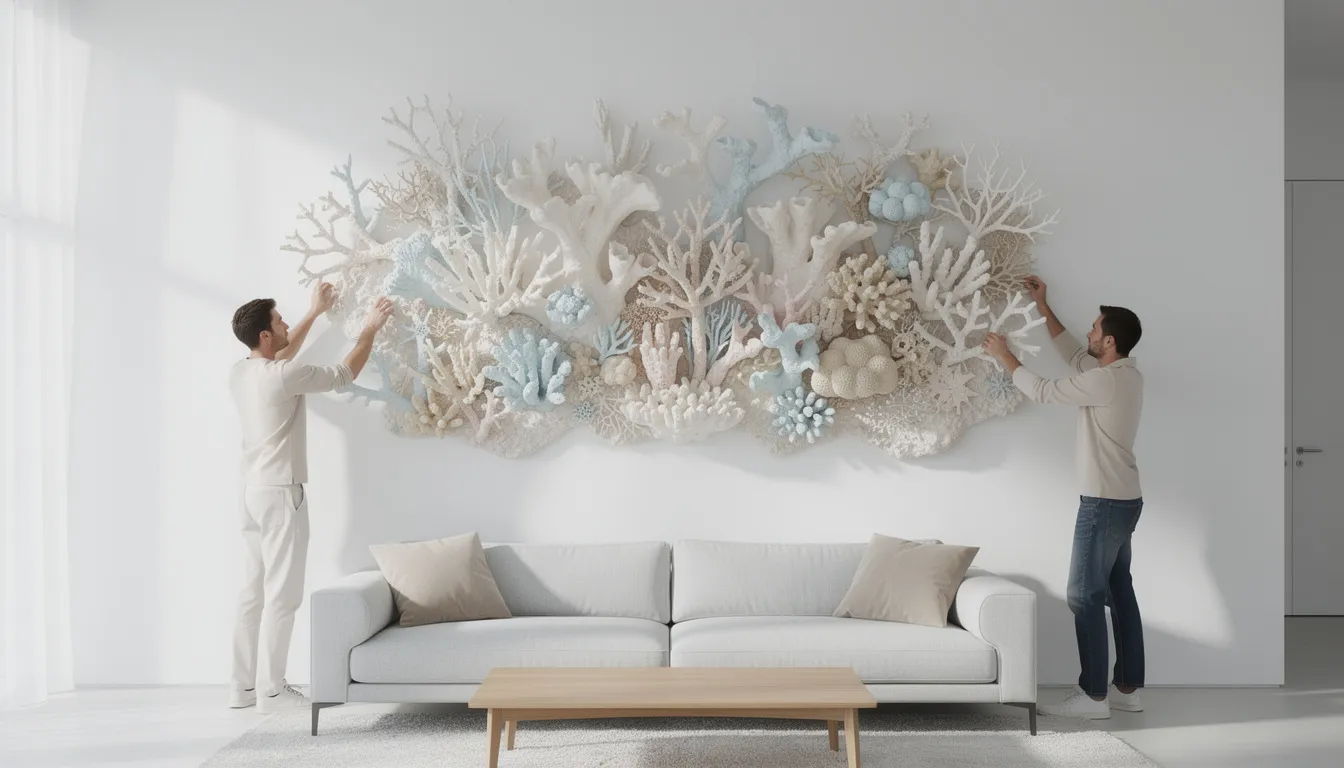
Three-dimensional coral sculptures represent the most immersive category of reef wall art. Crafted from resin, metal, or ceramic materials, these pieces replicate the branching growth patterns of tube coral, the convoluted mazes of brain coral, and the flowing movement of soft coral varieties.
Sculptural elements create depth and texture that flat prints cannot achieve. A well-crafted resin panel-like those measuring 15”W x 3”D x 47”H-casts shadows that shift throughout the day, producing what designers describe as “tide pool immersion.” The three-inch depth typical of premium pieces adds a different aspect to wall compositions, making reef wall art rectangle installations appear almost architectural.
Printed Coral Artwork
Photography and illustrated coral reef prints on canvas or archival paper offer accessible entry points to ocean-themed décor. These pieces range from realistic underwater photography capturing fish and ocean creatures to abstract interpretations featuring Kusama-inspired dot patterns in blue-pink-orange-teal palettes.
The relationship to sculptural pieces follows a logical progression: many designers recommend combining 2D prints with dimensional elements to create gallery walls with visual rhythm. A contrasting combination of design elements-perhaps a large canvas print flanked by smaller resin corals-builds layered compositions that draw the eye across the entire wall.
Understanding these foundational categories prepares you for selecting specific styles and determining optimal placement throughout your home.
Design Styles and Room Placement
Building on the sculptural and printed options above, coral reef wall decor adapts to multiple design philosophies. The key lies in matching piece selection to your existing aesthetic while considering scale, lighting, and viewing angles.
Contemporary Coastal Style
Contemporary coastal interpretation emphasizes clean lines, muted palettes, and modern coral forms that suggest rather than replicate marine life. Think off-white resin panels with subtle texture, or abstract prints featuring fluid lines in sandy beiges and soft teals.
Sizing for contemporary spaces typically follows the 60-75% rule: artwork should span 60-75% of the furniture width below it. Color palettes lean toward natural white coral color with occasional solid color accents-avoiding the bright oranges and pinks that characterize tropical approaches. The asymmetry in the shell configurations is eye catching without overwhelming minimalist rooms.
Tropical Maximalist Approach
Tropical maximalist design embraces vibrant colors, multiple layered pieces, and bold compositions that celebrate reef biodiversity. This approach pairs gradient prints transitioning from orange to blue with 3D elements in contrasting hues-creating walls that evoke the full spectrum of healthy coral ecosystems.
The contrast with contemporary style offers homeowners distinct pathways: where contemporary whispers “beach,” maximalist shouts “underwater paradise.” Shell configurations featuring symmetrical patterns inside a rectangle are a contrasting combination that works particularly well in maximalist schemes, where the eye catching arrangement draws viewers deeper into the composition.
Living Room and Bedroom Applications
Primary living spaces demand careful attention to scale and lighting. In living rooms, position coral reef wall art at eye level (57-60 inches center height) on walls receiving indirect natural light. Direct sunlight accelerates color fading-a critical consideration covered in the maintenance section.
Bedrooms benefit from calming reef imagery positioned opposite the bed for morning visibility. Pieces featuring soft coral forms and blue-dominant palettes align with color psychology research linking these hues to 15-20% stress reduction. The rectangle looks as though it was lifted from an actual reef when properly lit with picture lights or ambient wall sconces.
Scale considerations differ by room function: living rooms accommodate larger statement pieces (24x36 inches and above), while bedrooms often work better with triptych arrangements of smaller prints that create visual flow without overwhelming sleeping spaces.
Installation Methods and Care Requirements
Proper mounting ensures your coral reef wall decor remains secure and attractive for years. The installation approach depends on piece weight, wall material, and whether you’re working with drywall, plaster, or masonry surfaces.
Wall Mounting Procedures
Different wall types and piece weights require specific hardware selections. Resin panels weighing 10-15 lbs demand more robust mounting than lightweight canvas prints. Follow this procedure for secure installation:
Locate wall studs and mark mounting points using a stud finder; toggle bolts provide alternatives for hollow drywall sections where studs aren’t accessible
Select appropriate hardware based on piece weight-picture hangers for under 10 lbs, toggle bolts for 10-30 lbs, and lag bolts into studs for heavier sculptural pieces
Install mounting brackets using a level to verify horizontal alignment; mark multiple points for wide pieces to distribute weight evenly
Secure the coral decor piece and verify stability by gently pressing each corner; check that the piece hangs flat against the wall surface
Material Comparison
Criterion |
Resin |
Metal |
Ceramic |
|---|---|---|---|
Durability |
High-resists humidity, ideal for bathrooms |
Very High-withstands impact |
Moderate-fragile if struck |
Weight |
10-15 lbs for medium panels |
8-20 lbs depending on gauge |
15-25 lbs for dimensional pieces |
Maintenance |
Wipe with soft damp cloth |
Dust regularly, occasional polish |
Gentle cleaning only |
Price |
$200-400 for quality panels |
$150-350 for decorative pieces |
$300+ for artisan work |
Resin excels in humid environments where ceramic might develop issues, while metal offers the greatest durability for high-traffic areas. Ceramic pieces from collections focusing on terracotta and glazed finishes provide unique tactile qualities but require more careful handling during installation and cleaning. |
This comparison helps inform your selection before purchase-and understanding material properties proves essential when addressing common maintenance challenges.
Common Challenges and Solutions
Proper Sizing for Wall Space
Solution: Measure your available wall area before shopping, then apply the 60-75% rule for width. For example, a 6-foot-wide wall above a sofa accommodates pieces 43-54 inches wide. Too-small pieces appear lost; oversized selections overwhelm. When in doubt, create paper templates and tape them to the wall before purchase to visualize the final aspect of the piece in your space.
Cleaning Textured Surfaces
Solution: The irregular shapes and dimensional surfaces of sculptural coral pieces trap dust in crevices that flat art avoids. You can clean the coral reef wall decor with a soft brush and mild liquid detergent, avoiding strong chemicals. For routine dusting every 2-4 weeks, use a soft brush (like a clean makeup brush or specialty art brush). When cleaning your resin wall decor, it is recommended to dust it with a soft cloth and avoid using harsh chemicals. For deeper cleaning, apply mild liquid detergent diluted in water using a soft damp cloth, working gently into textured areas. Avoid strong chemicals or abrasive cleaning materials that can damage finishes or strip protective coatings.
Preventing Color Fading
Solution: UV exposure causes the most significant color degradation, with unprotected pieces fading noticeably within 2-3 years of direct sunlight exposure. Position coral reef wall art away from windows receiving direct sun, or apply UV-protective glass when framing prints. For sculptural pieces, UV protectant sprays mitigate approximately 80% of fading. Premium archival prints on 200 gsm paper with quality inks fade less than 1% over 100 years when properly protected-making material quality a worthwhile investment.
These preventive measures ensure your perfectly preserved coral decor continues looking as vibrant as the day it arrived.
Conclusion and Next Steps
Coral reef wall decor offers a compelling pathway to bringing ocean-inspired beauty into modern interiors. From dimensional resin panels that create immersive tide pool effects to abstract prints featuring flowing coral forms, these pieces combine aesthetic impact with subtle environmental awareness-reflecting the 2025 trend toward organic, biomorphic design elements.
Immediate Next Steps
Measure your intended wall space and calculate optimal piece dimensions using the 60-75% width guideline
Determine your style preference-contemporary coastal for minimalist spaces, tropical maximalist for bold statements
Research quality pieces from reputable sources, comparing material types against your durability and maintenance requirements
Plan installation hardware based on wall type and expected piece weight
Related topics to discover: Coastal lighting options that enhance coral art display, complementary ocean-themed accessories like rattan textures and jute rugs, and gallery wall arrangements that mix prints with sculptural elements for visual rhythm.
Additional Resources
Wall Mounting Weight Guidelines:
Under 10 lbs: Standard picture hooks or adhesive strips
10-30 lbs: Toggle bolts or wall anchors rated for weight
30+ lbs: Lag bolts into wall studs, professional installation recommended
Room Measurement Calculator:
Multiply wall width by 0.6 and 0.75 to establish ideal art width range
Subtract 6 inches from ceiling height for maximum vertical dimension
Allow 8-10 inches between bottom of art and furniture below
Care Instruction Summary:
Resin: Monthly dusting with soft brush or soft cloth; occasional wipe with damp cloth; avoid using harsh chemicals
Metal: Weekly dusting; polish with appropriate metal cleaner quarterly
Ceramic: Gentle dusting only; avoid moisture in textured areas
Canvas prints: Light dusting with microfiber; professional cleaning for stains