


Introduction
Japanese birds symbolism represents a rich tapestry of cultural meaning woven over more than a thousand years, appearing throughout Shinto beliefs, traditional japanese art, and contemporary design. These winged creatures serve as powerful conduits between the natural world and spiritual realms, carrying messages of hope, longevity, and divine protection across generations of japanese culture.
This guide covers the major symbolic birds in Japan-including the japanese crane, phoenix, owl, rooster, and mandarin ducks-exploring their meanings, historical origins, and cultural applications. The content focuses on mainstream symbolic interpretations while excluding detailed regional variations and specialized Buddhist interpretations. Whether you’re an art enthusiast studying traditional patterns, a cultural student researching japanese mythology, or a design professional seeking authentic symbolic references, this resource connects you to the authentic heart of bird symbolism in japanese folklore.
Japanese birds represent fundamental values central to japanese people: the crane embodies long life and fidelity, the phoenix signals renewal and imperial authority, the owl offers protection and wisdom, the rooster demonstrates courage, and mandarin ducks symbolize marital harmony. These auspicious symbols continue to influence everything from wedding ceremonies to corporate branding.
By exploring this guide, you will gain:
Understanding of eight major symbolic birds and their layered meanings
Knowledge of historical and spiritual contexts shaping these symbols
Insight into artistic applications from ink painting to modern design
Awareness of seasonal appropriateness and cultural nuances
Practical guidance for incorporating authentic symbolism in creative work
Understanding Japanese Bird Symbolism
In Japanese culture, birds symbolize nature, fortune, and spiritual beliefs, representing longevity, love, and protection. In Japanese folklore, birds bridge the gap between the divine and the human spirit, with various species symbolizing good fortune and seasonal changes. Birds are also used in traditional Japanese art to symbolize seasonal transitions and auspicious omens.
Bird symbolism in japanese culture functions as a sophisticated language connecting earthly existence with divine realms. Birds serve as spiritual messengers, their ability to move between land and sky making them natural intermediaries between humans and the gods. This symbolic framework emerged from careful observation of nature, with each species carrying distinct meanings shaped by behavior, appearance, and seasonal presence.
Shinto and Ancient Texts
The roots of japanese bird symbolism trace back to ancient Shinto practices, where nature worship positioned all living creatures as manifestations of spiritual energy. Ancient texts like the Kojiki and Nihon Shoki, compiled in the first half of the eighth century, link birds to foundational myths-particularly agricultural stories where cranes brought rice from the heavens to sustain human life on the land.
Chinese Influence
Chinese influences arriving through Korea significantly enriched this symbolic vocabulary. Taoist concepts introduced associations between certain birds and longevity, while Chinese artistic traditions provided visual conventions for depicting birds in art. By the edo period, japanese artists had synthesized these influences into distinctly japanese interpretations, creating patterns and imagery that reflected local beliefs while honoring continental traditions.
Seasonal Symbolism
These symbols became inseparable from daily life, marking seasonal transitions, life ceremonies, and religious life. Farmers read bird migrations as agricultural calendars, while artists painted birds to capture the essence of each season.
Spiritual and Philosophical Meanings
In japanese belief systems, birds occupy a unique spiritual position as divine messengers capable of traveling between the world of the living and celestial realms. The flight of birds-their wings carrying them toward the sky and light-symbolizes the soul’s journey and the possibility of transcendence.
Different birds represent distinct virtues and life stages. Cranes embody fidelity and the hope for long life, while wild geese signal the bittersweet beauty of autumn and the passage of time. Hawks represent vigilance and martial strength, whereas sparrows celebrate humble perseverance. The sparrow (suzume) symbolizes prosperity, especially in the Fukura-suzume motif, and is linked to moral virtues. This symbolic vocabulary allows japanese art to communicate complex emotional and philosophical concepts through the careful selection of bird imagery.
Understanding these spiritual foundations illuminates why bird motifs appear so prominently in ceremonies, religious spaces, and artistic traditions-they serve as visual prayers and blessings woven into the fabric of daily existence.
Major Symbolic Birds in Japanese Culture
Building upon these foundational concepts, specific birds carry particular significance that has been refined over a thousand years of cultural practice. Each species embodies distinct qualities that resonate with japanese values and aspirations.
The Crane (Tsuru) - Longevity and Good Fortune
The japanese crane, particularly the red crowned cranes of Hokkaido, stands as perhaps the most revered bird in japanese symbolism. Japanese folklore holds that cranes live for a thousand years, making them powerful emblems of longevity, good fortune, and enduring hope. The species’ lifelong monogamy reinforces associations with fidelity and faithful love.

Crane symbolism permeates japanese wedding traditions, where the bird’s image promises prosperity and health to newlyweds. The practice of folding paper cranes-particularly the tradition of creating one thousand origami cranes to grant a wish-crystallizes the bird’s association with healing and peace. This tradition gained profound modern significance through the story of Sadako Sasaki, making the crane an international symbol of hope.
In traditional art, cranes appear on folding screens, kimono patterns, and ceramics. Artists depicted them alongside the Seven Lucky Gods, reinforcing Taoist-influenced associations with extended life. Red crowned cranes remain so culturally significant that Japan Airlines selected the crane for its logo, choosing an image that conveys loyalty, endurance, and beauty to a global audience.
The Phoenix (Hou-ou) - Renewal and Imperial Power
The phoenix in japanese mythology differs substantially from its Western counterpart. Rather than the fiery rebirth narrative familiar in European traditions, the Japanese hou-ou represents fire, justice, fidelity, and the vital energy associated with the sun goddess Amaterasu-progenitor of the imperial family. This celestial bird symbolizes prosperity, peace, and the legitimate authority of righteous rulers.
Artists frequently pair the phoenix with dragons, creating compositions that signify the harmonious union of emperor and empress, balancing male and female energies for national stability. This pairing appears on imperial regalia, temple decorations, and auspicious garments worn during significant ceremonies.
The phoenix’s association with rebirth and renewal makes it appropriate for occasions marking new beginnings-weddings, business launches, and seasonal celebrations. Its feathers, often depicted in brilliant gold and red, suggest the transformative power of light and hope emerging from darkness.
The Owl (Fukurou) - Protection and Wisdom
In Japanese culture, owls are thought to bring good luck and protection from suffering. Japanese owl symbolism draws from a fortunate linguistic coincidence: the word fukurou can be interpreted as “no hardship” or “no suffering” when written with different characters. This wordplay transformed the owl into a popular lucky charm believed to bring good luck and ward off misfortune.
Beyond linguistic charm, owls carry associations with wisdom, patience, and nocturnal vigilance. Their ability to see in darkness links them to insight beyond ordinary perception. Different owl varieties carry subtle meaning variations-the horned owl suggests fierce protection, while barn owls evoke gentle guardianship.
Modern Japan embraces owl symbolism enthusiastically, with owl cafés, owl-themed goods, and owl imagery appearing throughout commercial spaces. This contemporary popularity reflects the bird’s enduring appeal as a cute yet powerful protective symbol.
The Rooster (Niwa Tori) - Courage and Sacredness
In Shinto beliefs, roosters are considered sacred birds and are allowed to roam freely around Shinto temples. The rooster is symbolic of courage in Japanese culture due to its role in ancient myths involving the sun goddess Amaterasu. The rooster’s crowing is believed to summon the sun, and its presence in shrines is a reminder of its mythological importance. Roosters are often depicted in art and festival decorations, symbolizing bravery and the dispelling of darkness.
The Sparrow (Suzume) - Prosperity and Virtue
The sparrow (suzume) symbolizes prosperity, especially in the Fukura-suzume motif, and is linked to moral virtues. Sparrows are celebrated for their humble perseverance and are often featured in Japanese art to represent community, diligence, and the joys of everyday life.
The Crow (Karasu) - Divine Messenger and Filial Piety
The crow (karasu) represents filial piety and gratitude in Japanese culture, while also serving as a divine messenger. The three-legged Yatagarasu symbolizes divine guidance. Crows are often seen as messengers of the gods, particularly in Shinto mythology, and their appearance is considered an omen of guidance and protection.
The Heron (Sagi) - Longevity and Wisdom
Herons, or 'sagi', are associated with longevity and wisdom in kimono patterns, reflecting their calm and observant nature. The heron’s elegant form and tranquil demeanor have made it a symbol of purity and spiritual transition, frequently appearing in contexts suggesting otherworldly beauty.
The Mandarin Duck (Oshidori) - Marital Harmony and Fidelity
Mandarin ducks, known as 'Oshidori' in Japan, symbolize marital harmony and fidelity in kimono patterns. These birds are often depicted in pairs, representing the ideal of a happy and faithful marriage, and are popular motifs in wedding garments and gifts.
The Pheasant (Kiji) - Abundance and Prosperity
The pheasant is considered Japan's national bird and symbolizes abundance and prosperity. Pheasants are associated with spring and symbolize abundance, prosperity, and promise in Japanese culture. The green pheasant is also linked to the imperial court and divine favor, and its vibrant plumage makes it a popular motif in both art and textiles.
Cultural Applications and Artistic Expression
Traditional Art Forms and Seasonal Representation
Seasonal appropriateness governs the selection of bird imagery in traditional contexts. Spring calls for swallows and bush warblers, summer features cuckoos, autumn brings wild geese, and winter showcases cranes against snow. This seasonal consciousness reflects the deep connection between nature observation and artistic expression in Japan.
Traditional applications of bird symbolism include:
Kimono and textile patterns featuring cranes for wedding garments and phoenixes for ceremonial occasions
Ink painting and woodblock prints capturing birds in characteristic poses and seasonal settings
Folding screens depicting elaborate bird-and-flower compositions for aristocratic interiors
Ceramic decoration on vessels, particularly the congratulatory bird motifs of Kutani ware
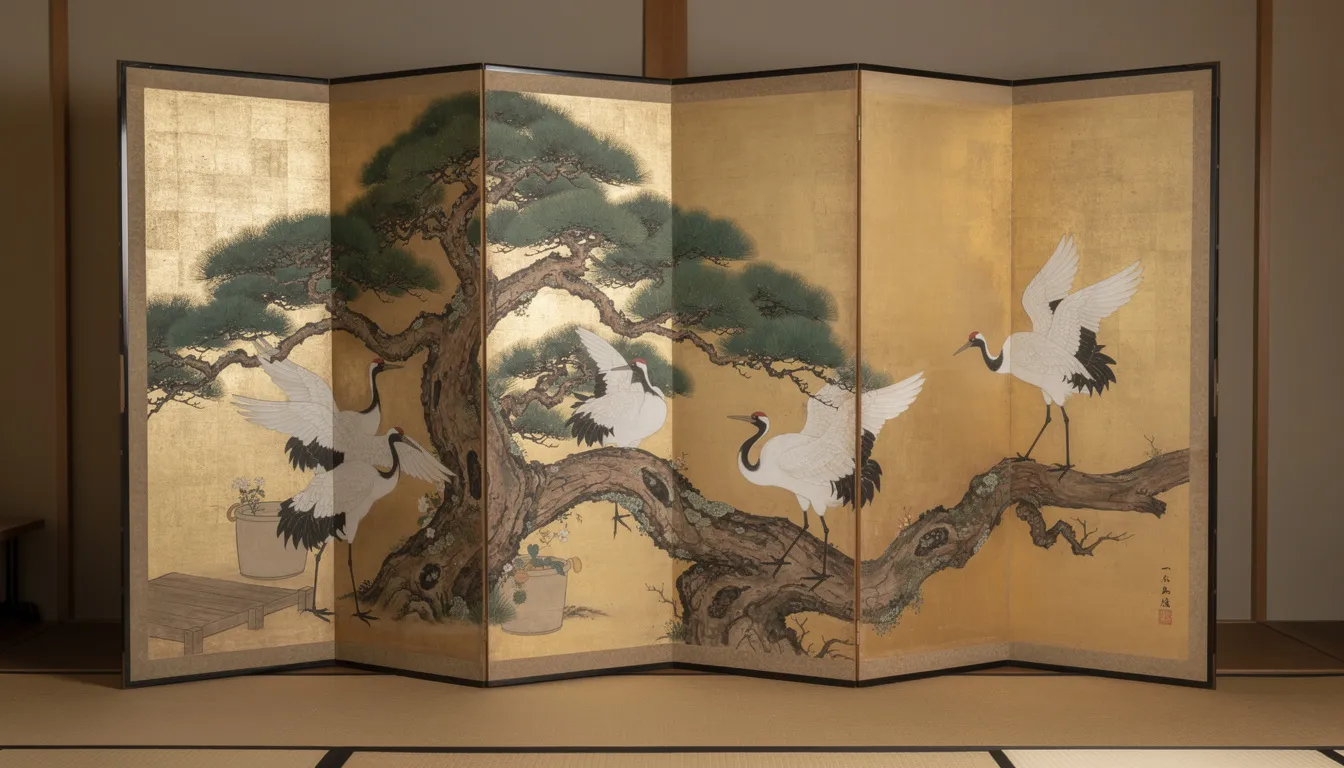
Buddhist monks and Shinto priests incorporated bird imagery into religious life, with temple architecture featuring phoenix ornaments and crane motifs appearing in sacred spaces. The heron, with its associations with purity and spiritual transition, frequently appeared in contexts suggesting otherworldly beauty.
Modern Design and Contemporary Usage
Contemporary japanese designers continue drawing from traditional bird symbolism while adapting visual language for modern contexts. The evolution from historical to contemporary applications demonstrates the enduring relevance of these symbols.
Application |
Traditional Form |
Contemporary Form |
|---|---|---|
Home Decor |
Folding screens with crane motifs |
Minimalist wall art featuring bird silhouettes |
Ceremonies |
Wedding kimono with mandarin duck patterns |
Modern wedding invitations with subtle bird symbols |
Gifts |
Hand-painted ceramics as wedding gift items |
Geometric bird prints for interior spaces |
Architecture |
Temple roof ornaments depicting phoenixes |
Corporate logos and building facades |
This table reveals how traditional symbolic content persists while visual expression adapts to contemporary aesthetics. The meaning of crane symbolism remains constant-longevity, fidelity, good fortune-even as artistic representation shifts from elaborate painted patterns to streamlined modern graphics.
Corporate adoption of bird symbolism, exemplified by Japan Airlines’ crane logo, demonstrates how traditional symbols translate effectively into global visual communication. The crane’s associations with grace, endurance, and positive outcomes create meaning that resonates across cultural boundaries.
Common Misconceptions and Cultural Nuances
Western vs Japanese Phoenix Symbolism
The Japanese phoenix (hou-ou) should not be confused with the Western phoenix rising from ashes. While Western mythology emphasizes destruction and rebirth through fire, the Japanese phoenix represents prosperity, peace, and imperial authority connected to the goddess Amaterasu. The hou-ou appears not through dramatic death and resurrection but as an auspicious presence signaling righteous governance and cosmic harmony.
Seasonal Appropriateness in Art
Seasonal consciousness remains important when using bird imagery. Depicting wild geese belongs to autumn contexts, while cranes suit winter and New Year celebrations. Cuckoos evoke summer, and bush warblers announce spring. Using birds outside their appropriate seasons can create dissonance for viewers educated in traditional aesthetic conventions.
Japan’s national bird, the green pheasant, carries particular significance connected to imperial favor. Historical texts recorded that sightings of white pheasants signaled divine approval of the emperor, positioning pheasant symbolism within courtly and governmental contexts rather than domestic or romantic ones.
Religious Context Sensitivity
Shinto and Buddhist traditions employ bird symbolism differently. Shinto emphasizes birds as nature spirits and divine messengers, while Buddhist contexts may interpret bird imagery through teachings about impermanence and the cycles of existence. The heron, for example, carries otherworldly associations in japanese folklore-with stories describing souls transforming into white herons at death-that require sensitive treatment in religious contexts.
Conclusion and Next Steps
Japanese bird symbolism functions as a sophisticated cultural language connecting nature, spirituality, and artistic expression across more than a thousand years of continuous tradition. From the crane’s promise of longevity to the phoenix’s representation of renewed hope, from the owl’s protective presence to the mandarin ducks’ celebration of happy marriage, these winged symbols carry profound meaning that continues to resonate in contemporary life.
To deepen your engagement with japanese bird symbolism:
Research specific birds relevant to your personal or professional projects, noting seasonal associations and appropriate contexts
Visit museum collections featuring Japanese bird art, particularly edo period screens and prints
Explore how seasonal symbolism informs design choices in both traditional and modern applications
Practice identifying bird species and their meanings in japanese art you encounter
Related topics worth exploring include japanese flower symbolism (which often pairs with bird imagery), seasonal art traditions governing appropriate motifs, and broader Shinto cultural practices that inform nature-based symbolism throughout Japanese artistic expression.
Additional Resources
Reference materials for further study include scholarly works on Shinto symbolism and cultural anthropology examining the relationship between nature observation and artistic tradition. Museum collections at the Tokyo National Museum, Kyoto National Museum, and international institutions with Asian art holdings offer opportunities to study bird symbolism in historical objects.
Academic journals on Japanese art history provide detailed analysis of specific bird motifs and their evolution across periods, while practical guides to kimono patterns offer insight into how bird symbolism functions in textile traditions that continue today.





