Key Takeaways
Kawase Hasui (1883–1957) was a leading figure in the shin hanga movement, creating around 600 woodblock print designs over four decades that captured Japan’s landscapes with naturalistic light, weather effects, and quiet atmosphere.
In 1956, he became the first print designer designated a Living National Treasure for his contribution to traditional printmaking techniques.
His collaboration with publisher Watanabe Shōzaburō, beginning around 1918, shaped both his career and the international reputation of shin hanga.
Snow scenes, night views, and rural landscapes remain his most sought-after subjects among collectors, with pre-1923 impressions being particularly rare due to the Great Kantō Earthquake.
Hasui’s restrained palettes, strong silhouettes, and balanced compositions continue to inform how landscape imagery functions in contemporary interior spaces.
Kawase Hasui (1883–1957) was a leading figure in the shin hanga movement, creating around 600 woodblock print designs over four decades that captured Japan’s landscapes with naturalistic light, weather effects, and quiet atmosphere.
In 1956, he became the first print designer designated a Living National Treasure for his contribution to traditional printmaking techniques.
His collaboration with publisher Watanabe Shōzaburō, beginning around 1918, shaped both his career and the international reputation of shin hanga.
Snow scenes, night views, and rural landscapes remain his most sought-after subjects among collectors, with pre-1923 impressions being particularly rare due to the Great Kantō Earthquake.
Hasui’s restrained palettes, strong silhouettes, and balanced compositions continue to inform how landscape imagery functions in contemporary interior spaces.
Introduction to Kawase Hasui
Kawase Hasui stands among the most significant Japanese artists of the 20th century, known for woodblock print designs depicting landscapes and townscapes with an attention to atmosphere that few of his contemporaries matched. Active from the late 1910s through the mid-1950s, this Japanese artist worked within the shin hanga new prints movement, which revived traditional ukiyo-e printmaking techniques while incorporating Western influences such as naturalistic light and linear perspective.
The shin hanga movement emerged in the early 20th century as a response to both the decline of traditional woodblock printing and the growing interest in Western-style painting. Unlike the sōsaku-hanga (creative prints) movement, where artists handled all stages themselves, shin hanga retained the collaborative system of earlier ukiyo-e masters-designer, carver, printer, and publisher each contributing specialized skills. This approach allowed for technical refinement that would have been difficult for a single artist to achieve.
Over roughly forty years, Hasui produced several hundred woodblock designs, along with watercolors, oil paintings, traditional hanging scrolls, and folding screens. Many of these works originated as sketches from his travels across Japan, capturing locations that ranged from famous places like Nikkō and Kyoto to quiet provincial villages and coastal paths. His prints are now held by major institutions including the British Museum, the Metropolitan Museum of Art, and the Virginia Museum of Fine Arts, and they remain actively traded among collectors worldwide. Hasui’s work remains highly collectible abroad and has influenced various modern figures and institutions.
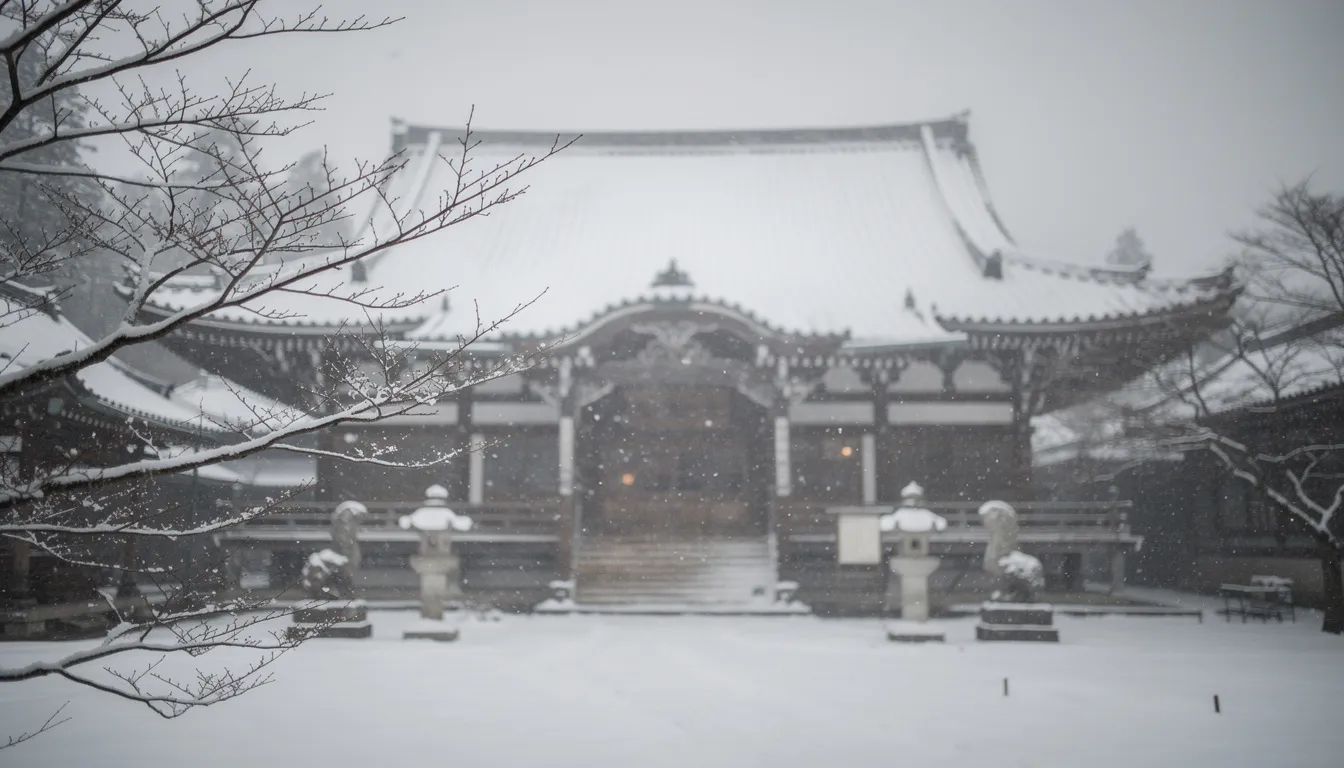
The visual character of his work-quiet streets under falling snow, temples seen through evening mist, moonlit canals-reflects a sensibility that translates well to contemporary spaces. At Laboo Studio, we approach Hasui’s prints as reference points for mood, light, and composition rather than as commercial comparisons. The same qualities that made his landscapes effective in the 1920s continue to inform how thoughtful wall art functions in living rooms and studios today.
Biography and Early Training
Hasui Bunjirō, later known by his art name Hasui Kawase, was born on May 18, 1883, in Tokyo’s Shiba district. He lived through Japan’s rapid modernization-from the late Meiji period through the upheavals of the early Shōwa era-and continued working until his death in Tokyo in 1957. His life spanned earthquakes, wars, and the transformation of the country’s visual culture, yet his prints consistently returned to landscapes that seemed removed from these disruptions.
From childhood, Hasui showed a strong interest in drawing. As a young man, he sketched nature and copied woodblock prints by earlier ukiyo-e masters. However, his merchant family operated a thread wholesaling business (dealing in drapery, silk braiding, and related goods), and they expected him to inherit the enterprise. He worked in the family rope and textile trade from an early age, delaying any serious pursuit of art.
His formal artistic career began gradually. Around 1897, he studied under painter Aoyagi Bokusen, where he learned nature sketching and design compilation. In 1902, he moved to brush painting with Araki Kanyu, during which time he also explored ukiyo-e replication. These early studies in Japanese-style painting gave him a foundation in traditional techniques, though his interests would soon expand.
The family business declared bankruptcy in 1909, when Hasui was 26. This freed him to pursue art full-time. He first approached the nihonga painter Kaburagi Kiyokata in 1908, seeking instruction, but was rejected as a late starter at a time when Western-style painting was gaining popularity. Undeterred, he spent two years studying yōga (Western-style painting) under Okada Saburōsuke, where he went to study western style painting, produced oil paintings, and learned techniques of light and shadow that would later distinguish his woodblock designs.
After completing his study of western style painting, Hasui reapplied to Kaburagi’s school and was this time accepted. It was through this circle that he adopted the art name “Hasui” and began making watercolors, illustrations for books and magazines, and studies of actors and everyday life. More importantly, it was through Kaburagi’s connections that he met publisher Watanabe Shōzaburō-a contact that would define the direction of his art career. Hasui considered himself a realist who employed Western-style painting techniques (yōga) in his compositions, setting his work apart from traditional ukiyo-e masters by focusing on real, tranquil, and sometimes obscure locales.
A small detail worth noting: Hasui’s paternal uncle was Kanagaki Robun (1829–1894), a pioneering Japanese author and journalist who launched Japan’s first manga magazine. This familial connection to creative publishing may have shaped Hasui’s comfort with the collaborative, commercially oriented world of printmaking.
Shin Hanga Movement and Collaboration with Watanabe Shōzaburō
The shin hanga movement represented an attempt to revitalize Japanese woodblock printmaking for both domestic and export markets in the early 20th century. Unlike the earlier ukiyo-e tradition, which had largely declined by the Meiji period, shin hanga combined traditional carving and printing techniques with modern sensibilities-atmospheric effects, naturalistic lighting, and subjects that appealed to Western collectors as well as Japanese audiences.
Watanabe Shōzaburō was the central figure in organizing this revival. Operating from Tokyo, he brought together artists, carvers, and printers, coordinating their work and managing distribution to galleries and collectors in Japan, Europe, and the United States. He was a publisher in the traditional sense, overseeing every stage from design to finished print, and he actively shaped the aesthetic direction of the movement. Watanabe published many of the most important works of the shin hanga era, including Hasui's early and later prints.
Watanabe identified Hasui’s potential after seeing his landscape watercolors and illustrations. Beginning around 1918, when Hasui was nearly 40, Watanabe commissioned landscape designs from him-a decision influenced in part by the success of Itō Shinsui’s pensive bijin-ga (beautiful women) prints. As part of his early career, Hasui was asked to produce three experimental prints for Watanabe, which included two prints that served as an initial step in their collaboration and allowed Hasui to explore innovative woodblock techniques. Hasui would focus almost exclusively on landscape and townscape prints based on his travels, becoming one of Watanabe’s key artists and a prominent designer within the shin hanga stable.
Between approximately 1918 and 1923, Hasui created over 100 landscape prints for Watanabe. Many were exported to Western markets, where they found appreciative audiences among collectors who valued their atmospheric qualities and accessible subjects. This period established Hasui’s reputation both in Japan and abroad.
The Great Kantō Earthquake of September 1, 1923, disrupted everything. The disaster destroyed Watanabe’s workshop along with printing blocks, unsold inventory, and records. For Hasui personally, the losses were devastating: 188 accumulated sketchbooks-the foundation of his work-were destroyed, along with finished woodblocks for the unfinished twelve-print series, known as Hasui's twelve print series, A Collection of Scenes of Japan begun in 1922. Pre-1923 impressions of his prints became immediately rare, and some designs from this period exist only in a handful of surviving examples.
Watanabe financed recovery trips to help Hasui rebuild his stock of sketches. In late 1923, Hasui traveled to the Hokuriku, San’in, and San’yo regions, yielding the third Souvenirs of Travel series by February 1924. Further trips followed-to Kansai in 1924, Tohoku and Hokkaido in 1932, and the Korean Peninsula in 1939-expanding his oeuvre across Japan’s breadth. After rebuilding, Hasui worked closely with Watanabe for decades more, producing hundreds of additional designs. Watanabe managed quality control, distribution, and marketing, while Hasui focused on design and the supervision of proofs.
This collaboration lasted until Hasui’s death in 1957 and defined both his artistic career and the broader trajectory of the shin hanga movement.
Style, Technique, and Themes
Hasui’s characteristic style balances realism with a poetic quietness. Hasui's works encompass an extensive body of landscape and townscape woodblock prints, watercolors, and other artworks, celebrated for their tranquil, often obscure locales and masterful collaboration with artisans. His landscapes depict specific locations-identifiable temples, bridges, coastlines-yet they convey a mood that transcends documentation. Hasui employed his training in Western painting to create naturalistic light, shade, and texture in his compositions. His prints are noted for their bold and intense colors, often resembling gouache or oil paintings rather than traditional prints. Careful attention to atmosphere, weather, and naturalistic light gives his prints a contemplative quality that distinguishes them from both earlier ukiyo-e masters and his shin hanga contemporaries. His innovative approach to color and light has influenced modern aesthetics, including animation and minimalist design.
Recurring Subjects
Certain themes appear throughout his work:
Subject |
Characteristics |
|---|---|
Snow scenes (yuki-e) |
Soft whites, subtle gradations, falling flakes, quiet temples |
Rain views |
Wet streets, reflections, muted grays and blues |
Night scenes |
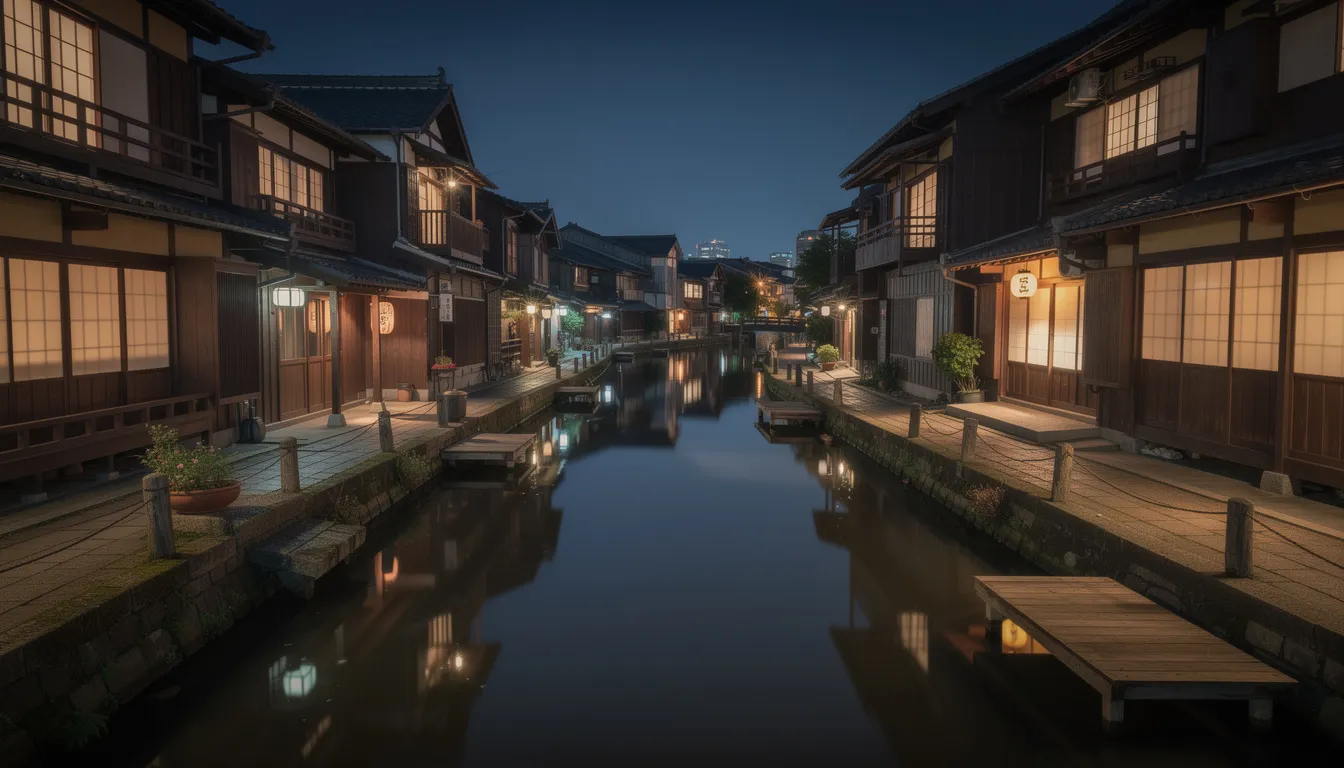
Moonlit paths, lantern glow, deep shadows |
Rural landscapes |
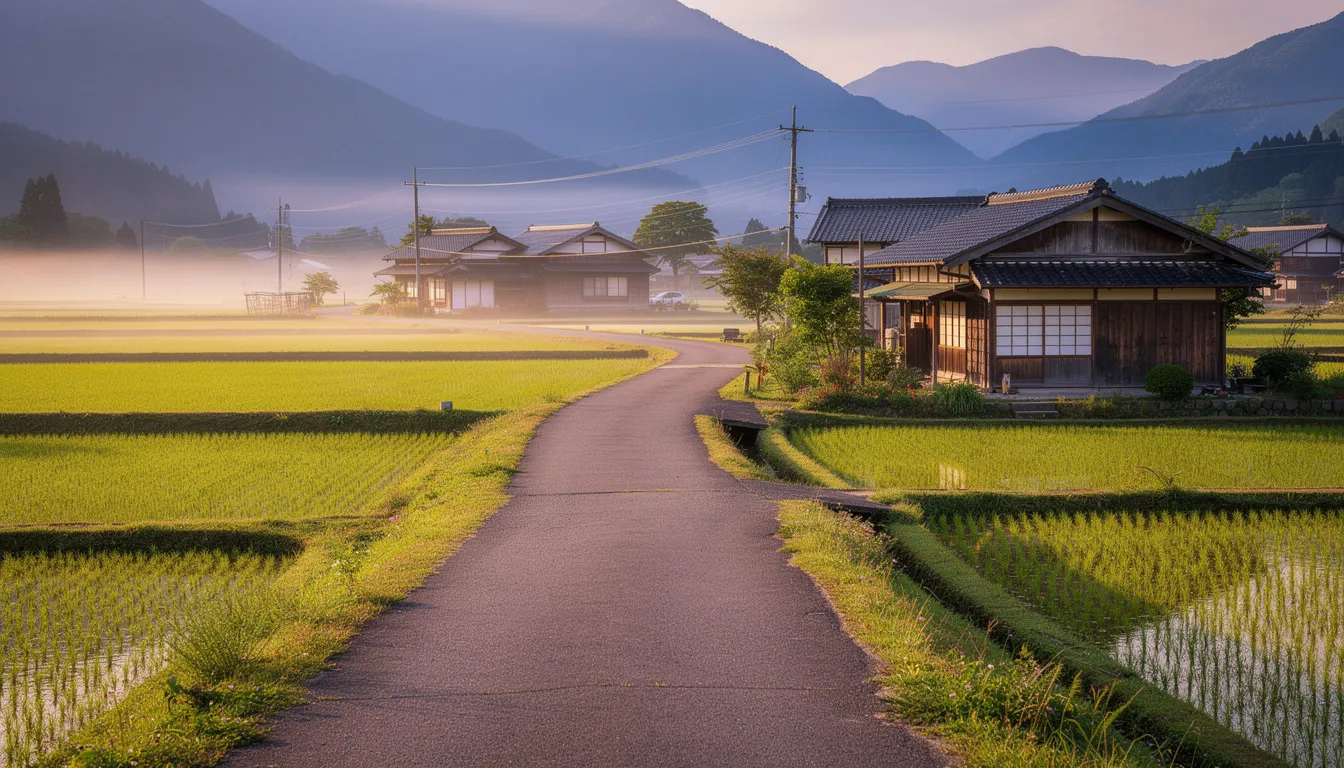
Village houses, coastal cliffs, mountain passes |
Quiet townscapes |
Back streets, small shrines, provincial architecture |
Rather than focusing only on famous places, Hasui often depicted lesser-known locations rendered with the same care as celebrated landmarks. A small village on the coast received the same atmospheric treatment as a Kyoto temple.
Working Process
Hasui’s process began with sketching on site during his extensive travels across Japan. He made detailed drawings with color notes, recording the specific light and weather conditions of each location. Hasui traveled extensively throughout Japan, sketching landscapes on site and later completing the designs in his lodgings. Many of his prints were based on Hasui's sketchbooks, which contained numerous travel sketches and documented his creative process. The loss of these sketchbooks in the 1923 Great Kantō earthquake caused him significant distress, as they served as the foundation for many of his woodblock prints and watercolors.
From these studies, he created key drawings that carvers translated into woodblocks. The process required close collaboration: Hasui supervised proofs and worked with highly skilled craftsmen to achieve the subtle gradations (bokashi) and fine detail that characterize his prints. Unlike sōsaku-hanga artists who controlled every stage themselves, Hasui’s role was that of designer and supervisor within a traditional system.
Human Presence and Mood
Human figures in Hasui’s prints are typically small or absent entirely. Architecture, trees, water, and sky become the primary subjects. This absence of prominent figures contributes to the calm and contemplative mood that defines his work-landscapes exist as themselves rather than as settings for human drama.
Western and Japanese Elements
Hasui blended Western influences with traditional Japanese composition and color harmonies. His study of oil paintings under Okada Saburōsuke gave him familiarity with:
Linear perspective and spatial depth
Cast shadows and modeling of forms
Naturalistic treatment of light sources
These techniques combined with Japanese printmaking traditions: flat areas of color, strong silhouettes, and compositional balance derived from centuries of woodblock practice. The result was something distinct from both pure ukiyo-e and Western landscape painting.
The restrained color palettes, strong silhouettes, and balanced compositions that define Hasui’s work are aspects that continue to appeal when considering how art functions in contemporary spaces. At Laboo Studio, these same qualities-clarity, structure, and sensitivity to light-guide our approach to wall art.
Important Series and Representative Works
Hasui’s output is often organized into series reflecting his travels and thematic interests. Over his 40-year career as an artist, Hasui Kawase created around 620 woodblock prints. Certain prints have become especially iconic among collectors and institutions, while others document locations that have since changed beyond recognition. Notably, some of his works are featured in collections such as the 'Japan II' edition, which highlights scenic views and urban landscapes across Japan.
Twelve Views of Tokyo (c. 1919–1921)
These early shin hanga designs captured temples, bridges, and quiet districts of the capital. Scenes such as Shiba Zōjō-ji under atmospheric light established Hasui’s ability to transform familiar urban locations into contemplative images. The series showed Tokyo before the 1923 earthquake altered much of its landscape.
Souvenirs of Travel (Tabi miyage)
Produced in several sets during the 1920s and 1930s, these travel and landscape prints documented regional Japan beyond the major cities. The first Souvenirs series appeared before the earthquake; the third Souvenirs followed Hasui’s post-disaster recovery trips in 1923–1924.
Subjects included:
Hot springs and rural inns
Coastal cliffs and fishing villages
Mountain passes and forested paths
Provincial temples and local shrines
Titles like “Souvenirs of Travel II: Senjō Cliff at Lake Towada” indicate the geographic range of these works.
Selected Views of Japan (Nihon fūkei senshū)
This 1920s–1930s group includes works such as “Onsengadake Seen from Amakusa,” characterized by layered depth, rich color, and scenes largely untouched by industrialization. Many depict an urbanizing Japan that was already disappearing during Hasui’s lifetime.
Celebrated Individual Prints
Several specific images have achieved particular recognition:
Zojoji in Snow (1953) – Designated an Intangible Cultural Asset, this evening snow scene of the temple became one of Hasui’s most reproduced works
Snow at Kiyosumi Garden – Quiet winter scene demonstrating his mastery of snow effects
Night views of temples and canals – Various prints showing golden hue of lantern light against deep blue-black skies
Views of Nikkō and Kyoto – Traditional subjects rendered with Hasui’s distinctive atmospheric treatment
Many of these prints are preserved in institutions like the British Museum, the Metropolitan Museum of Art, and university collections including the University of Oregon’s James B. Austin Collection. Others circulate in the collector market, with condition and impression date affecting their availability and value.
Life, Personality, and Daily Practice
Hasui was a reserved, methodical professional artist who lived through earthquakes, war, and rapid social change without seeking public attention. Historical accounts describe a disciplined temperament and a modest lifestyle focused on consistent work rather than artistic celebrity.
He was notably near-sighted and relied on thick glasses throughout his life. This shaped how he sketched during his travels across Japan’s countryside and provincial towns-working carefully and at close range to capture the details that would later inform his finished designs.
His life in Tokyo included periods of financial uncertainty. After the 1923 earthquake destroyed his sketchbooks and home, he depended on Watanabe’s support to rebuild his practice. During World War II, materials became scarce and markets unstable; wartime restrictions limited what could be produced and sold. Air raids again destroyed blocks and prints, forcing him to retreat to Shiobara at various points.
Small personal details from historical accounts paint a picture of conservative habits:
Preference for traditional dress such as kimono in daily life
Enjoyment of sake
Disciplined work schedule maintained over decades
Quiet devotion to the subjects of countryside and lesser-known locations
After the war, Hasui returned to landscape motifs when materials became available again. The postwar Japanese government even leveraged his works for tourist publications, presenting a gentler image of Japan to international audiences. He continued designing prints into the 1950s despite declining health.
Recognition, Living National Treasure, and Legacy
By the 1950s, Hasui was widely recognized in Japan as a leading landscape print artist within shin hanga. His large body of work-spanning several hundred designs and four decades-had established him as a central figure in the movement.
In 1953, his print Zojoji in Snow was designated an Intangible Cultural Asset exemplifying the cooperative skills of traditional printmaking. Three years later, in 1956, Hasui himself received the Living National Treasure designation for his contribution to woodblock printmaking-the first time a print designer received this distinction.
During his final years, he continued working despite illness. Hall of the Golden Hue, Hiraizumi, completed in 1957 while he was hospitalized with cancer, is often regarded as a culminating work. He passed away on November 7, 1957, in Tokyo.
His legacy includes:
Several hundred complete woodblock prints and yet undistributed prints
Watercolors, oil paintings, sketches, and studies
Documentation of landscapes that have since changed or disappeared
Continued exhibitions and scholarly studies
Comprehensive catalogues including work by Hotei Publishing
The American connoisseur Robert O. Muller played a significant role in popularizing shin hanga abroad, collecting extensively and introducing Hasui’s work to Western audiences. Scholars have called Hasui the “Hiroshige of the Shōwa Era,” comparing his atmospheric travel scenes to those of the 19th-century ukiyo-e master.
His influence extends beyond printmaking. The quiet, structured compositions and nuanced palettes that define his work continue to inform how many people think about landscape imagery in their homes and studios. At Laboo Studio, this design-led perspective-where clarity of composition and sensitivity to light guide visual decisions-aligns with how we approach contemporary wall art.
Collecting Kawase Hasui Prints and Market Notes
Hasui’s prints exist in multiple impressions and editions. Many were produced during his lifetime under Watanabe’s supervision; others were printed after his death from surviving blocks or re-carved blocks. Understanding these distinctions affects how collectors evaluate individual prints.
Publisher Seals and Dating
Watanabe used different seals over time, which help identify when an impression was made:
Seal Type |
Period |
Notes |
|---|---|---|
Small rectangular seal |
Pre-1923 |
Destroyed in earthquake; prints with this seal are rare |
Round seal variations |
1920s–1940s |
Lifetime impressions under Watanabe supervision |
Post-war seals |
After 1945 |
Later lifetime impressions, sometimes showing changes in materials |
Posthumous markings |
After 1957 |
Printed from surviving or re-carved blocks |
The Great Kantō Earthquake destroyed many early blocks, making surviving pre-1923 prints rare and highly prized. Hasui’s twelve print series begun in 1922 was never completed due to these losses.
Differences Between Impressions
Pre-war and post-war impressions often differ in:
Carving quality (earlier impressions typically finer)
Pigment depth and color saturation
Paper characteristics
Impression sharpness
Later editions and posthumous prints may show changes in color tone or detail that experienced collectors can identify.
Price Considerations
Market values vary widely based on subject, condition, and impression date:
Rare early snow or night scenes in excellent condition have sold for several thousand US dollars at auction
Common post-war or posthumous impressions tend to be more accessible
Condition issues (fading, foxing, trimming) significantly affect value
Detailed reference works and auction archives document edition histories and realized prices. Serious collectors rely on these sources, along with expert advice, for authentication and valuation.
This information is provided for understanding the print landscape rather than as investment guidance.
Kawase Hasui in Contemporary Visual Culture
Hasui’s images of quiet streets, shrines, and rural paths have had a long afterlife in visual culture. His compositions-strong foreground silhouettes, receding paths, and atmospheric light-parallel scenes found in popular Japanese animation, especially works set in rural or small-town environments.
Prints such as “Onsengadake Seen from Amakusa” from the Selected Views of Japan series show layered mountain landscapes and small village houses that echo the visual language of animated films depicting the Japanese countryside. Tree-lined roads leading to distant hills, shrines glimpsed through forest, rice fields under changing skies-these elements appear in both Hasui’s 1920s prints and in contemporary media.
Scholars and critics have drawn visual parallels between some Hasui landscapes and scenes from well-known animated films and series. The comparison is less about direct copying than about shared visual tradition. Hasui’s work forms part of a broader image vocabulary that contemporary creators can draw from, whether consciously or not.
The same qualities that make his prints effective-clarity of composition, balance of built structures and landscape, sensitivity to light and weather-translate across media. These are not trends but fundamentals of how landscape imagery communicates mood and place.
At Laboo Studio, we recognize this continuity. The visual principles that made Hasui’s work enduring also guide how we think about contemporary wall art for modern interiors. Calm compositions, considered color relationships, and attention to how light moves through a scene remain relevant whether the medium is a 1920s woodblock or a contemporary print designed for a living room or studio.
Recommended References and Further Reading
Collectors, designers, and researchers rely on a small number of key reference works to study Hasui’s prints in detail.
Essential Catalogues
Kawase Hasui: The Complete Woodblock Prints (Brill, 2003) Two-volume set with essays by Kendall H. Brown, Watanabe Shōichirō, and Amy Reigle Newland. Functions as a catalogue raisonné with hundreds of color illustrations, publication data, and edition information.
Visions of Japan – Kawase Hasui’s Masterpieces (Hotei Publishing, Amsterdam) Features essays and high-quality reproductions useful for understanding both the artist’s life and his visual approach.
Broader Context
Guide to Modern Japanese Woodblock Prints: 1900–1975 by Helen Merritt and Nanako Yamada Provides broader context on modern Japanese prints, including shin hanga and sōsaku-hanga movements, with attention to experimental prints and their relationship to traditional subjects.
Museum Resources
Online databases from institutions such as the British Museum and Metropolitan Museum of Art provide accessible images, dates, and technical details for many Hasui prints. These can function as visual libraries for studying composition, palette, and atmosphere without requiring physical access to collections.
For readers interested in design applications, these sources work less as price guides and more as reference points for how calm, structured imagery achieves its effects. This approach aligns with Laboo Studio’s focus on what makes art function well in contemporary spaces.