Introduction
Mid century pop art stands as one of the most influential art movements in modern history, fundamentally reshaping how we understand the relationship between fine art and everyday life. Pop art is an art movement that emerged in the 1950s and flourished in the 1960s in America and Britain, drawing inspiration from sources in popular and commercial culture. Emerging in the 1950s and reaching its peak throughout the 1960s, this movement brought images from advertisements, comic books, and consumer products directly into gallery spaces, challenging centuries of artistic tradition.
Pop Art blurred the boundaries between high art and low commercial culture, redefining what was considered worthy of artistic representation. It challenged elitist art by bridging the gap between high culture and everyday life, and democratized art by making it accessible and relatable to the public, breaking down elitist barriers.
This guide covers the origins of mid century pop art, its defining visual characteristics, the iconic artists who shaped the movement, and its lasting influence on contemporary design and culture. Whether you’re an art collector evaluating potential acquisitions, an interior designer seeking inspiration for home decor, or simply curious about this pivotal era in art history, this content will provide the foundational knowledge you need.
Mid century pop art emerged when artists like Andy Warhol and Roy Lichtenstein began appropriating commercial imagery, employing bold colors and mass production techniques to blur the boundary between high art and popular culture. This movement democratized art by making it accessible to a mass audience while simultaneously critiquing the consumer society that inspired it.
By the end of this guide, you will:
Recognize the visual characteristics that define authentic mid century pop artworks
Understand the techniques and philosophies of major pop artists
Identify how this movement broke from abstract expressionism
Appreciate pop art’s ongoing influence on modern design and media
Navigate common misconceptions about the movement’s intentions
Understanding Mid Century Pop Art Fundamentals
Pop art is an art movement that emerged in the 1950s and flourished in the 1960s in America and Britain, drawing inspiration from sources in popular and commercial culture. Mid century pop art represents a deliberate elevation of popular culture imagery to fine art status. Where previous movements sought to express inner emotions or explore abstraction, pop artists turned their attention outward-to the world of advertising, mass media sources, and commercial culture that surrounded them daily.
Pop Art blurred the boundaries between high art and low commercial culture, redefining what was considered worthy of artistic representation. It challenged elitist art by bridging the gap between high culture and everyday life. Pop Art democratized art by making it accessible and relatable to the public, breaking down elitist barriers.
For contemporary collectors, understanding these fundamentals proves essential for authenticating works and appreciating their historical significance. For interior designers, this knowledge unlocks the power of pop art’s bold aesthetic to transform any room or office space.
Origins and Cultural Context
The movement began in Britain during the mid-1950s before exploding across America by decade’s end. Post-World War II society experienced unprecedented consumer prosperity, and artists responded to this new world saturated with advertisements, television, and mass produced goods.
Pop art emerged as a direct reaction against abstract expressionism, the dominant movement of the early 1950s. While abstract expressionists emphasized personal emotion and painterly technique, pop artists embraced detachment, irony, and mechanical reproduction. The earlier influence of Dadaism-particularly Marcel Duchamp’s concept that everyday objects could become art-provided crucial intellectual groundwork for this shift in thinking.
The Independent Group in Britain, including Richard Hamilton and Eduardo Paolozzi, first explored these concepts academically, examining how American popular culture images represented aspiration and excess to a society still experiencing austerity.
Visual Characteristics and Techniques
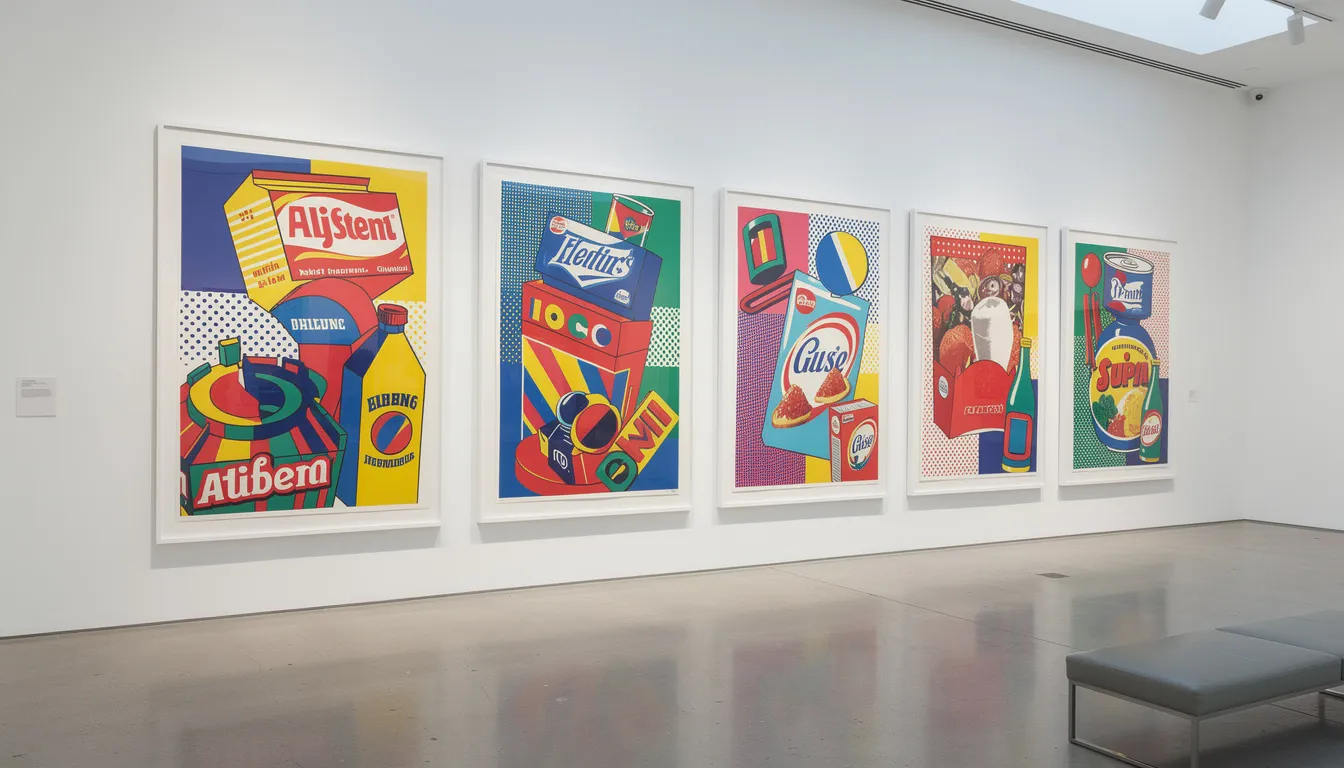
Mid century pop art announces itself through unmistakable visual elements: bright colors reminiscent of commercial printing, hard edges replacing the soft brushwork of abstraction, and imagery drawn directly from consumer products and mass media.
Technical innovation defined the movement. Artists employed screenprinting to achieve the mechanical precision of commercial reproduction. Roy Lichtenstein hand-painted Ben-Day dots to simulate comic book printing at monumental scale. Collages incorporated actual advertisements and magazine materials, bringing fragments of commercial culture directly onto the canvas.
These techniques served a conceptual purpose beyond mere style-they questioned whether art required the artist’s unique hand or whether mass produced aesthetics could carry equal weight in gallery spaces.
Major Artists and Their Signature Styles
The visual language of mid century pop art developed through individual artists who each brought distinct approaches to appropriating commercial culture. Understanding their specific contributions helps collectors and enthusiasts identify authentic works and appreciate the movement’s range.
Andy Warhol and Repetition
Andy Warhol transformed the art world by embracing mechanical reproduction as artistic method. His background in commercial art-creating advertisements and magazine illustrations-directly inspired his fine art practice. Rather than hiding these low cost commercial origins, Warhol celebrated them.
His Campbell’s Soup Cans series demonstrated how repetition could drain meaning from familiar objects while simultaneously elevating them to contemplation. The Marilyn Diptych applied this same thinking to celebrity, presenting Marilyn Monroe’s face in endless variation, exploring how fame becomes both easily forgotten and eternally reproducible.
Warhol’s Factory studio operated like a commercial production facility, deliberately challenging romantic notions of the solitary artist genius.
Roy Lichtenstein and Comic Book Imagery
Roy Lichtenstein achieved something remarkable: he made paintings that looked mass produced while being entirely hand-crafted. His signature Ben-Day dots-those tiny circles that create shading in cheap printing-were painstakingly painted by hand to simulate mechanical reproduction.
By enlarging single panels from comic books to monumental scale, Lichtenstein forced viewers to examine what society considered low culture with the attention typically reserved for masterworks. His approach transformed images designed as a short term solution for disposable entertainment into permanent paintings commanding serious artistic consideration.
Works like Whaam! brought the fun, whimsical energy of youth culture into sophisticated gallery contexts.
Richard Hamilton and Consumer Culture Critique
Richard Hamilton approached pop art with an academic sophistication that distinguished British contributions from their American counterparts. His collages dissected advertising’s manipulation, using magazine materials to expose how commercial imagery creates desire.
His 1956 collage Just what is it that makes today’s homes so different, so appealing? essentially defined pop art before the movement had fully emerged. By combining American advertisements for bodybuilding, vacuum cleaners, and other consumer products, Hamilton created a critique of aspiration wrapped in its own sexy, glamorous imagery.
Hamilton’s written definition characterized pop art as designed for a mass audience: transient, expendable, low cost, young, witty, and gimmicky-concepts that became the movement’s manifesto.
Iconic Artworks and Technical Innovation
Building from individual artist techniques, examining specific masterworks reveals how mid century pop art achieved its revolutionary impact through both subject matter and method.
Campbell’s Soup Cans (1962)
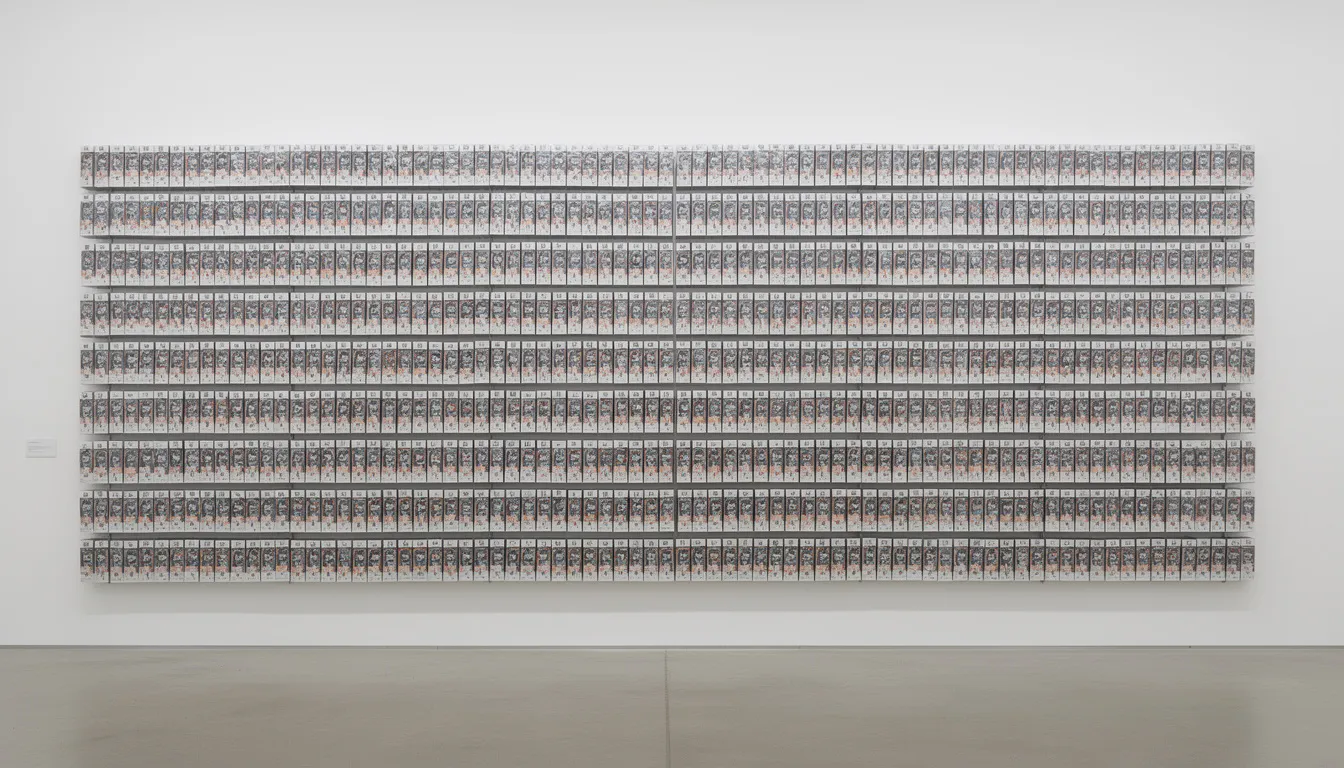
Andy Warhol’s breakthrough series presented 32 canvases, each displaying a different variety of Campbell’s soup. The work’s genius lay in treating commercial products as worthy subjects while employing commercial production methods.
Initially, Warhol hand-painted these canvases, but he soon adopted screenprinting-the same technique used to print actual soup labels. This shift represented more than efficiency; it embodied the movement’s core concepts about originality, creativity, and the boundary between art and commerce.
The collection questioned consumer choice itself: what difference exists between selecting tomato or chicken noodle soup and selecting one painting over another? Both decisions occur within systems of mass production and marketing.
This series fundamentally altered how galleries presented art, initially displaying the works on shelves like grocery items rather than on walls like traditional paintings.
Comparison of Printing Techniques
Criterion |
Hand-Painting |
Screenprinting |
Offset Printing |
|---|---|---|---|
Production Speed |
Slow, individual |
Moderate, reproducible |
Fast, industrial |
Image Consistency |
Unique variations |
High consistency |
Perfect uniformity |
Artistic Control |
Complete |
Significant |
Minimal |
Commercial Association |
Traditional fine art |
Advertising, posters |
Mass media, magazines |
Pop artists strategically chose techniques based on the ideas they wished to express. Lichtenstein’s hand-painting paradoxically simulated mechanical reproduction, while Warhol’s screenprinting embraced actual commercial methods. Understanding these technical choices helps collectors evaluate authenticity and artistic intention. |
The simplicity of screenprinting allowed for bold graphic impact-flat areas of color, hard edges, and the mechanical aesthetic that defined the movement’s visual language.
Common Questions and Misconceptions
Confusion about mid century pop art’s intentions persists decades after the movement’s emergence. Addressing these misconceptions helps viewers engage more deeply with the artworks and their significance.
Is Mid Century Pop Art Just Commercial Art?
Pop art deliberately blurred this boundary, but crucial distinctions remain. While pop artists appropriated commercial imagery and techniques, they did so within gallery and museum contexts that invited critical reflection rather than consumer action. Warhol’s soup cans don’t encourage purchase; they prompt contemplation of why such images saturate our visual environment.
The movement maintained art’s reflective function while adopting commerce’s aesthetic-a sophisticated stance often mistaken for simple celebration.
Why Are These Works Considered Important?
Mid century pop art fundamentally democratized what could be considered worthy artistic subjects. By treating advertisements, comic books, and products with the same seriousness as portraits or landscapes, these artists expanded art’s possibilities for future generations.
The movement also pioneered postmodernism by incorporating low culture into high art contexts, establishing ideas that continue influencing contemporary artists, advertisers, and designers. Its legacy appears in everything from street art to social media aesthetics.
How to Identify Authentic Mid Century Pop Art
Authentic works from this era display specific technical markers. Original screenprints show characteristic ink saturation and slight registration variations. Lichtenstein’s hand-painted dots differ subtly from mechanical reproduction. Paper stock, ink composition, and printing techniques all provide authentication evidence.
Provenance documentation-exhibition history, gallery records, and catalog listings-proves essential for significant works. Major auction houses like Sotheby’s and Christie’s maintain extensive expertise in authenticating pieces from this collection of artists.
Conclusion and Next Steps
Mid century pop art transformed fine art by demonstrating that popular culture imagery, commercial techniques, and mass production aesthetics could carry profound artistic weight. The movement broke from abstraction to engage directly with the world of advertising, media, and consumer products that shaped postwar society.
From Warhol’s mechanical repetition to Lichtenstein’s simulated printing to Hamilton’s critical collages, these American artists and their British counterparts created a visual language that continues to shape how we see art and culture today.
To deepen your understanding:
Visit major museum collections housing mid century pop art-MoMA, Tate Modern, and the Whitney offer extensive holdings
Study original screenprinting techniques through workshop demonstrations
Explore related movements like Neo-Pop and contemporary artists inspired by this era
Examine auction catalogs to understand market values and authentication standards
Related topics worth exploring include mid century modern design’s relationship to pop art aesthetics, collecting vintage prints and posters, and how contemporary artists continue drawing inspiration from these foundational ideas.
Additional Resources
Major museum collections provide direct access to significant works: The Museum of Modern Art (New York), Tate Modern (London), and the Art Institute of Chicago maintain comprehensive mid century pop art holdings with educational materials.
For technical understanding, workshops in screenprinting and printmaking reveal the production methods that gave these artworks their distinctive appearance. Many art schools and community centers offer introductory courses.
Auction house catalogs from Christie’s and Sotheby’s serve dual purposes: they provide market research for collectors while offering detailed authentication analysis and provenance documentation that helps distinguish original works from later reproductions.