Introduction
Oversized wall art refers to artwork that typically exceeds 40 to 48 inches in width or height, specifically designed to dominate walls and anchor interior design schemes. These large-scale pieces function as commanding focal points that transform blank expanses into curated visual experiences, making them essential elements in contemporary home decor and commercial spaces alike.
This guide covers the complete process of selecting, sizing, placing, and installing oversized artwork in residential and commercial environments. Whether you’re a homeowner looking to fill an expansive living room wall, a renter seeking dramatic yet temporary solutions, or a design professional specifying large artwork for clients, you’ll find actionable guidance tailored to your situation.
Direct answer: Oversized wall art transforms blank walls into commanding visual statements by leveraging scale and composition rather than ornate details-a single stunning piece can accomplish what multiple smaller works cannot.
By reading this guide, you will gain:
Understanding of proper sizing ratios between art and wall dimensions
Strategic placement methods based on room architecture and sight lines
Material knowledge for selecting high quality canvas and framing options
Installation techniques for safely mounting large artwork
Solutions for common challenges like rental restrictions and space limitations
Understanding Oversized Wall Art
Oversized art distinguishes itself from standard wall decor through its proportional relationship to the surrounding space. While typical wall art measures under 40 inches, oversized wall art typically exceeds 40 to 48 inches in width or height-often reaching 48, 60, or even 72 inches-creating visual impact that commands attention and establishes clear hierarchy within a room’s design.
Scale and Proportion Fundamentals
The mathematical relationship between art dimensions and wall space determines whether a piece enhances or overwhelms a room. Interior design principles suggest large wall art should occupy approximately two-thirds to three-quarters of the available wall width for balanced visual weight. A wall measuring 12 feet wide, for instance, accommodates artwork between 8 and 9 feet effectively.
Room size directly influences appropriate art scale. In spacious lofts with high ceilings, a 48-inch canvas might appear modest, while the same piece becomes a statement piece in a compact apartment. The goal involves creating proportional harmony where the artwork feels intentional rather than either lost or cramped.
Design Function in Modern Interiors
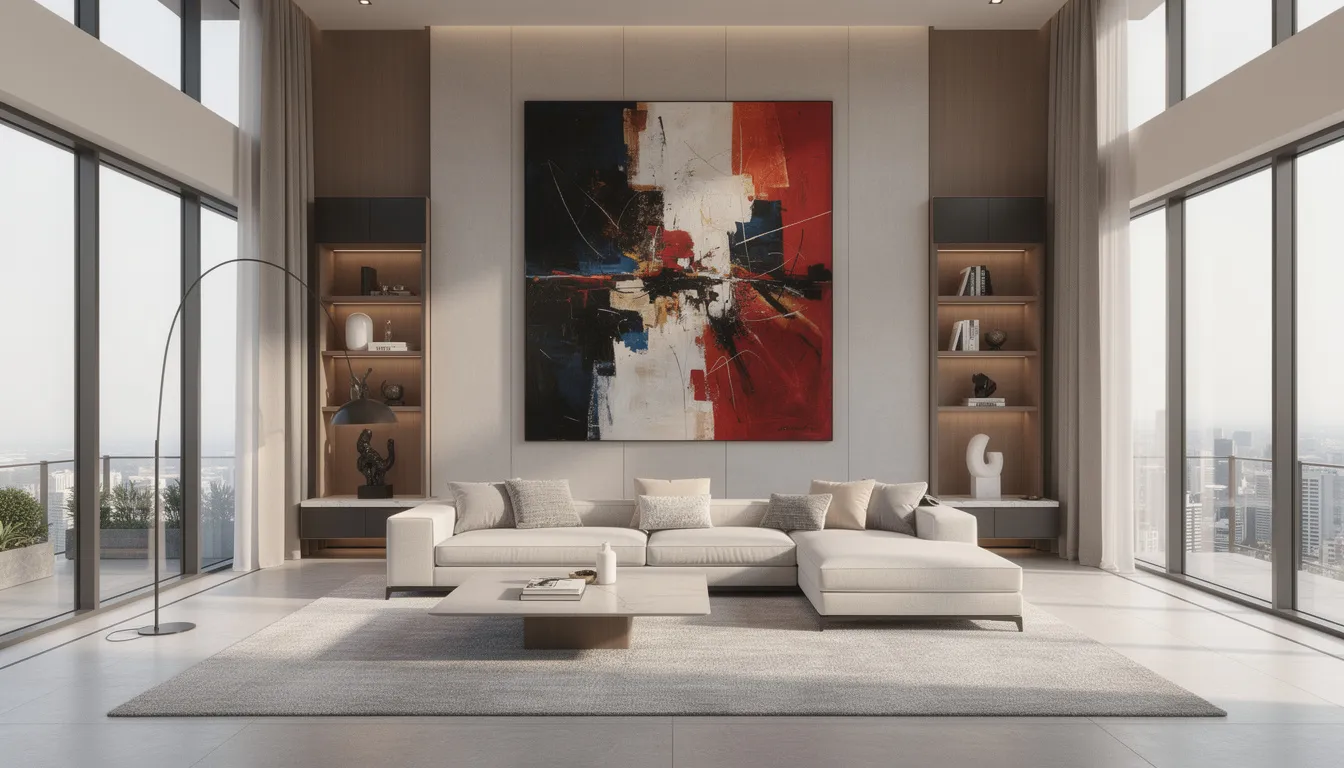
In contemporary design, oversized artwork functions as an architectural element rather than mere decorative accent. A large abstract wall art piece can define zones in open-plan living, anchor seating arrangements, or establish color palettes that inform surrounding decor styles.
This approach aligns with minimalist design principles where fewer, more impactful elements replace cluttered arrangements. A single beautiful painting spanning 60 inches delivers visual drama that a gallery wall of smaller frames cannot replicate, while simultaneously reducing installation complexity and maintenance demands.
Types and Styles of Oversized Wall Art
With foundational scale concepts established, selecting the right style becomes the next consideration. The art subject search across oversized formats reveals distinct categories, each serving different aesthetic goals and spatial needs.
Abstract and Geometric Compositions
Abstract art thrives at large scale. Bold color fields, sweeping brushstrokes, and geometric forms gain emotional resonance when expanded beyond typical dimensions. These works suit modern composition principles, functioning as architectural elements rather than narrative focal points requiring close examination.
Abstract wall art in oversized formats particularly excels in spaces requiring visual energy without specific thematic content. A vibrant colors abstract piece measuring 60 inches commands attention in a dining room or office lobby, adding depth and sophistication without competing with other design elements.
Photography and Digital Prints
Large-format photographic works-including landscape orientation images, architectural studies, and conceptual imagery-bring real life scenes into interior spaces with immersive presence. The art subject canyon photographs or urban architectural prints gain dramatic impact when reproduced at oversized dimensions.
Technical quality becomes critical for product type painting prints at large scale. Resolution requirements increase proportionally; images appearing sharp at 24 inches may reveal pixelation at 60 inches. Reputable suppliers specify minimum resolution thresholds and use professional printing equipment to ensure excellent quality reproduction.
Mixed Media and Textural Works
Combination approaches using layered textures, multiple materials, and varied surface treatments add dimensional interest that flat prints cannot achieve. An original oil painting with visible brushwork, for example, reveals new details as viewers approach and light shifts throughout the day.
These textural works excel in spaces where guests linger-living rooms, private offices, master bedrooms-where close examination rewards attention. The interplay between tactile surface and large scale creates sophisticated visual experiences reflecting understated sophistication.
Sizing, Placement, and Installation
With style categories understood, practical implementation begins with precise measurement and strategic positioning. Proper sizing and placement transform even mediocre artwork into impactful design elements, while poor execution undermines exceptional pieces.
Determining Correct Dimensions
Measurement starts with wall dimensions, considering both width and ceiling height. The minimum maximum width for oversized artwork typically ranges from two-thirds to three-quarters of available wall space, though architectural features like windows or built-ins may adjust this calculation.
Room-specific recommendations provide useful starting points:
Living rooms: 48-72 inches above sofas, proportional to seating width
Dining rooms: 36-60 inches, positioned at seated eye level
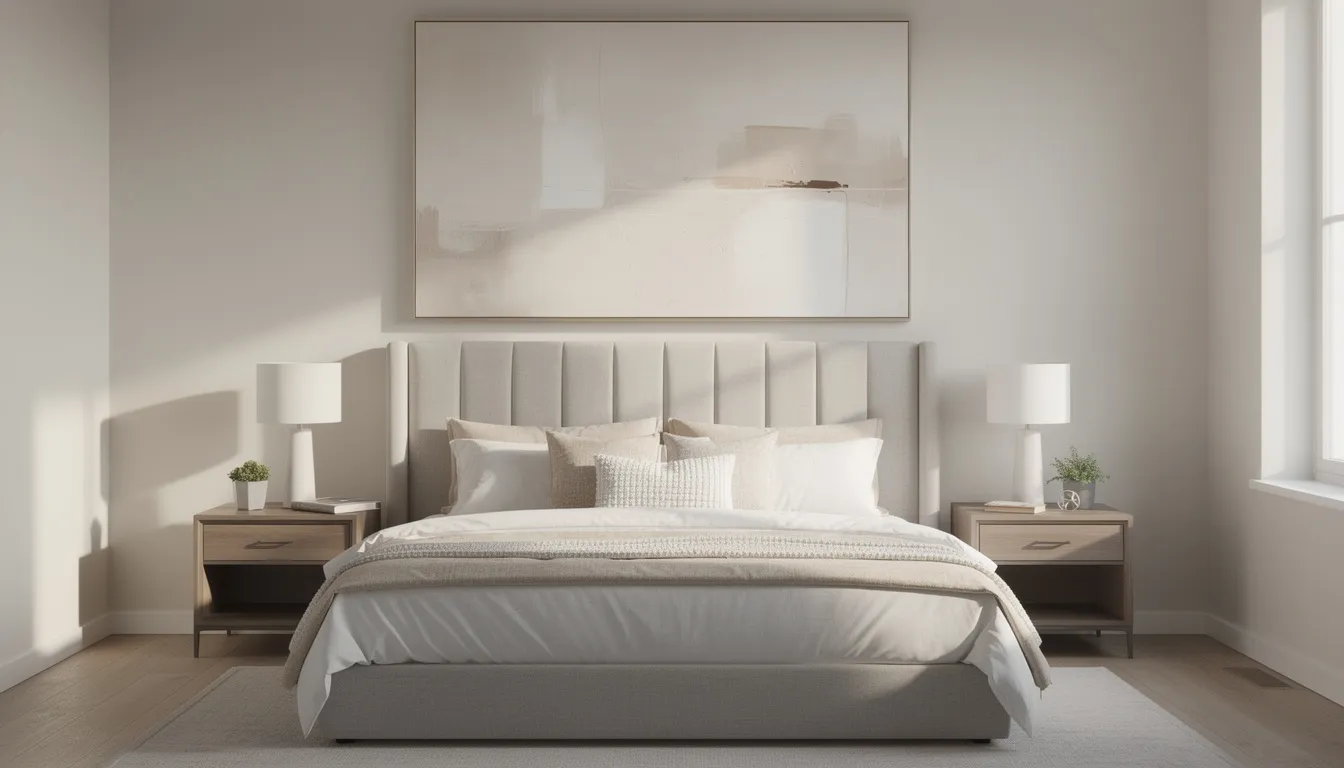
Bedrooms: 48-60 inches above headboards, matching bed width
Office spaces: 40-60 inches behind desks or in reception areas
Laundry room or utility spaces: 24-36 inches for functional areas
Consider viewing distance alongside dimensions. Large artwork requires stepping back for full appreciation; rooms under 12 feet deep may limit options for the largest pieces.
Strategic Placement Methods
Wall selection criteria focus on natural sight lines-the walls visible immediately upon entering a space-and architectural features that frame or complement artwork. Position the art piece where lighting enhances rather than obscures, avoiding direct sunlight that causes fading.
Height positioning follows the standard gallery practice of centering artwork at 57-60 inches from floor to center, approximating average eye level. When hanging above furniture like sofas or console tables, maintain 4-6 inches clearance between furniture top and frame bottom.
Installation Approaches
Mounting hardware selection depends on artwork weight and wall construction. Large artwork often exceeds 20-30 pounds, requiring more robust solutions than standard picture hooks.
Assess wall construction: Determine whether walls are drywall, plaster, or masonry before selecting anchors
Calculate weight capacity: Add 50% safety margin when selecting hanging hardware ratings
Locate studs when possible: Direct stud mounting provides superior support for heavy pieces
Use appropriate anchors: Toggle bolts for drywall, expansion anchors for masonry surfaces
Verify level positioning: Use laser levels for precision across large spans
Professional installation merits consideration for pieces exceeding 48 inches or 30 pounds. The cost typically proves modest compared to artwork value and potential damage from improper mounting. Many suppliers offering more sale fast delivery also provide installation services or referrals.
Safety protocols during installation include two-person handling for pieces over 40 inches, protective gloves for framed work with sharp corners, and clear floor space to prevent tripping. Never overreach from ladders; reposition frequently for safe access.
Material and Quality Considerations
Material selection significantly impacts both immediate visual quality and long-term durability. At oversized dimensions, material limitations become pronounced while quality differences grow increasingly visible.
Canvas and Fabric Options
Canvas weight specifications matter more at large scale, where thin materials may sag or warp. High quality canvas typically weighs 12-16 ounces per square yard, providing sufficient body to maintain tension across expansive stretcher bars.
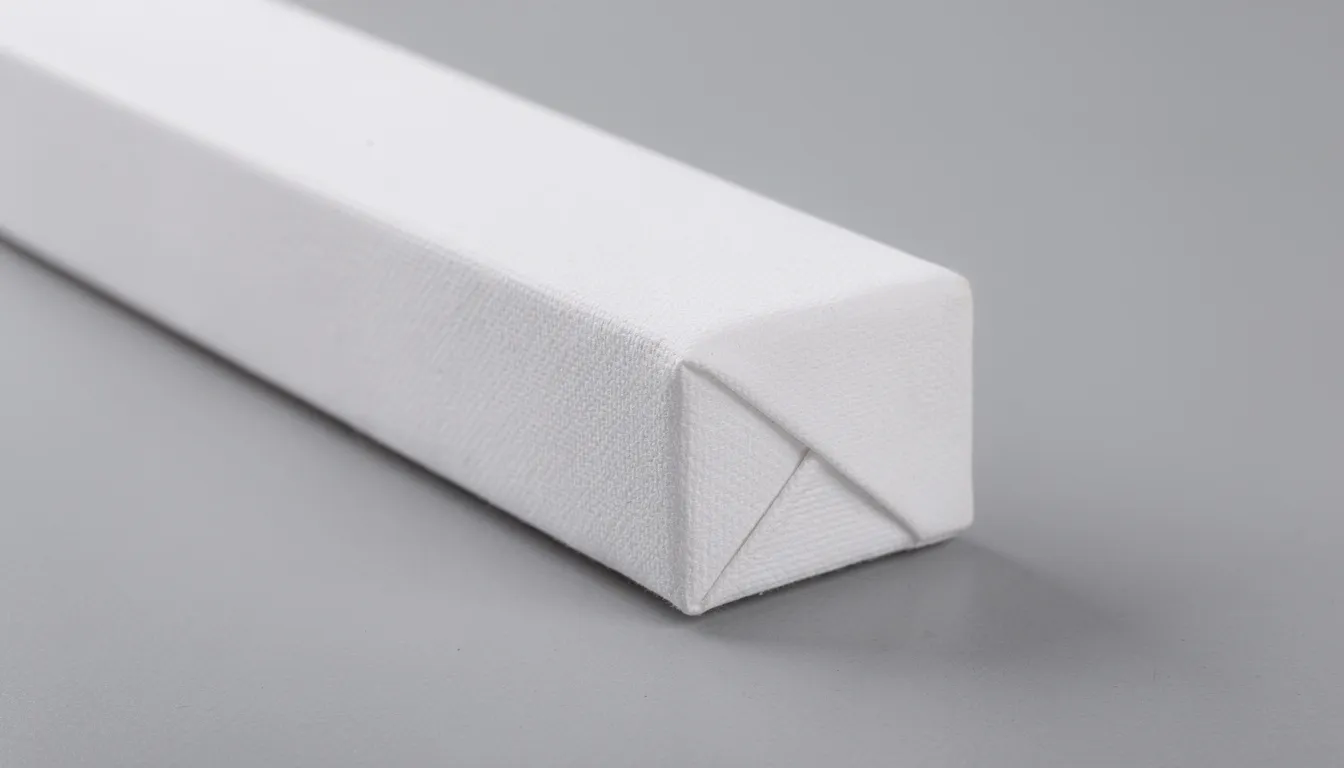
Gallery wrapped canvas-where canvas wraps around frame edges, continuing the image onto sides-offers clean contemporary aesthetics requiring no additional framing. This arrives ready for immediate hanging, reducing total investment while maintaining gallery-quality presentation.
Fabric alternatives including linen and synthetic materials each offer distinct characteristics. Linen provides traditional texture preferred for original oil painting reproduction, while synthetic canvases resist environmental fluctuations better in humid or variable climates.
Print Quality and Longevity
Ink systems determine color vibrancy and stability over time. Archival pigment inks resist fading for 75-100 years under proper conditions, while dye-based inks may shift or fade within 10-25 years. For great quality that endures, specify archival inks explicitly.
UV protection extends artwork life, particularly in bright spaces. Varnish coatings, UV-filtering glass for framed works, and strategic placement away from direct sunlight all contribute to lasting visual quality. These considerations become especially relevant for high-value pieces.
Framing and Mounting Systems
Frame construction requirements increase with artwork dimensions. A wood frame supporting a 60-inch canvas must resist considerable weight and torque; solid wood construction with reinforced corners prevents warping or separation over years of display.
Frame Type |
Weight Support |
Aesthetic |
Best For |
|---|---|---|---|
Gallery Wrap |
N/A - self-supporting |
Contemporary, minimal |
Modern spaces, budget-conscious |
Solid frame |
High |
Classic, substantial |
Traditional interiors, heavy pieces |
Black frame |
Medium-High |
Modern, dramatic |
Contemporary, high-contrast art |
Floater frame |
Medium |
Gallery, architectural |
Canvas paintings, dimensional work |
The choice between gallery wrap versus traditional framing depends on decor styles and artwork type. Contemporary spaces often favor frameless presentation, while traditional interiors benefit from frame features gallery wall presentations typically display. |
Common Challenges and Solutions
Overwhelming Small Spaces
Even well-planned oversized art projects encounter obstacles. Anticipating common issues enables proactive solutions.
When proportions feel challenging, several strategies restore balance. Consider horizontal landscape orientation pieces in narrow rooms to emphasize width rather than height. Select artwork with white hues or light backgrounds that visually recede rather than advance. Position pieces higher than typical guidelines, creating breathing room below.
For genuinely compact rooms, oversized wall art may work best as single statement pieces without competing elements. Remove other wall decor, letting the standout addition command undivided attention.
Installation in Rental Properties
Damage-free mounting solutions have expanded significantly. Heavy-duty adhesive strips rated for 15+ pounds handle moderate oversized artwork without wall damage. For heavier pieces, leaning against walls on floor stands or furniture creates dramatic effect without holes.
Some renters invest in large, lightweight foam-backed prints or fabric hangings that standard hooks support. These alternatives sacrifice some visual impact for practical flexibility, though quality options maintain timeless charm and professional appearance.
Coordinating with Existing Decor
When integrating oversized artwork with established spaces, color harmony techniques prevent discord. Pull accent colors from existing furniture and textiles, selecting art that echoes these tones. Alternatively, use the artwork as catalyst for refreshing accessories-new throw pillows, rugs, or decorative objects that reference art colors create cohesive environments.
Visual balance with furniture requires attention to weight distribution. A massive dark canvas opposite lightweight furnishings creates imbalance; either add visual weight to furnishings or select artwork with lighter tones and more open composition.
Conclusion and Next Steps
Oversized wall art functions as an architectural design element requiring thoughtful consideration of scale, placement, and material quality. When properly sized and positioned, a single large artwork transforms interior spaces more effectively than multiple smaller pieces, creating focal points that anchor design schemes and express personal style.
Immediate action steps:
Measure target walls, recording width, height, and clearances from furniture
Assess viewing distances from typical positions within the room
Research wall mounting hardware appropriate for your wall construction
Request samples or use virtual preview tools before committing to large purchases
Consider us customer service closed hours when ordering from international suppliers
For continued exploration, related topics include lighting design for large artwork (essential for dramatic effect), seasonal art rotation systems for collectors with multiple pieces, and gallery wall compositions that incorporate oversized anchors with smaller supporting works.
Whether selecting abstract compositions, photographic prints, or textural works, oversized wall art represents accessible investment in home decor that delivers disproportionate visual return-proving that in interior design, scale strategically applied creates impact no amount of smaller elements can match.