Introduction
Large modern wall art for living rooms transforms bare walls into dynamic focal points that define the entire space. Whether you’re working with an expansive open-concept layout or a compact apartment, oversized contemporary pieces deliver visual impact that smaller decor simply cannot achieve.
This guide covers selection criteria, sizing guidelines, placement strategies, and styling approaches for large modern wall art. We focus specifically on contemporary pieces measuring 36 inches or larger in at least one dimension, excluding traditional or small-scale artwork. If you’re a homeowner or renter seeking to enhance your modern living space with impactful big wall decor-regardless of your design experience level-this content addresses your needs directly.
Direct answer: Large modern wall art for living rooms should measure at least 36 inches in width or height, feature contemporary design elements such as abstract forms or clean lines, and complement your room’s scale and existing color scheme to create a cohesive, striking display.
By the end of this guide, you will:
Understand proper sizing ratios for artwork relative to walls and furniture
Learn placement principles that maximize visual impact
Identify modern art styles compatible with contemporary living spaces
Master color coordination techniques that enhance room atmosphere
Gain confidence to find pieces that reflect your personal style
Understanding Large Modern Wall Art
Large modern wall art refers to pieces measuring 36 inches or more in at least one dimension, created within contemporary design principles that emerged in the second half of the 20th century. These works feature characteristics that distinguish them from traditional fine art-think bold abstraction rather than classical portraiture, geometric precision over ornate detailing.
Living rooms serve as primary gathering spaces where families connect and guests form first impressions. This makes the room essential territory for artwork that commands attention while creating an inviting atmosphere. Large art carries the ability to transform an ordinary wall into a sophisticated display that speaks to your aesthetic sensibilities.
Size Classifications and Impact
Understanding size classifications helps determine which scale works best for your space:
Medium-large (36-48 inches): Suitable for moderate wall sections, pairs well with furniture groupings
Large (48-60 inches): Creates substantial presence, ideal as standalone statement pieces
Oversized/extra large wall art (60+ inches): Dominates wall space, best for rooms with high ceilings or expansive walls
The relationship between artwork size and room dimensions follows visual weight principles. A piece that appears commanding in a gallery may feel undersized on a wall spanning 15 feet. Conversely, oversized art in a compact room can add depth rather than overwhelm-when chosen thoughtfully with lighter compositions and strategic placement.
Modern Art Characteristics
Modern art encompasses several defining elements that distinguish it from traditional works:
Abstract forms that suggest rather than depict, inviting personal interpretation
Geometric patterns featuring clean lines and mathematical precision
Minimalist compositions that embrace negative space
Bold, vibrant colors or intentionally restrained palettes
Expressive texture through varied art mediums and application techniques
The terms contemporary and modern are often used interchangeably, but they are not synonymous in the context of art and design. Modern art refers to past artistic movements from the late 19th and early 20th centuries, while contemporary art is focused on the present and future.
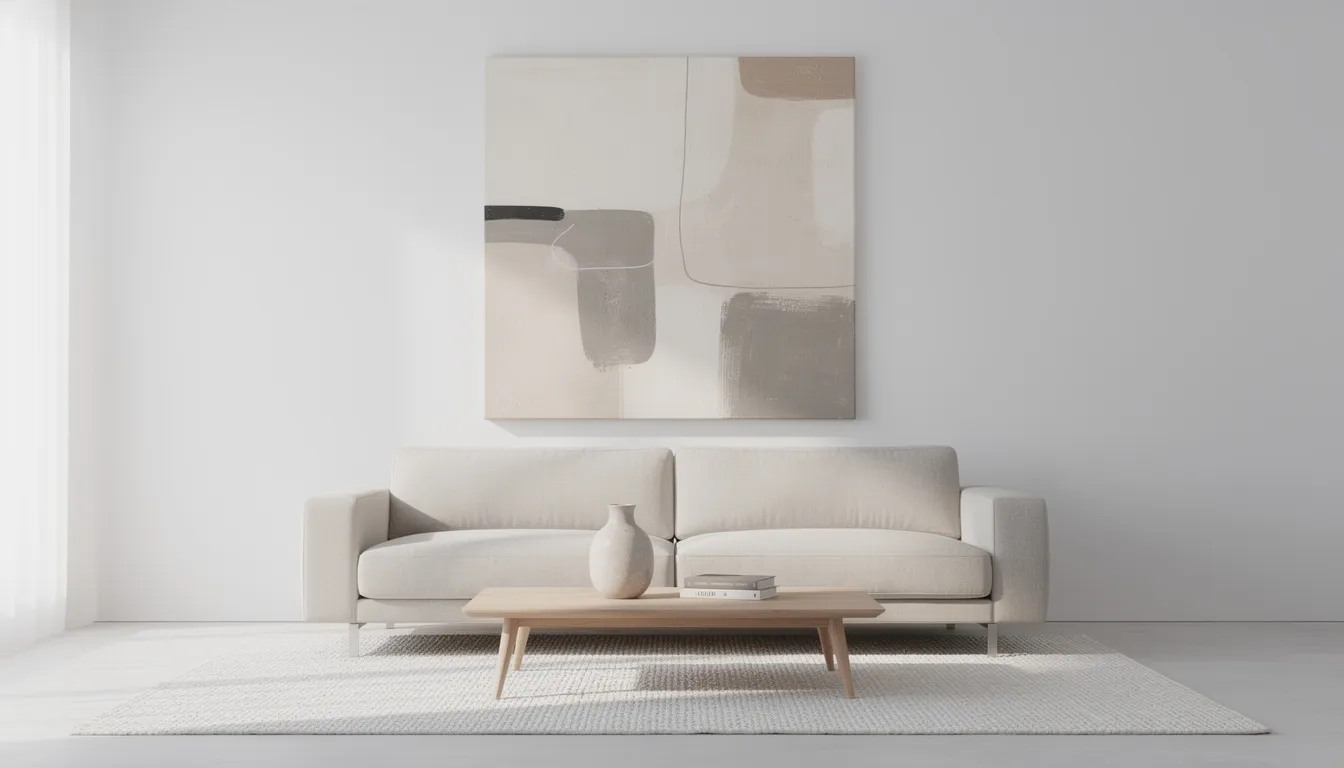
Contemporary interior design trends favor these characteristics because they complement modern furniture’s streamlined profiles and neutral foundation colors. A large abstract painting introduces visual interest without competing with architectural elements, while geometric prints reinforce the sense of order present in modern spaces.
With these foundational concepts established, selecting specific pieces requires examining how your living room’s unique characteristics should guide your choices.
Selecting the Right Pieces for Your Living Room
Building on your understanding of modern art characteristics, the selection process involves matching specific pieces to your living room’s proportions, color environment, and existing style elements.
Room Proportions and Artwork Scale
Proper scaling prevents artwork from appearing lost on vast walls or cramped in smaller spaces. The standard guideline suggests large artwork should span 60-75% of the furniture width it hangs above-a 90-inch sofa pairs naturally with pieces measuring 54-68 inches wide. Ceiling height matters equally; rooms with 9+ foot ceilings accommodate taller vertical pieces that would overwhelm standard 8-foot spaces.
Wall width independent of furniture follows similar logic. A 12-foot wall section can support a single oversized piece spanning 7-9 feet, or multiple panels creating equivalent coverage. The goal remains consistent: fill sufficient wall space to establish presence without crowding architectural features like windows or doorways.
Color Harmony and Contrast
Artwork color selection either harmonizes with existing room palettes or introduces intentional contrast. Harmonious approaches pull colors already present-if your living room features navy throw pillows and a gray sectional, serene landscapes incorporating these tones create cohesion. Contrast approaches use art to introduce accent colors absent elsewhere, with the artwork serving as the source that future decor additions might echo.
Choosing art that complements the existing color scheme helps achieve a cohesive look in a space. The choice of wall art often ties into the existing color scheme and desired mood of the living space.
Vibrant colors inject energy and personality into neutral modern rooms, while muted palettes maintain calm sophistication. Consider the atmosphere you want to create: bold statement pieces energize entertaining spaces, whereas restrained abstracts suit rooms intended for relaxation. Either direction can enhance your living room when executed with intention.
Style Integration
Modern art styles vary considerably, and compatibility with existing furniture and architectural elements determines success. Minimalist geometric prints complement mid-century modern furniture’s clean profiles. Expressive abstract paintings pair effectively with contemporary sectionals featuring simple lines. Nature-inspired prints-whether abstract interpretations or stylized botanical elements-bridge modern aesthetics with organic warmth.
Examine your living room’s current personality. Spaces with eclectic elements welcome bolder, more expressive pieces. Strictly minimalist rooms benefit from artwork that maintains visual restraint while still commanding attention through scale. The artwork should feel like a natural extension of the space rather than an intrusion.
With selection criteria established, implementation through proper placement and installation ensures your chosen pieces achieve their full potential.
Placement and Installation Strategies
Selecting remarkable artwork means little without thoughtful placement. Installation decisions affect how pieces interact with room traffic patterns, furniture arrangements, and lighting conditions throughout the day.
Optimal Hanging Heights and Positions
Standard hanging guidelines exist for good reason, though modern approaches sometimes bend these rules for dramatic effect. Follow this process for reliable results:
Measure 57-60 inches from floor to artwork center-this places art at average eye level for comfortable viewing
Account for furniture placement by centering artwork above sofas, consoles, or other anchor pieces rather than centering on the wall itself
Consider lighting sources and position pieces to avoid direct glare from windows or fixtures while ensuring adequate illumination
Mark and level before hanging using painter’s tape to visualize placement; live with the tape for a day before committing
Contemporary designers sometimes position oversized wall art lower than traditional guidelines suggest, particularly when leaning pieces against walls rather than hanging them. This creates casual sophistication and allows future repositioning without wall damage-ideal for renters or those who enjoy refreshing their display periodically.
Wall Layout Options
Different configurations suit different spaces and preferences:
Criterion |
Single Statement Piece |
Diptych/Triptych |
Gallery Wall Incorporation |
|---|---|---|---|
Visual Impact |
Maximum focus, immediate attention |
Distributed interest, sense of movement |
Varied, layered complexity |
Best Room Size |
Medium to large rooms |
Any size, highly adaptable |
Larger walls with room to explore |
Flexibility |
Limited-piece defines the space |
Moderate-panels can be rearranged |
High-evolves over time |
Cost Consideration |
Single investment |
Often more affordable per panel |
Builds gradually |
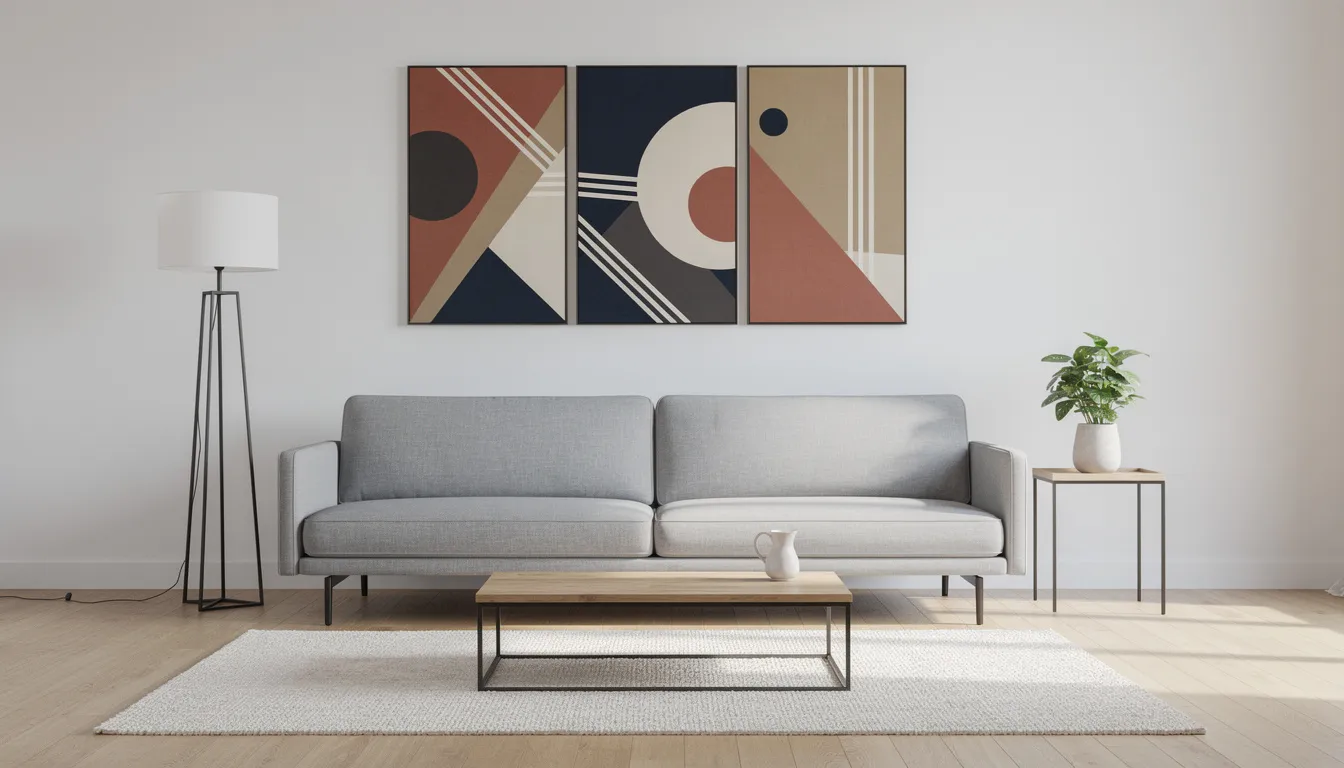
Single statement pieces deliver instant transformation-one bold decision that eliminates further choices. Triptychs and multi-panel arrangements offer modularity, allowing panels to stretch across wide walls or stack in varied configurations above different furniture groupings. Gallery walls incorporating large modern pieces among smaller works create depth and invite extended viewing, though they require more careful curation to maintain cohesion. |
Consider your living room layout, patience for ongoing arrangement, and whether you prefer decisive impact or evolving displays.
Common Challenges and Solutions
Even well-chosen artwork encounters implementation obstacles. These practical solutions address the most frequent issues when working with large modern art.
Overwhelming Small Rooms
Counter-intuitively, oversized art can enhance compact living rooms rather than shrink them. Choose pieces with light backgrounds or significant negative space-these add depth rather than visual weight. Avoid heavy ornate frames that add bulk; simple floater frames or unframed canvas prints maintain airiness. Position large artwork opposite windows where natural light creates the illusion of expanded space, drawing the eye outward rather than stopping it.
Clashing with Existing Decor
When new artwork fights with established elements, bridge the gap through strategic color connections. Identify one color from the artwork that already appears somewhere in your room, even subtly-a thread in a throw blanket, a book spine on your shelf. Build from this connection by gradually introducing complementary elements like pillows, vases, or smaller decorative objects that echo the artwork’s palette. This integration approach transforms potential clash into intentional collection building.
Budget Constraints for Large Pieces
Original paintings at exhibition scale carry substantial price tags, but quality alternatives exist. High-resolution prints on canvas deliver visual impact at accessible price points without sacrificing durability. Explore emerging artists whose work hasn’t yet reached premium pricing but demonstrates genuine skill and vision. End-of-season sales from reputable galleries offer opportunities to acquire pieces that retain timeless charm well beyond trend cycles. Consider the cost-per-square-foot: a single large piece often costs less than multiple smaller works providing equivalent coverage.
Conclusion and Next Steps
Successful large modern wall art selection balances scale, style, and placement with your living room’s proportions and existing decor. The principles remain consistent: size artwork appropriately for your walls and furniture, choose pieces whose modern characteristics complement your space, and install thoughtfully to maximize visual impact.
Take these immediate steps to transform your living room walls:
Measure your primary wall space and the furniture beneath it to determine ideal artwork dimensions
Identify which modern art style-abstract, geometric, minimalist, nature-inspired-resonates with your personal aesthetic
Establish a realistic budget range that accounts for framing, hanging hardware, and potential professional installation
Visit local galleries or shop online collections to see pieces at actual scale, noting how they might transform your specific space
Related topics worth exploring include lighting design specifically for artwork display, creating cohesive room color schemes that accommodate bold statement pieces, and seasonal art rotation strategies that keep your living room feeling fresh while maintaining your curated collection’s coherence.
Additional Resources
Measurement Quick Reference:
Art width = 60-75% of furniture width below
Hanging center = 57-60 inches from floor
Minimum wall clearance = 3-6 inches from architectural features
Modern Art Style Categories:
Abstract expressionist: emotional, gestural, often large-scale
Geometric: precise shapes, mathematical relationships
Minimalist: reduced elements, emphasis on negative space
Contemporary naturalism: modern interpretations of landscapes, botanicals
Mixed media: combining multiple art mediums for texture and depth
Hanging Hardware by Wall Type:
Drywall: toggle bolts for pieces over 20 lbs, picture hooks for lighter works
Plaster: specialized plaster hooks, avoid standard nails
Brick/masonry: masonry anchors with appropriate drill bits
Rental-friendly: adhesive strips rated for weight, leaning options